 GNPA | PSU Banks
PSU Banks' Gross NPAs drop to 6.9 pc in Sept 2021 against 8.2 pc in March 2020: RBI report
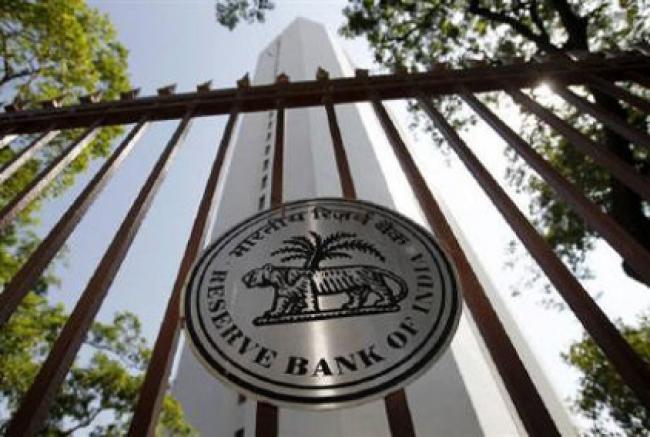
Mumbai/IBNS: The gross non-performing assets (NPAs) of scheduled commercial banks (SCB) as reduced to 6.9 percent at the end of September 2021 from 7.3 percent at the end of March 2021, the Reserve Bank of India said in its report on Trend and Progress of Banking in India 2020-21.
The GNPA stood at 8.2 percent at the end of March 2020, according to the December 28 report which covers the performances of cooperative banks, and non-banking financial institutions during 2020-21 and 2021-22 so far.
The return on assets (RoA) of SCBs improved from 0.2 percent at end-March 2020 to 0.7 percent at end-March 2021, based on stable income and reduction in expenditure.
Capital to risk-weighted assets (CRAR) ratio of SCBs strengthened from 14.8 percent at end-March 2020 to 16.3 percent at end-March 2021 and further to 16.6 percent at end-September 2021, partly aided by higher retained earnings, recapitalisation of public sector banks (PSBs), and capital raising from the market by both PSBs and private sector banks.
Further, the RBI said some of the policy measures taken by the RBI in response to the COVID-19 have reached the pre-announced sunset dates in 2021-22. Consequently, some liquidity measures have been wound down as a result.
Some regulatory measures, including deferment of implementation of net stable funding ratio (NSFR), restrictions on dividend payouts by banks, deferment of implementation of the last tranche of capital conservation buffer, have been realigned to avoid extended forbearance and risks to financial stability while providing targeted support to needy sectors, the RBI said.
"Even though the initiation of fresh insolvency proceedings under the Insolvency and Bankruptcy Code (IBC) was suspended for a year till March 2021, it constituted one of the major modes of recovery in terms of amount recovered,” the RBI report said.
During 2020-21, the consolidated balance sheet of SCBs expanded in size, notwithstanding the pandemic and the resultant contraction in economic activity. In 2021-22 so far, nascent signs of recovery are visible in credit growth. Deposits grew by 10.1 percent at end-September 2021 as compared with 11 percent a year ago, the RBI said.
The report further noted that the balance sheet growth of urban co-operatives banks (UCBs) in 2020-21 was driven by deposits, while subdued credit growth led to acceleration in investments. Their financial indicators, including capital position and profitability, improved, the report said.
Further, the profitability of state co-operative banks and district central co-operative banks improved in 2019-20, while their asset quality deteriorated, the report noted.
The consolidated balance sheet of NBFCs expanded during 2020-21, aided by credit and investments of non-deposit taking systemically important NBFCs (NBFCs-ND-SI).
“Their asset quality and capital buffers also improved,” the report said.
In short, the Indian financial sector is standing at a critical point: while the immediate effects of the fallout of COVID-19 will dominate the short-term, larger challenges relating to climate change and technological innovations will need a carefully crafted strategy, the RBI report said.
Support Our Journalism
We cannot do without you.. your contribution supports unbiased journalism
IBNS is not driven by any ism- not wokeism, not racism, not skewed secularism, not hyper right-wing or left liberal ideals, nor by any hardline religious beliefs or hyper nationalism. We want to serve you good old objective news, as they are. We do not judge or preach. We let people decide for themselves. We only try to present factual and well-sourced news.
Support objective journalism for a small contribution.