


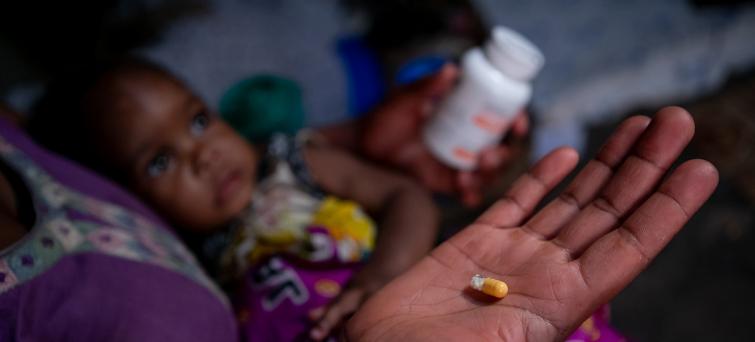
Countries urged to act over potential HIV drug shortages, within next two months
New York/IBNS: Stocks of medication for HIV patients could run out in the next two months, because of higher costs linked to lockdowns and COVID-19 border closures, UNAIDS said on Monday.
In a call to countries and manufacturers to take pre-emptive action now, the agency said that both the production of generic antiretroviral drugs and their distribution are threatened.
Millions of people could be at risk – particularly in developing countries - if they go without treatment, both to themselves and others from an increased chance of HIV transmission, according to the UN agency.
‘Treatment must continue’
“It is vital that countries urgently make plans now to mitigate the possibility and impacts of higher costs and reduced availability of antiretroviral medicines,” said Winnie Byanyima, Executive Director of UNAIDS.
“I call on countries and buyers of HIV medicines to act swiftly in order to ensure that everyone who is currently on treatment continues to be on it, saving lives and stopping new HIV infections.”
‘500,000’ at risk in sub-Saharan countries
UNAIDS also cited forecasting models that indicated that a six-month disruption of antiretroviral therapy in sub-Saharan Africa alone could lead to 500,000 additional AIDS-related deaths.
Several factors linked to the pandemic risk pushing up the cost of producing HIV medicine.
These include increased manufacturing and transport costs, the need to find new sources of key pharmaceutical ingredients and currency fluctuations caused by the economic shock of COVID-19.
UNAIDS said that a 10–25 per cent increase in these costs could make the final cost of exported antiretroviral medicines from India alone between $100 and $225 million a year more expensive than before.
The Asian nation is a key player in the production of HIV drugs, with eight manufacturers there together accounting for more than 80 per of generic antiretroviral medicine production worldwide.
To counter this, the UN agency and partners are working to mitigate the impact.“Considering that in 2018 there was an HIV financing shortfall of more than $7 billion, the world cannot afford an added burden on investments in the AIDS response,” UNAIDS said.
“Immediate funding” of up to $1 billion has been pledged by the Global Fund to Fight AIDS, Tuberculosis and Malaria to help countries to respond to COVID-19, UNAIDS said, while the Fund is also expanding the use of its procurement platform to non-Global Fund recipients.
Support Our Journalism
We cannot do without you.. your contribution supports unbiased journalism
IBNS is not driven by any ism- not wokeism, not racism, not skewed secularism, not hyper right-wing or left liberal ideals, nor by any hardline religious beliefs or hyper nationalism. We want to serve you good old objective news, as they are. We do not judge or preach. We let people decide for themselves. We only try to present factual and well-sourced news.
Support objective journalism for a small contribution.


