


Lessons from Japan tsunami vital to new disaster risk reduction agreement, says UN official
“We think on Wednesdayof all those who lost their lives in the tsunami and all those who continue to re-build their lives four years later,” said Margareta Wahlström, the head of the UN Office for Disaster Risk Reduction (UNISDR).
“The learning from that tragic event has helped in the development of a robust new agreement on disaster risk reduction which will be adopted at the Third UN World Conference on Disaster Risk Reduction,” she added in a news release.
At the Conference, which will begin on Saturday in the Japanese city of Sendai, will see the adoption of a successor agreement to the Hyogo Framework for Action, which was agreed by governments 10 years ago in the wake of the Indian Ocean tsunami.
A key focus of the new framework will be on reducing mortality and economic losses by agreeing on measures to bring down existing levels of risk and to avoid creation of new risks, according to UNISDR.
Over the last ten years some 700,000 people have died in disaster events; 1.7 billion people have been affected; and reported economic losses from major disaster events stand at $1.4 trillion.
A Preparatory Committee meeting will take place on Friday to discuss the current text of the new agreement, which places a strong emphasis on tackling the underlying drivers of risk such as poverty, climate change, eco-system decline, bad urban planning, land use and risk governance.
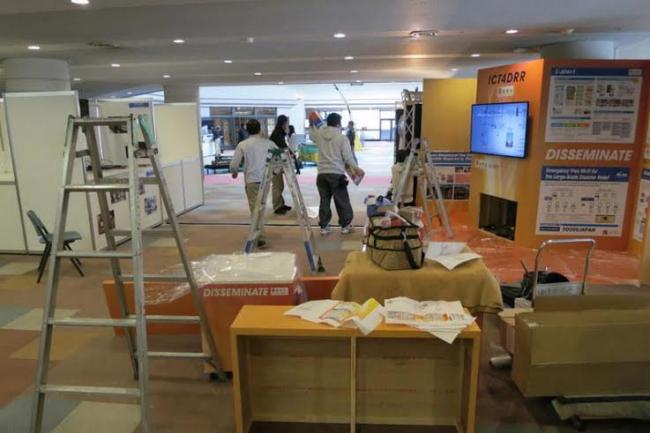
Photo: UNISDR/Andy McElro
Support Our Journalism
We cannot do without you.. your contribution supports unbiased journalism
IBNS is not driven by any ism- not wokeism, not racism, not skewed secularism, not hyper right-wing or left liberal ideals, nor by any hardline religious beliefs or hyper nationalism. We want to serve you good old objective news, as they are. We do not judge or preach. We let people decide for themselves. We only try to present factual and well-sourced news.
Support objective journalism for a small contribution.


