
October 14, 2026 02:16 pm (IST)
Follow us:
facebook-white sharing button
twitter-white sharing button
instagram-white sharing button
youtube-white sharing button
Punjab activist confronts chemist over alleged drug sales, shot dead during Facebook Live | ‘Rahul Gandhi pushed me during protest march’: Pregnant journalist’s allegation sparks BJP-Congress faceoff | ‘You cannot denotify resistance': CJP leaders Ashutosh Ranka, Saurav Das jump Jantar Mantar gate to protest, detained | Delhi Police de-notifies Jantar Mantar as protest site amid CJP stir over Gyanesh Kumar | 'Gyanesh Kumar will not escape': Rahul Gandhi issues warning amid voting rights row | 'Supreme Court doors open for all': CJI Surya Kant breaks silence on refusing to meet INDIA bloc over Gyanesh Kumar row | 'Undeclared Emer-GenZ': Shashi Tharoor slams Delhi curbs over CJP protests, calls internet shutdown 'most regressive' | ‘Bharat Mata Ki Jai’, ‘Inquilab Zindabad’: CJP leader Abhijeet Dipke dares Delhi Police to arrest him, says ‘We are not afraid’ | CJP protest crackdown? Abhijeet Dipke, Saurav Das and Ashutosh Ranka detained from inside flight | Dhruv Rathee detained ahead of CJP protests against CEC Gyanesh Kumar as Delhi goes on high alert

NASA, Smithsonian’s National Air and Space Museum host discussion on solar hazards in exploration

| | Oct 20, 2016, at 02:57 pm
Washington, Oct 20 (IBNS): Understanding the hazards of space weather on crewed and robotic missions is vital to informing plans for NASA’s Journey to Mars and other missions into our solar system, and beyond.

Veteran NASA astronaut John Grunsfeld and solar experts will discuss that and more during a panel discussion at 1 p.m. EDT, Tuesday, Oct. 25.

The event will air live on NASA Television and stream on the agency’s website.

The panel discussion will take place at the National Air and Space Museum’s Moving Beyond Earth gallery at 6th Street and Independence Avenue S.W. in Washington, read the NASA website.

The event also will mark the 10th anniversary of the launch of NASA’s two Solar TErrestrial RElations Observatory (STEREO) spacecraft.

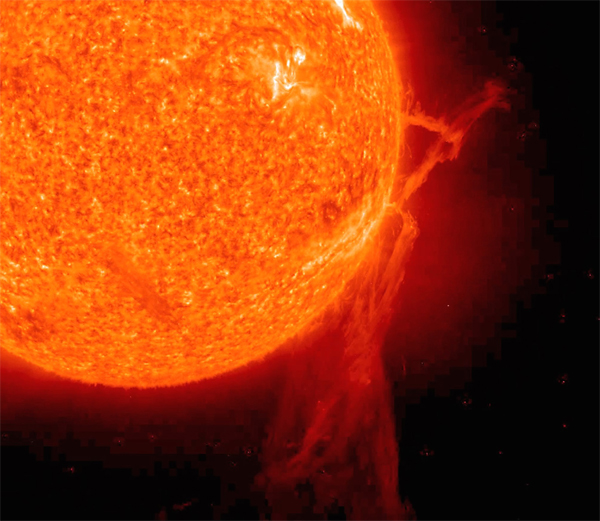
The twin probes have advanced space weather forecasting more than any other spacecraft or solar observatory and enabled previously impossible early warnings of threatening conditions posed by the sun.

Image credit: NASA

Support Our Journalism

We cannot do without you.. your contribution supports unbiased journalism

IBNS is not driven by any ism- not wokeism, not racism, not skewed secularism, not hyper right-wing or left liberal ideals, nor by any hardline religious beliefs or hyper nationalism. We want to serve you good old objective news, as they are. We do not judge or preach. We let people decide for themselves. We only try to present factual and well-sourced news.

Support objective journalism for a small contribution.