


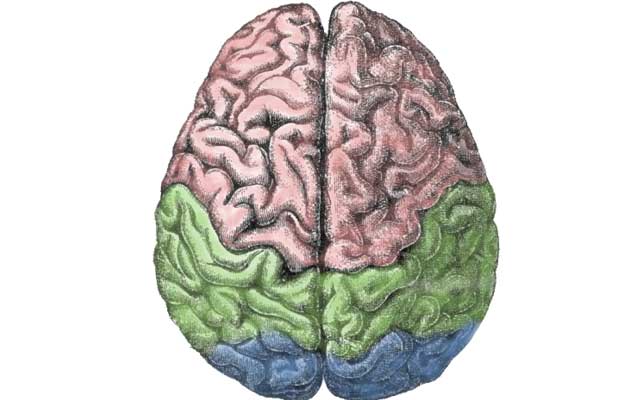
New technology for use in military vehicles may protect warfighters from blast-induced brain injury
Washington, Mar 7 (IBNS): Researchers from the University of Maryland (UMD) and the University of Maryland School of Medicine (UMSOM) have developed a new military vehicle shock absorbing device that may protect warfighters against traumatic brain injury (TBI) due to exposure to blasts caused by land mines.
During Operations Iraqi Freedom and Enduring Freedom, more than 250,000 warfighters were victims of such injuries.
Prior to this study, most research on blast-induced TBI focused on the effects of rapid changes in barometric pressure, also known as overpressure, on unmounted warfighters.
“This is the only research to date to model the effects of under-vehicle blasts on the occupants,” explains Gary Fiskum, Ph.D., M. Jane Matjasko professor for research and vice-chair, Department of Anesthesiology at UMSOM. “We have produced new and detailed insights into the causes of TBI experienced by vehicle occupants, even in the absence of significant ambient pressure changes.” The research has also resulted in the development of materials and vehicle frame design that greatly reduce injury caused by under-vehicle explosions.
Fiskum and William Fourney, Ph.D., associate dean, University of Maryland's A. James Clark School of Engineering, keystone professor of aerospace and mechanical engineering and director of the Dynamic Effects Laboratory were the first to demonstrate how the enormous acceleration (G-force) that occupants of vehicles experience during under-vehicle blasts can cause mild to moderate TBI even under conditions where other vital organs remained unscathed.
“Intense acceleration can destroy synapses, damage nerve fibers, stimulate neuroinflammation, and damage the brain’s blood vessels,” explains Fiskum. Researchers also elucidated the molecular mechanisms responsible for this specific form of TBI.
These findings are described in articles published in the Journal of Trauma and Acute Care Surgery, with Julie Proctor, M.S., UMSOM lab manager, as primary author, Experimental Neurology, with Flaubert Tchantchou, Ph.D., UMSOM research associate as primary author, and in the Journal of Neurotrauma, with Rao Gullapalli, Ph.D., professor of diagnostic radiology, UMSOM, as senior author.
Mitigating G-force experienced by vehicle occupants
Fourney, Ulrich Leiste, Ph.D., assistant research engineer in the Clark School’s Department of Aerospace Engineering, and doctoral researcher Jarrod Bonsmann, Ph.D., developed highly advanced shock absorber designs that incorporate polyurea-coated tubes and other structures to reduce the blast acceleration experienced by vehicle occupants by up to 80 percent.
“Essentially, it spreads out the application of force,” Fourney explains. “Polyurea is compressible and rebounds following compression, resulting in an excellent ability to decrease the acceleration,” he says.
Reducing blast-induced TBI
These results were combined with those of Tchantchou, who demonstrated that mitigation of g-force by the elastic frame designs virtually eliminates the behavioral alterations in lab rats and loss of neuronal connections observed using small scale vehicles with fixed frames, as published in the Journal of Neurotrauma.
Peter Rock, M.D., MBA, Martin Helrich chair of the Department of Anesthesiology, noted that “the research team has addressed an important clinical problem by identifying a novel mechanism to explain TBI, engineered a solution to the problem, and convincingly demonstrated improvements in morphology and behavior. This work has important implications for improving outcomes in military blast-induced TBI and might be applicable to causes of civilian TBI, such as car crashes.”
Image: Wikimedia Commons
Support Our Journalism
We cannot do without you.. your contribution supports unbiased journalism
IBNS is not driven by any ism- not wokeism, not racism, not skewed secularism, not hyper right-wing or left liberal ideals, nor by any hardline religious beliefs or hyper nationalism. We want to serve you good old objective news, as they are. We do not judge or preach. We let people decide for themselves. We only try to present factual and well-sourced news.
Support objective journalism for a small contribution.


