


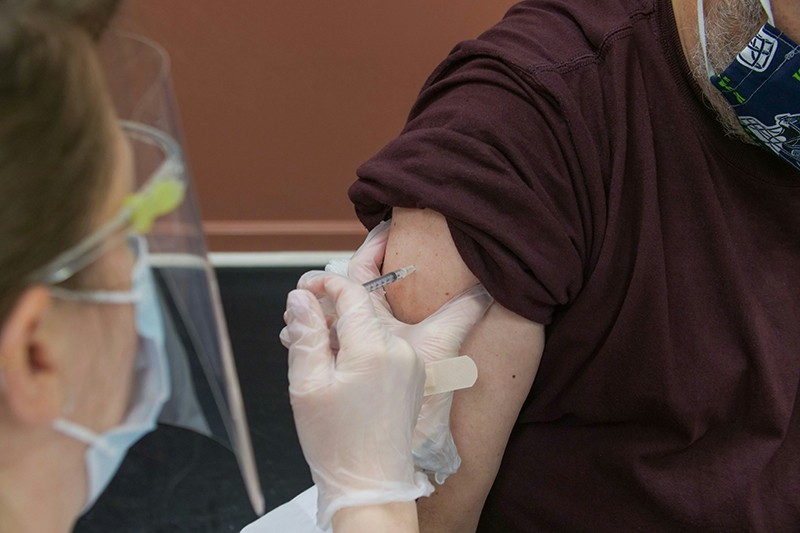
 COVID-19 Vaccine
The real reason people rejected COVID vaccines at first, new study reveals
New research suggests that much of the initial hesitancy surrounding COVID-19 vaccines was driven by concerns that could be addressed through clear information and public engagement, offering valuable lessons for future vaccination programmes.
A large-scale study involving more than one million participants from Imperial College London’s landmark Real-time Assessment of Community Transmission (REACT) study found that nearly two-thirds (65%) of people who were initially hesitant about COVID-19 vaccines eventually received at least one dose.
Published in The Lancet, the findings reveal that the most common reasons for vaccine hesitancy during the pandemic were worries about vaccine effectiveness and potential side effects. Importantly, individuals citing these concerns were more likely to change their views over time and go on to get vaccinated.
In contrast, those who expressed general anti-vaccine sentiment, mistrust of vaccine developers, or believed their personal risk from COVID-19 was low were significantly more likely to remain unvaccinated.
The research sheds new light on the different forms of vaccine hesitancy in the UK and highlights the need for tailored public health strategies. While some concerns can be addressed through transparent communication and trusted information, others appear more resistant to change.
Professor Paul Elliott, Director of the REACT study and co-senior author from Imperial’s School of Public Health, said the pandemic underscored the importance of providing reliable, accessible information during public health emergencies. He stressed that clear communication around vaccine effectiveness and safety is crucial, especially when new vaccine technologies are deployed rapidly.
COVID-19 vaccine rollout insights
The researchers analysed longitudinal survey data from 1.1 million adults collected between January 2021 and March 2022, linking responses with NHS vaccination records up to May 2024. During this period, overall vaccine hesitancy declined sharply—from 8% in early 2021 to 1.1% at the start of 2022—before rising slightly during the Omicron wave.
Among participants who reported hesitancy, concerns about long-term health effects, waiting to see if vaccines worked, and fear of side effects were the most frequently cited reasons. Hesitancy patterns also varied by age, gender, ethnicity, and socio-economic status.
The authors say the findings provide critical insights not only for future pandemic responses but also for tackling hesitancy around routine and childhood vaccinations.
Support Our Journalism
We cannot do without you.. your contribution supports unbiased journalism
IBNS is not driven by any ism- not wokeism, not racism, not skewed secularism, not hyper right-wing or left liberal ideals, nor by any hardline religious beliefs or hyper nationalism. We want to serve you good old objective news, as they are. We do not judge or preach. We let people decide for themselves. We only try to present factual and well-sourced news.
Support objective journalism for a small contribution.


