


UNICEF report shows 85 per cent of children affected by polio in 2023 lived in fragile, conflict-affected areas
Countries facing conflict, natural disasters and humanitarian crises are struggling to provide routine childhood immunisations leaving many children vulnerable to the resurgence of polio, the UN Children’s Fund (UNICEF) warned in new report.
On World Polio Day, UNICEF has issued a stark warning: polio cases in fragile and conflict-affected countries have more than doubled over the past five years, with 85 per cent of the children affected by the disease in 2023 living in these regions.
“In conflict, children face more than bombs and bullets; they are at risk of deadly diseases that should no longer exist,” said UNICEF Executive Director Catherine Russell. A new analysis from the agency highlights that vaccination coverage has dropped from 75 to 70 per cent, far below the 95 percent needed to achieve community immunity.
“In many countries, we are witnessing the collapse of healthcare systems, destruction of water and sanitation infrastructure, and the displacement of families, triggering a resurgence of diseases like polio,” she continued.
Impact on conflict-affected countries
The resurgence of polio has been most pronounced in conflict zones. Of the 21 countries currently battling polio, 15 are fragile or conflict-affected, including Afghanistan, the Democratic Republic of Congo, Somalia, South Sudan, and Yemen.
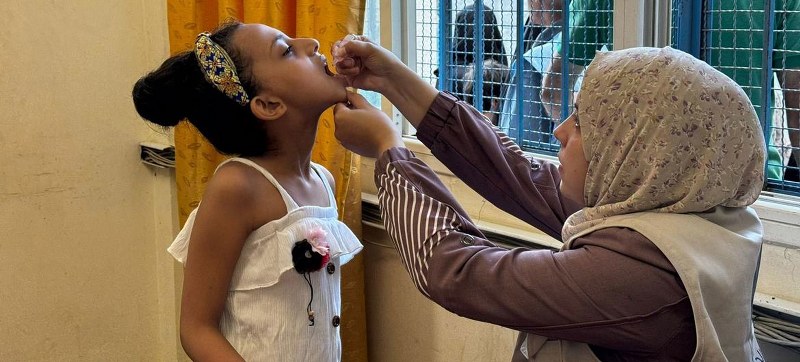
In Gaza, following the return of polio to the region for the first time in 25 years, UNICEF and the World Health Organization (WHO) launched an emergency polio vaccination campaign in September, reaching nearly 600,000 children under 10 years old. However, renewed bombings and mass displacement have delayed the campaign’s completion in northern Gaza.
Humanitarian pauses critical
The UNICEF report stresses that successful polio vaccination campaigns in fragile and conflict-affected countries are crucial to suppressing further outbreaks. Humanitarian pauses, allowing healthcare workers to safely access affected communities, are essential for these efforts.
UNICEF, which delivers over one billion doses of polio vaccines annually, called on governments and international partners to take urgent action to halt the spread of the disease.
‘The final push’
“The spread of polio not only puts children in affected countries at immediate risk but also poses a growing threat to neighbouring countries,” added Russell.
“The final push is the hardest, but now is the time to act. We cannot rest until every child, in every corner of the world, is safe from polio – once and for all.”
Support Our Journalism
We cannot do without you.. your contribution supports unbiased journalism
IBNS is not driven by any ism- not wokeism, not racism, not skewed secularism, not hyper right-wing or left liberal ideals, nor by any hardline religious beliefs or hyper nationalism. We want to serve you good old objective news, as they are. We do not judge or preach. We let people decide for themselves. We only try to present factual and well-sourced news.
Support objective journalism for a small contribution.


