


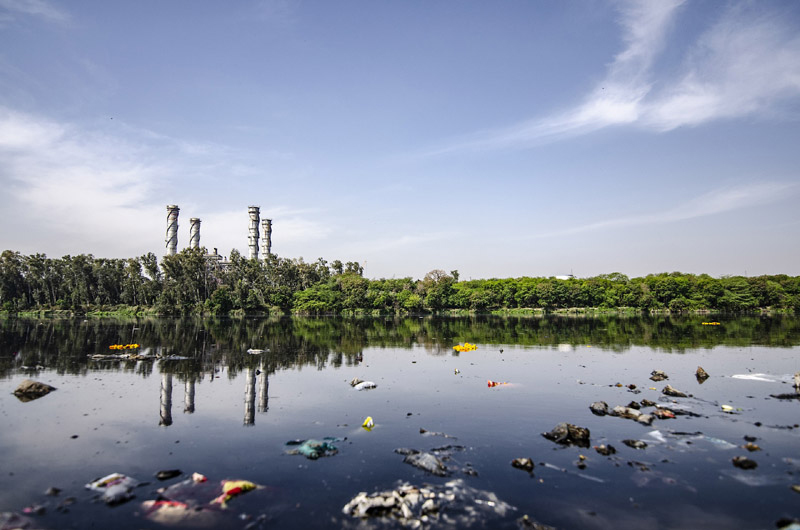
 Pakistan Tanneries
Villagers in Fazilka in India's Punjab suffering due to Pakistani tanneries
Fazilka, Punjab: Hundreds of residents of 130 villages located in Fazilka region of Punjab are suffering for the past 15 years due to the highly polluted water of tanneries located on banks of Sutlej river across the border in Pakistan’s Kasur.
Water from Hussainwala headworks on Sutlej first flows 12 km into Pakistan, where around 300 tanneries located in Kasur, reportedly release the untreated water, often laced with chemicals, which re-enters India through Kasur nullah, reports The Tribune.
The people in the region are suffering from skin diseases and cancer, forcing them to continuously raise the issue with the government.
Since 2006, residents continuously highlighted the matter to the consequent government but they always turned their backs on them.
Hukum Chand, a resident of Jalalabad, told The Tribune, “It has no financial implications, but will ensure good health and economic prosperity of villagers. Hundreds of people in our villages are suffering from cancer and our orchards have been destroyed permanently as the polluted water has seeped underground.”
These villagers told The Tribune that most residents in their villages were suffering from hepatitis C and cancer and they had to go to Bikaner on the “cancer train” for treatment.
Harish Nadda, a farm union leader, told the newspaper, “Many villagers have already succumbed to the disease. The reddish water that remains stagnant at Ganda Singh pond for nine months each year has seeped underground. The crops we grow and the groundwater we extract are all polluted.”
Support Our Journalism
We cannot do without you.. your contribution supports unbiased journalism
IBNS is not driven by any ism- not wokeism, not racism, not skewed secularism, not hyper right-wing or left liberal ideals, nor by any hardline religious beliefs or hyper nationalism. We want to serve you good old objective news, as they are. We do not judge or preach. We let people decide for themselves. We only try to present factual and well-sourced news.
Support objective journalism for a small contribution.


