


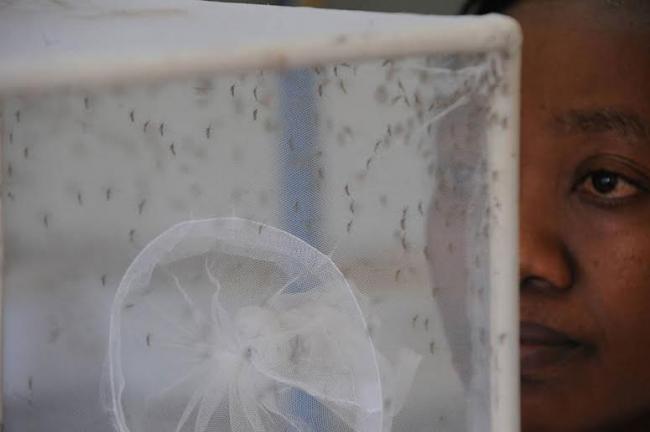
Water and sanitation likely to be best answer to Zika virus, say UN experts
“We can engineer sterile mosquitos or use sophisticated Internet tools to map data globally, but we should not forget that on firday 100 million people in Latin America still lack access to hygienic sanitation systems and 70 million people lack piped water in their places of residence,” Léo Heller, the Special Rapporteur on the human right to safe drinking water and sanitation, said in a press release.
Highlighting a strong link between weak sanitation systems and the current outbreak of the mosquito-borne Zika virus, as well as dengue, yellow fever and chikungunya, he stressed that “the most effective way to tackle this problem is to improve the failing services.”
He noted that Latin America met the UN Millennium Development Goal (MDG) target for water in 2010, but the advancements are still not reaching all.
Regarding sanitation, the MDG target remains unachieved and 3 million people still practice open defecation. “Because of stricter definitions for the related goals within the framework of the new 2030 Agenda for Sustainable Development these will reveal an even more dramatic lack of access to safe water and sanitation in the region,” . Heller warned.
“Governments in the region must speed up the improvement of water and sanitation conditions, in particular for the most vulnerable populations, in order to save lives in the face of this unfolding global health crisis,” he urged.
Leilani Farha, Special Rapporteur on adequate housing, said that when people have inadequate living and housing conditions, where they do not have access to safely managed water services, they tend to store water in unsafe ways that attract mosquitos.
“In addition, poor sanitation systems where wastewater flows through open channels and is disposed of in unsafe pits leads to stagnant water and unfit housing – a perfect habitat for breeding mosquitos,” she said.
The experts’ views have also been endorsed by Dainius Puras, Special Rapporteur on health, and Philip Alston, Special Rapporteur on extreme poverty.
Independent experts or special rapporteurs are appointed by the Human Rights Council to examine and report back on a country situation or a specific human rights theme. The positions are honorary and the experts are not UN staff, nor are they paid for their work.
Photo: FAO/Simon Miana
Support Our Journalism
We cannot do without you.. your contribution supports unbiased journalism
IBNS is not driven by any ism- not wokeism, not racism, not skewed secularism, not hyper right-wing or left liberal ideals, nor by any hardline religious beliefs or hyper nationalism. We want to serve you good old objective news, as they are. We do not judge or preach. We let people decide for themselves. We only try to present factual and well-sourced news.
Support objective journalism for a small contribution.


