Kolkata's tryst with Haveli Sangeet on Makar Sankranti
Talking about the historical background of Haveli Sangeet, Suman Ghosh told IBNS: "This particular form of music, derived from the Indian Classical genre, is believed to have originated in the late 15th century.”
“In the past, especially during the Mughal rule, when temple worship was virtually banned, many people quietly removed the idols from the temples to the safety of their households or havelis to continue with the worshipping. The devotional songs or 'bhajans' that were sung by the devotees during prayers in these haveils, later came to be known as Haveli Sangeet,” he added.
Asked about the speciality of this music, Ghosh said: "Haveli Sangeet draws its main components from the 'dhrupad' style of Hindustani Classical Music and is steeped in 'bhakti bhaav'. It was believed that the audience of this music is none other than Lord Krishna himself.”
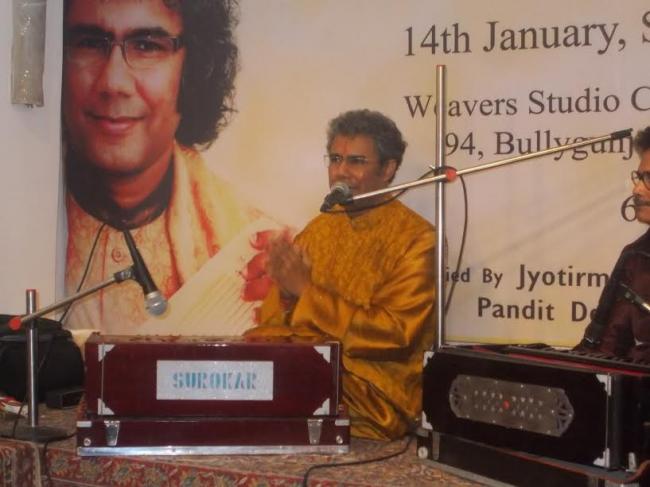 According to Ghosh, Haveli Sangeet faded away with the passage of time, being sung only in few temples of North India. But Sangeet Martand Pandit Jasraj saw to the revival of this spiritually rich music and re-introduced it as a genre. The tradition is being ably carried forward by his disciples.
On being asked, that why Ghosh chose Haveli music for his research out of so many other classical forms of music, he said: ”Belonging to Mewati Gharana and being a disciple of Pandit Jasraj, who very minutely researched Vaishnava literature and built a strong genre on Haveli Sangeet, it is my obvious duty to carry forward the tradition and hand it down to the successive generations.”
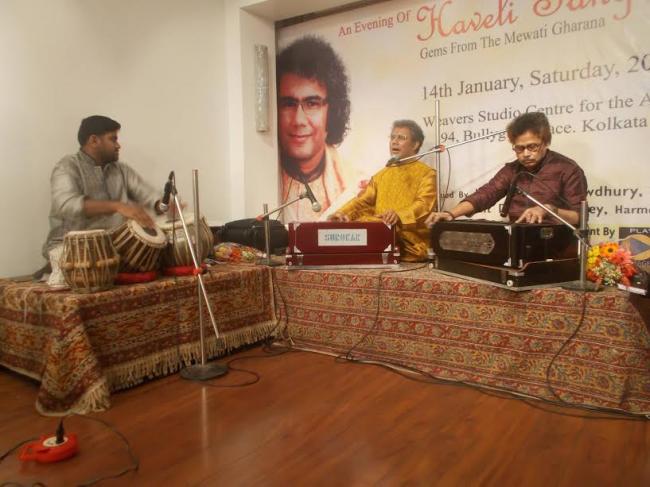
At the concert, Suman Ghosh was accompanied by Jyotirmoy Roychowdhury on tabla and Debaprasad Dey on Harmonium.
(Reporting by Aninnya Sarkar)
Support Our Journalism
We cannot do without you.. your contribution supports unbiased journalism
IBNS is not driven by any ism- not wokeism, not racism, not skewed secularism, not hyper right-wing or left liberal ideals, nor by any hardline religious beliefs or hyper nationalism. We want to serve you good old objective news, as they are. We do not judge or preach. We let people decide for themselves. We only try to present factual and well-sourced news.
Support objective journalism for a small contribution.