Gen Z protests impact Modi wave? NDA still dominates, but BJP loses ground, Congress gains: Survey
New Delhi/IBNS: Prime Minister Narendra Modi's Bharatiya Janata Party (BJP) is likely to continue dominating the Indian political landscape despite a decline in its projected seat share following the recent Gen Z protests, according to the latest India Today-CVoter Mood of the Nation survey.
The survey has projected that the BJP-led National Democratic Alliance (NDA) would win 326 seats if Lok Sabha elections were held in August 2026, while the Congress is expected to improve its tally compared to the previous survey conducted in January.
NDA projected to win 326 seats
The NDA's projected tally, however, marks a decline from the January survey, which had predicted that the ruling alliance would secure 352 seats.
The BJP alone is projected to win 261 seats, down from the 287 seats predicted for the party in the previous survey.
The BJP is currently in its third consecutive term at the Centre. In the 2024 Lok Sabha elections, the party won 240 seats, falling 32 short of the 272-seat mark required for a simple majority.
It subsequently formed the government with the support of its NDA allies.
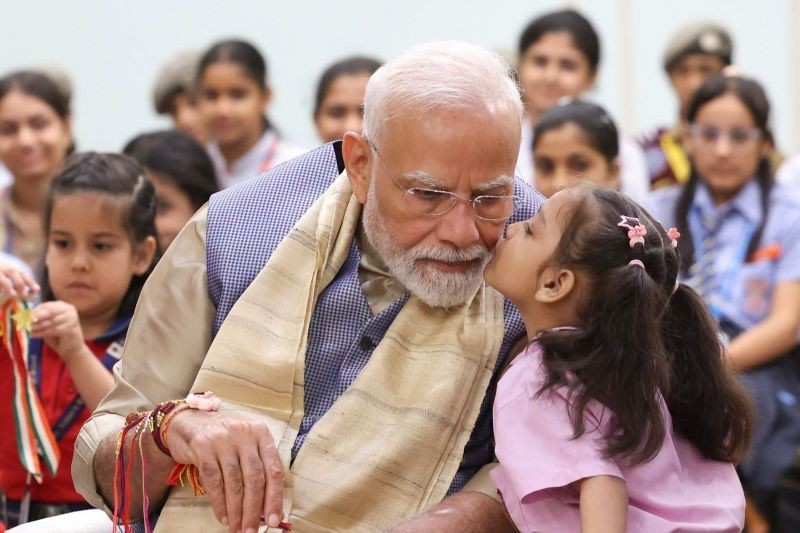
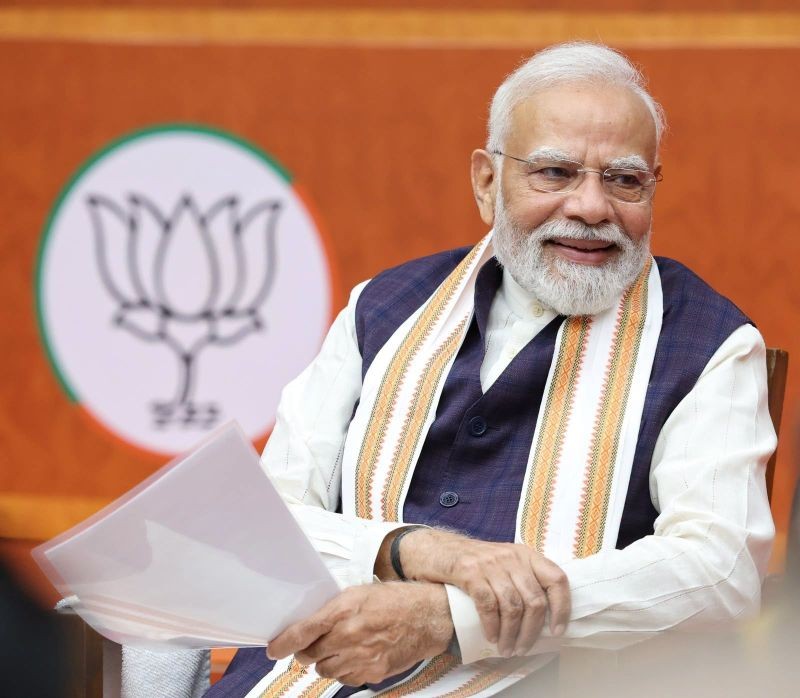 PM Modi likely to return to power if elections were held in August 2026. Photo: Narendra Modi/Facebook
Congress projected to make gains
The latest survey has projected a significant improvement in the Congress' tally.
According to the August 2026 findings, the Congress is expected to secure 106 seats, up from the 80 seats projected for the party in the January survey.
However, despite the Congress' projected gains, the overall seat share of the INDIA bloc remains considerably below its performance in the 2024 Lok Sabha elections.
INDIA bloc projected at 185 seats
The combined strength of the opposition parties belonging to the INDIA bloc has been projected at 185 seats in the latest survey.
This is only marginally higher than the 182 seats projected for the bloc in the January survey, but significantly lower than the 234 seats won collectively by the opposition alliance and its constituents in the 2024 Lok Sabha elections.
Meanwhile, parties that are not aligned with either the NDA or the INDIA bloc are projected to win 107 seats, unchanged from the January survey.
The findings come amid heightened political activity following the recent Gen Z protests and indicate that, despite some erosion in its projected numbers, the NDA continues to maintain a clear advantage over the opposition.
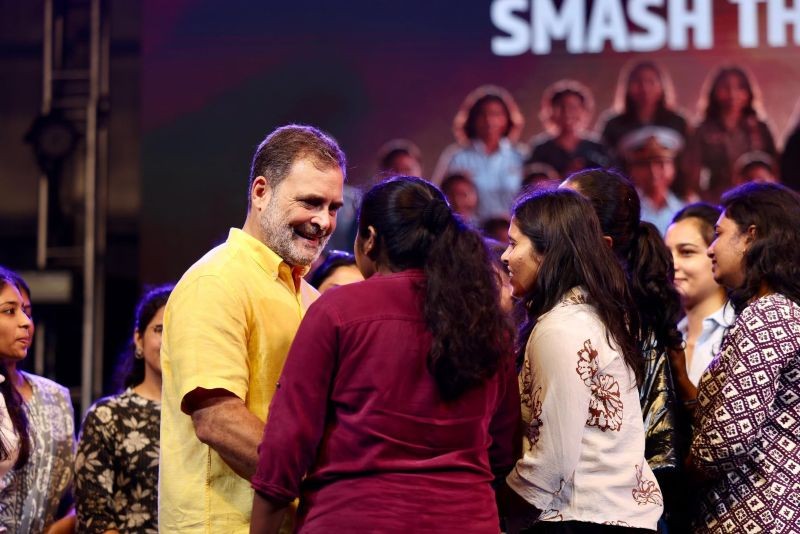 Lok Sabha Leader of Opposition and Congress MP Rahul Gandhi during a youth event. Photo: Rahul Gandhi/Facebook
Possible reasons for the shift
1. Gen Z protests may have created an anti-incumbency ripple
The most obvious factor is the recent Gen Z protests. If younger voters, particularly first-time voters and urban youth, expressed dissatisfaction with the government, this could explain part of the BJP's projected decline from 287 to 261 seats. The protests may have provided a broader political outlet for frustrations over jobs, education, governance and economic opportunities.
2. Youth dissatisfaction could disproportionately hurt the BJP
The BJP's electoral strength has traditionally benefited from strong support among younger voters in several elections. A visible youth-led protest movement could therefore have an outsized impact on its projected numbers, particularly in urban and semi-urban constituencies.
However, this does not automatically translate into Congress gains. Young voters could also move towards regional parties or non-NDA/non-INDIA options.
3. Congress appears to be benefiting from opposition consolidation
The Congress projection rising from 80 to 106 seats is significant. One possible explanation is that the party has managed to consolidate some of the anti-BJP vote since January.
But there is an interesting contradiction: Congress gains 26 seats, while the INDIA bloc gains only 3 overall (182 to 185). That suggests Congress may be gaining at the expense of some other INDIA constituents rather than the bloc simply expanding its overall support.
4. Regional parties could be losing ground to Congress
This is perhaps one of the most important points hidden behind the headline numbers.
If Congress rises by 26 seats while the INDIA bloc rises by only 3, some INDIA allies may be projected to lose seats. That could indicate a redistribution of opposition votes within the INDIA bloc, rather than a dramatic nationwide shift from NDA to INDIA.
5. The 2024 election result may be influencing voter perceptions
The BJP won 240 seats in 2024, forcing it to rely on NDA allies to form the government. The August 2026 projection of 261 seats is actually higher than its real 2024 tally.
So while the BJP's projection has fallen sharply from January's 287, it is still projected to perform better than its actual 2024 result. This is important context: the survey indicates erosion in the BJP's projected dominance, not necessarily a collapse.
6. The NDA remains considerably stronger than the opposition
The NDA's 326 seats versus INDIA's 185 represents a 141-seat gap. Therefore, even if there has been some anti-incumbency movement, it hasn't translated into anything resembling an opposition takeover.
This could suggest that voters dissatisfied with the BJP are not uniformly transferring their support to the opposition.
7. Modi's personal popularity may be cushioning the BJP
Even amid dissatisfaction with the government or specific policies, Narendra Modi's personal political appeal can continue to benefit the BJP-led alliance. Voters can distinguish between dissatisfaction with particular issues and their broader preference for Modi as prime minister.
That could partly explain why the NDA remains comfortably ahead despite the BJP's projected decline.
8. The protests may have changed the political conversation without completely changing voter preferences
This is probably the safest interpretation. A major protest movement can generate headlines, affect perceptions of the government and energise opposition supporters without necessarily producing a wholesale electoral realignment.
Support Our Journalism
We cannot do without you.. your contribution supports unbiased journalism
IBNS is not driven by any ism- not wokeism, not racism, not skewed secularism, not hyper right-wing or left liberal ideals, nor by any hardline religious beliefs or hyper nationalism. We want to serve you good old objective news, as they are. We do not judge or preach. We let people decide for themselves. We only try to present factual and well-sourced news.
Support objective journalism for a small contribution.