India’s May 10 airstrikes hit deep into Pakistan, destroyed SAAB-2000, F-16s and key defence assets: Report
New Delhi: Indian Air Force (IAF) strikes on May 10 penetrated deep into Pakistani territory, destroying several key military assets, including a high-value SAAB-2000 airborne early warning aircraft located 315 kilometres inside Pakistan, according to a Hindustan Times report quoting Indian officials.
The cross-border offensive, dubbed Operation Sindoor, also brought down a Pakistani C-130J military transport aircraft, two F-16 jets, and a JF-17 fighter, both in air combat and on the ground.
These strikes were carried out with SCALP and BrahMos missiles launched from Rafale and Su-30MKI fighter jets.
India’s airstrikes were launched in retaliation to earlier tensions, as Pakistan initiated its own military action, Operation Bunyan al-Marsoos, beginning at 1 am on May 10 with plans to target Indian airbases over 48 hours.
However, that offensive ended within eight hours after India’s response disrupted command structures and prompted Islamabad to request a ceasefire via the United States by 9:30 am.
One of the first Indian missile hits disabled Pakistan’s northern command and control node at Nur Khan Airbase in Chaklala.
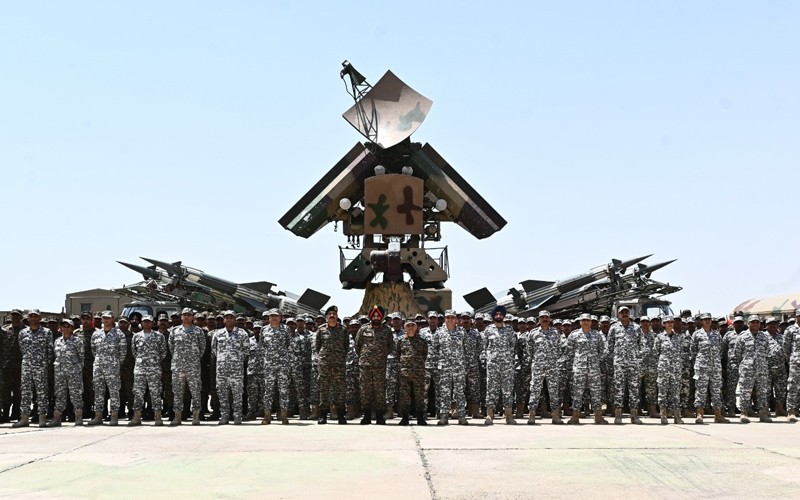
The final wave of strikes targeted the Jacobabad and Bholari airbases. India’s S-400 air defence system stationed in Adampur was activated 11 times during the operation, with at least one confirmed hit on the SAAB-2000.
In addition to the aerial assault, Indian missiles destroyed Pakistan’s Chinese-supplied LY-80 air defence system in Lahore using a HARPY kamikaze drone, and an HQ-9 SAM system — a Chinese variant of the Russian S-300 — in Malir, Karachi.
Just days earlier, on May 7, Indian forces had targeted nine terror camps using coordinated strikes by the Army, Navy, and Air Force.
Seven camps were hit with loitering munitions, while precision SCALP and BrahMos strikes were used on high-value sites in Muridke and Bahawalpur.
The Indian Navy, positioned 260 nautical miles off the Makran Coast, was ready to strike Karachi Naval Port on the morning of May 10.
However, the same day, in the afternoon, Pakistan’s Director General of Military Operations reached out to India for a ceasefire agreement.
Support Our Journalism
We cannot do without you.. your contribution supports unbiased journalism
IBNS is not driven by any ism- not wokeism, not racism, not skewed secularism, not hyper right-wing or left liberal ideals, nor by any hardline religious beliefs or hyper nationalism. We want to serve you good old objective news, as they are. We do not judge or preach. We let people decide for themselves. We only try to present factual and well-sourced news.
Support objective journalism for a small contribution.