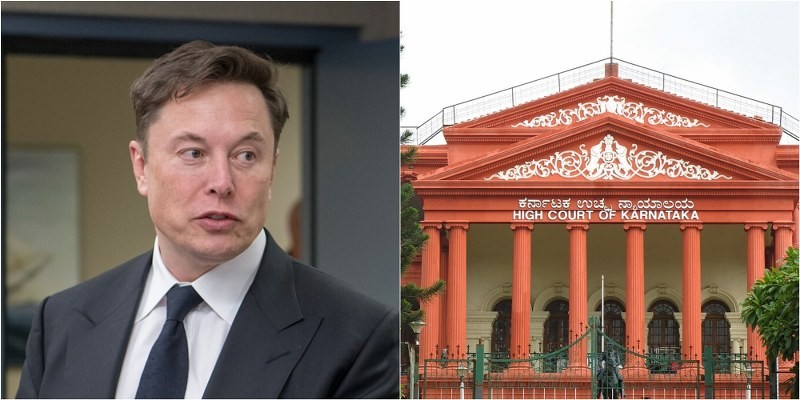
Karnataka HC dismisses X Corp’s challenge to govt’s content-blocking authority
Bengaluru: The Karnataka High Court on Wednesday rejected a petition by Elon Musk’s X Corp, formerly known as Twitter, which sought to challenge the authority of government officials to issue information blocking orders.
The court underscored the necessity of regulating social media, particularly to prevent offences against women.
“Social media needs to be regulated, and its regulation is a must, more so in cases of offences against women, in particular, failing which the right to dignity, as ordained in the Constitution of a citizen gets railroaded,” the court nored, reported NDTV.
X Corp had argued that Section 79(3)(b) of the Information Technology Act, 2000, did not empower officials to issue blocking orders.
Instead, the company maintained that only Section 69A, read with the IT (Procedure and Safeguards for Blocking Access of Information by Public) Rules, 2009, offered the proper legal framework.
The platform had also sought to prevent ministries from taking coercive action based on Section 79(3)(b) and requested interim protection from joining the government’s Sahyog portal.
After months of hearings, which concluded in late July, the court delivered its order, rejecting X Corp’s claims.
Justice M. Nagaprasanna emphasised that regulation of information and communication has long been a matter of governance, regardless of medium, stating: “Information and communication, its spread or speed has never been left unchecked and unregulated. It has always been a subject matter of regulation.”
The court further cautioned against applying American judicial reasoning to the Indian context, observing that the U.S. approach to free speech cannot simply be transplanted onto India’s constitutional framework.
The Centre had opposed X Corp’s plea, arguing that unlawful or illegal content does not enjoy the same constitutional protections as legitimate
Support Our Journalism
We cannot do without you.. your contribution supports unbiased journalism
IBNS is not driven by any ism- not wokeism, not racism, not skewed secularism, not hyper right-wing or left liberal ideals, nor by any hardline religious beliefs or hyper nationalism. We want to serve you good old objective news, as they are. We do not judge or preach. We let people decide for themselves. We only try to present factual and well-sourced news.
Support objective journalism for a small contribution.