 Private Property
Not all private properties are community resources that govt can take over: Supreme Court
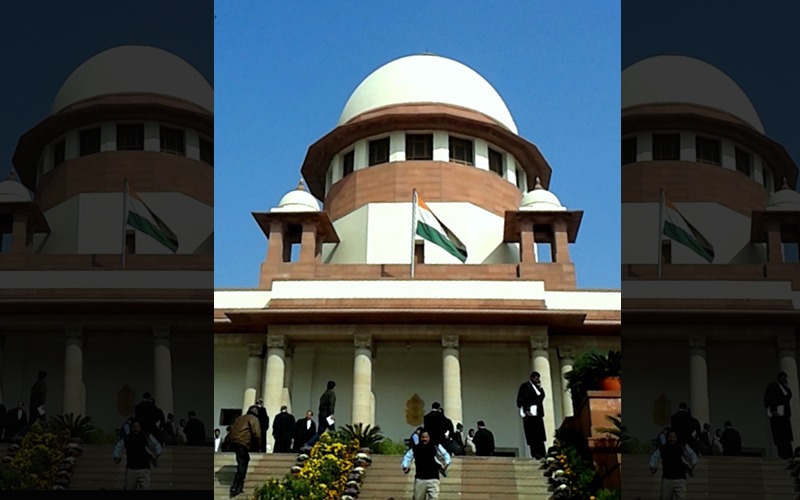
New Delhi/IBNS: In a landmark judgement, the Supreme Court on Tuesday ruled not all private properties can be considered community resources that the government can take over, media reports said.
A nine-judge bench led by Chief Justice of India DY Chandrachud delivered the verdict with 8:1 majority. Justice Sudhanshu Dhulia dissented.
The top court held that some private properties come under Article 39(b) as they are material and belong to the community.
CJI Chandrachud pronounced the majority verdict as quoted by Live Law, "The phrase may include privately owned resources....Not every resource owned by an individual can be considered a material resource of the community merely because it meets the qualifier of material needs."
The court said whether a resource can be considered as" material resource of community" should be based on its nature, characteristics and the impact on the community.
The case is related to Article 31C of the Constitution that protects laws that ensure the distribution of the community's resources to serve the common good, and prevents the concentration of wealth and the means of production.
Article 39B states that the State shall make its policy to ensure that the ownership and control of the material resources of the community are distributed so that the common good is subserved.
CJI Chandrachud added, as quoted by NDTV, "Does material resources of a community used in 39B include privately owned resources? Theoretically, the answer is yes, the phrase may include privately owned resources. However, this court is unable to subscribe itself to the minority view of Justice Iyer in Ranganath Reddy."
"We hold that not every resource owned by an individual can be considered a material resource of a community only because it meets the qualifier of material needs," he added.
The Supreme Court said Justice Krishna Iyer's 1978 ruling is "unsustainable".
Justice Iyer's ruling advanced socialist economic ideology and so it is unsustainable.
Support Our Journalism
We cannot do without you.. your contribution supports unbiased journalism
IBNS is not driven by any ism- not wokeism, not racism, not skewed secularism, not hyper right-wing or left liberal ideals, nor by any hardline religious beliefs or hyper nationalism. We want to serve you good old objective news, as they are. We do not judge or preach. We let people decide for themselves. We only try to present factual and well-sourced news.
Support objective journalism for a small contribution.