 India-Oman
Over 7,000 documents of Indian diaspora digitised in Oman
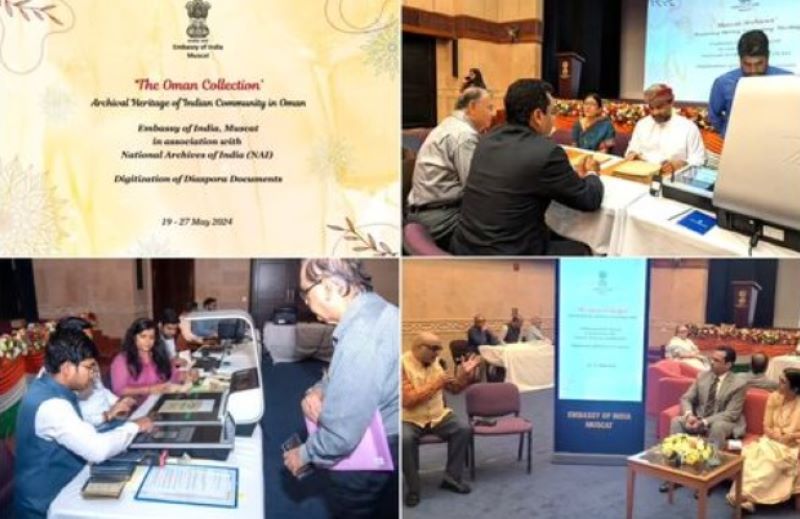
The Embassy of India Muscat, in association with the National Archives of India (NAI), has successfully conducted an initiative to archive 7,000 historical documents of the Indian diaspora living in Oman.
‘The Oman Collection – Archival Heritage of the Indian Community in Oman’ - a special digitization and oral history project was conducted at the Embassy of India premises in Muscat from May 19-27, 2024 and saw enthusiastic participation of 32 prominent Indian families hailing from the state of Gujarat in India, whose presence in Oman spans several generations and dates back to 250 years.
"This was the first overseas project of the NAI for digitizing and archiving diaspora documents, marking an important step in preserving the history and heritage of the Indian community abroad," the Indian Embassy in Oman posted in a statement.
Indian Community in Oman
Oman is home to nearly 700,000 Indians.
India and the Sultanate of Oman share a rich tapestry of historical and cultural connections that go back 5000 years.
In recent times, several merchant families mainly from Mandvi, Surat and other parts of Gujarat have been resident in Sur, Muttrah and Muscat since the late 18th century CE.
"They are an integral part of the Omani society, many having become Omani citizens, but also maintain strong ties with their motherland India," the statement said.
Record number of documents digitized
Over 7000 documents in English, Arabic, Gujarati, and Hindi languages from the private collections of the old Indian merchant families were scanned and digitized under this project.
The oldest digitized document dates back to 1838, while a large majority date from late 19th and early 20th centuries.
The wide variety of documents digitized include personal diaries, account books, ledgers, telegrams, trade invoices, passports, citations, letters & correspondences, photographs etc that shed a fascinating light into the lives and contributions of the Indian community in the Sultanate of Oman.
These documents collectively constitute a vivid narration of the history of the Indian community in Oman, including their cultural practices, social activities, trade and commerce, as well as their contributions to and integration into Omani society, and the preservation of Indian traditions abroad.
The digitized documents will be archived and uploaded on ‘Abhilekh Patal’, the digital portal of the NAI, making these documents available to researchers and the wider public.
Support Our Journalism
We cannot do without you.. your contribution supports unbiased journalism
IBNS is not driven by any ism- not wokeism, not racism, not skewed secularism, not hyper right-wing or left liberal ideals, nor by any hardline religious beliefs or hyper nationalism. We want to serve you good old objective news, as they are. We do not judge or preach. We let people decide for themselves. We only try to present factual and well-sourced news.
Support objective journalism for a small contribution.