 Kashmir
UNGA president says Kashmir status should not be changed; acknowledges Simla agreement
United Nations General Assembly President Volkan Bozkir has said that the status of Jammu and Kashmir should not be changed while acknowledging the 1972 Simla Agreement between India and Pakistan making it a bilateral issue.
“I call on all parties to refrain from taking steps that could affect the status of Jammu and Kashmir,” he said at a news conference here on Tuesday.
“I support dialogue and diplomacy, and I encourage both Pakistan and India, neighbours, to resolve this dispute through peaceful means,” he said.
While answering a reporter's question about Kashmir, he said that he would repeat the statement he made last August about it at a news conference when he visited Pakistan as the president-elect.
He recalled that he had said, “The position of the United Nations on Jammu and Kashmir is governed by the UN Charter and applicable Security Council resolutions. And I also recall India and Pakistan’s Simla Agreement of 1972, which states that the final status of Jammu and Kashmir is to be settled by peaceful means in accordance with the UN Charter.
“So there again, I mentioned that I call on all parties to refrain from taking steps that could affect the status of Jammu and Kashmir.”
In the Simla agreement signed in the aftermath of the Bangladesh War by Indira Gandhi, who was the prime minister of India, and Zulfikar Ali Bhutto, who at that time held the post of president of Pakistan, they agreed that their countries would resolve disputes bilaterally, thus ruling out third party intervention.
The Security Council's Resolution 47 adopted in 1948 requires Pakistan withdraw its personnel and nationals from Kashmir.
Bozkir did not mention either country but asked “all parties” to refrain from changing the status of Kashmir.
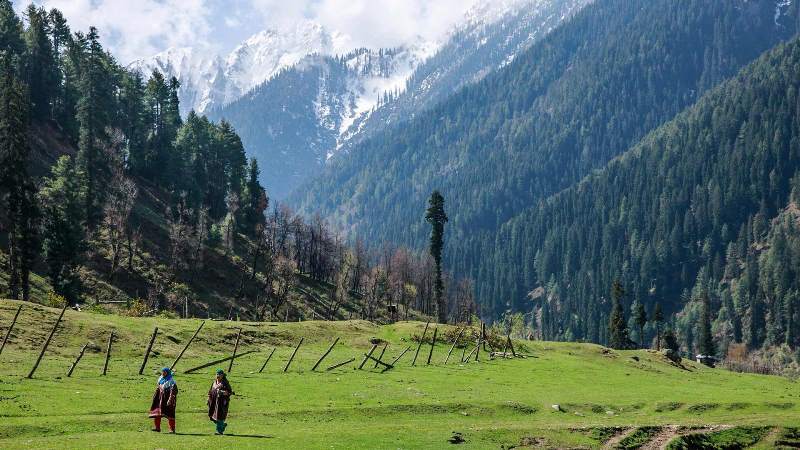
While India abrogated in 2019 the Article 370 of the Indian Constitution giving Kashmir a special status, Pakistan Prime Minister Imran Khan announced last year that he would make the Gilgit-Baltistan area of Jammu and Kashmir under its occupation a province of Pakistan.
Bozkir said that he was postponing a visit to India that had been scheduled as part of his trip to South Asia because of “an unexpected situation” – reference to the COVID-19 surge – and would visit Pakistan and Bangladesh as planned.
“But I will absolutely make sure that I'll go to India as well,” he said.
(South Asia Monitor/IBNS)
Support Our Journalism
We cannot do without you.. your contribution supports unbiased journalism
IBNS is not driven by any ism- not wokeism, not racism, not skewed secularism, not hyper right-wing or left liberal ideals, nor by any hardline religious beliefs or hyper nationalism. We want to serve you good old objective news, as they are. We do not judge or preach. We let people decide for themselves. We only try to present factual and well-sourced news.