


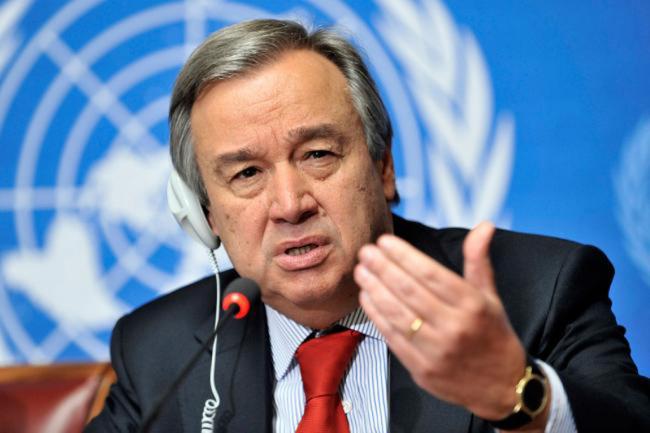
‘World has failed’ victims of genocide too often: Guterres
New York/IBNS: Too often, “the world has failed” populations under threat of genocide, crimes against humanity, war crimes and ethnic cleansing, Secretary-General António Guterres said in his message for the International Day of Commemoration and Dignity of the Victims of Genocide on Monday.
Marking the day at a round table event, Chef de Cabinet Maria Luiza Viotti spoke on behalf of the UN chief, saying that, genocide remains “a scourge…causing great suffering”.
“On this day we remember and pay tribute to the victims of the horrendous crime of genocide” she stated, encouraging all to reflect on what can be done to uphold the responsibilities set out in the Genocide Convention.
She maintained that the devastating impact on the victims, communities and society as a whole “can take generations to overcome and heal”.
“Acting quickly to early warning signs and investing in early prevention can save lives and prevent attempts to destroy vulnerable groups, in whole or in part”, Ms. Viotti said.
Pointing to people facing systematic discrimination or becoming targets of violence simply because of their identity, she stressed that “we must act, both to defend those at immediate risk and those who could be in jeopardy in the future”.
“By promoting a culture of peace and non‑violence that includes respect for diversity and non‑discrimination, we can build societies that are resilient to the risk of genocide.”
The imperative to prevent genocide is not only moral, it is a legal obligation set out in the first article of the Convention, putting the prevention of genocide in the hands of each State. But civil society, religious leaders, media outlets and teachers also play an important role.
“Across the world, we are seeing an alarming surge in xenophobia, racism, antisemitism, anti‑Muslim hatred and attacks against Christians, often fed by nationalist and populist ideologies”, she said.
Underscoring the importance of investing in prevention, Ms. Viotti spoke about two UN initiatives, namely the UN Strategy and Plan of Action on Hate Speech and the Action Plan for the Protection of Religious Sites, explaining that they “aim to galvanize our work and to encourage contributions from these partners, working hand in hand with States”.
“It is important on this day to recognize that the Holocaust did not start with the gas chambers, nor did the genocides in Rwanda, Srebrenica or Cambodia start with mass killings” she flagged. “They were all preceded by discrimination, hate speech, incitement to violence and the dehumanization of ‘the other’”.
In conclusion, the Chef de Cabinet encouraged everyone to “pay tribute to the victims of this egregious crime by remembering their suffering and by recommitting to equality and prevention, not only in our words but in our actions”.
Education is ‘key’
Special Adviser on the Prevention of Genocide, Adama Dieng, opened the event with a focus “on ways in which we can all contribute to the prevention of genocide", noting that religious leaders have a “particularly important role”.
“When they promote messages of peace and inclusion, they are actively contributing to prevention”, he indicated.
Discussions examined prevention tools, such as education programmes, which were seen as key to addressing the root causes of intolerance and discrimination, prevention of crimes against humanity and genocides.
The UN General Assembly designated 9 December as the commemoration day in 2015.
Photo caption and credit:
UN Photo/Violaine Martin
Marking the 1994 Genocide against the Tutsi in Rwanda (2019).
Support Our Journalism
We cannot do without you.. your contribution supports unbiased journalism
IBNS is not driven by any ism- not wokeism, not racism, not skewed secularism, not hyper right-wing or left liberal ideals, nor by any hardline religious beliefs or hyper nationalism. We want to serve you good old objective news, as they are. We do not judge or preach. We let people decide for themselves. We only try to present factual and well-sourced news.
Support objective journalism for a small contribution.


