


At this ‘critical moment’, UN chief urges anti-corruption conference to adopt united front
New York/IBNS: As we enter the Decade of Action to deliver the Sustainable Development Goals (SDGs), the world must “unite against corruption” to stop precious resources from being drained by illicit financial flows, an international conference on the issue heard on Monday in Abu Dhabi.
“You meet at a critical moment”, said Yury Fedotov, Executive Director of the UN Office on Drugs and Crime (UNODC), on behalf of Secretary-General António Guterres, addressing the UN Convention Against Corruption in the capital of the United Arab Emirates.
The world's primary anti-corruption summit began with a call to advance efforts to prevent and combat corruption to achieve the SDGs: “Through corrupt practices, trillions of dollars are diverted every year from schools, hospitals and other essential services and infrastructure”, spelled out Mr. Fedetov, underscoring that “action against corruption…is crucial to reducing inequalities, promoting inclusive growth and addressing the climate crisis”.
The anti-corruption chief maintained that fighting corruption can prevent criminal traffickers from “exploiting human misery and plundering natural resources”.
Looking ahead to 2021, when the first-ever General Assembly Special Session on ending corruption will convene, he urged everyone to make the fight a “top priority”.
Loopholes that allow financial assets to illegally cross borders, and public funds to be laundered and embezzled, help fuel large-scale corruption.
Fedotov stressed that “international cooperation is fundamental”.
Measures to fight corruption:
Strengthen law enforcement and criminal justice.
Partner with the financial sector and businesses to increase accountability and transparency.
Engage more with civil society.
Support young people in their demand for accountability, justice and a fair future.
As corruption threatens the well-being of societies, the future of children and the health of the planet, “it must be fought by all, for all”, he concluded.
Sinister enabler
Preventing and combatting corruption offers “a key to unlock progress towards ending poverty and inequalities, protecting health and planet, and strengthening justice and the rule of law”, Fedotov said in his own address, describing it as “the sinister enabler of some of the worst problems we face”.
He added that “by preventing and curbing corruption, we can nip corruption's contribution to instability in the bud”, stopping it “from prolonging conflict and spoiling peace”.
The top UN official argued that the international convention “offers a genuine chance to agree new approaches and seek innovative solutions to corruption threats facing all our countries”.
In what he acknowledged to be the last time he addressed the Conference as UNODC Executive Director, he concluded by saying, “we are on the cusp of a new decade, with renewed hope that together we can win this fight”.
About the Convention
With 186 parties, the Convention against Corruption, is the only legally binding universal anti-corruption instrument.
It came into force in December 2005 and has been ratified by most UN Member States, with the newest being Samoa, Equatorial Guinea and Chad in 2018.
The Convention covers various forms of corruption, including bribery, trading in influence, abuse of functions, as well as corruption in the private sector.
Under the Convention, States are legally obliged to prevent and criminalize corruption; promote international cooperation; recover and return stolen assets; and improve technical assistance and information exchange in both the private and public sectors.
Every two years, its States parties meet to review implementation and discuss how corruption can better be tackled.
In addition to reviewing its core mandates, the week-long eighth session will deliberate on preparations for the 2021 Special Session next year in New York
Photo caption and credit:
World Bank/Chhor Sokunthea
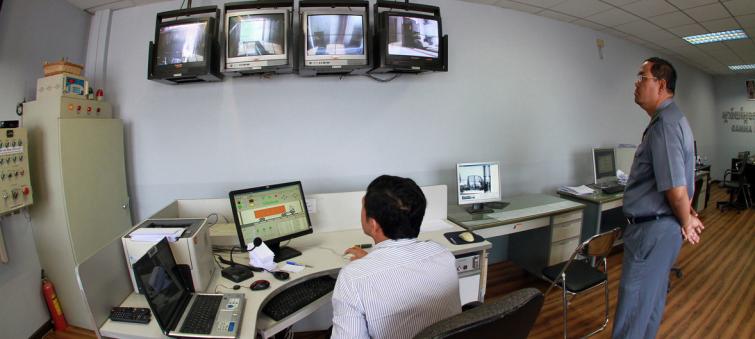
A gamma ray scanner station of the Sihanoukville Port in Cambodia is being used to detect illegal items in container vans.
Support Our Journalism
We cannot do without you.. your contribution supports unbiased journalism
IBNS is not driven by any ism- not wokeism, not racism, not skewed secularism, not hyper right-wing or left liberal ideals, nor by any hardline religious beliefs or hyper nationalism. We want to serve you good old objective news, as they are. We do not judge or preach. We let people decide for themselves. We only try to present factual and well-sourced news.
Support objective journalism for a small contribution.


