


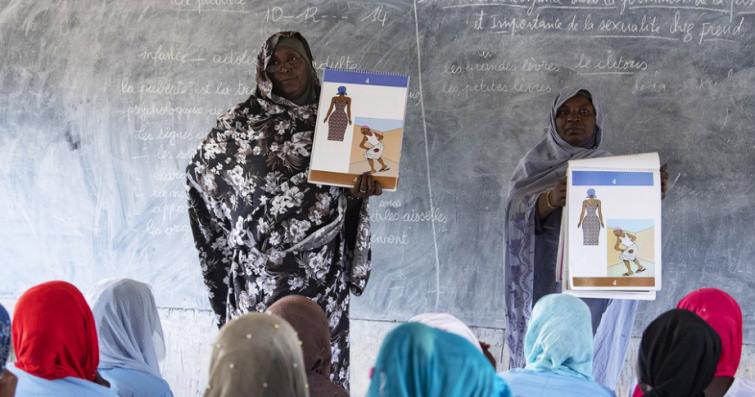
Break taboo around menstruation, act to end ‘disempowering’ discrimination, say UN experts
New York, Mar 6 (IBNS): A group of seven United Nations rights experts issued a clarion call on Tuesday to break the taboo around menstrual health for women and girls that persists in many parts of the world and take concrete action to end “disempowering” discrimination.
“Persistent harmful socio-cultural norms, stigma, misconceptions and taboos around menstruation, continue to lead to exclusion and discrimination of women and girls”, said the independent human rights experts, ahead of International Women’s Day on 8 March.
Despite recent campaigns by women to challenge menstruation taboos and increasing attention to the issue of menstruation in the media, research, policy-making, and cultural discussion, they underscored the need for “more efforts to address challenges faced by women and girls”.
In some countries, said the experts, menstruating women continue to be viewed as “contaminated and impure”, often restricted and forbidden to engage in activities like touching water or cooking, attending religious and cultural ceremonies or other community activities.
Menstruating women and girls can even be banished to outside sheds according to custom, where they suffer in cold and isolation, often at risk of life-threatening illness and attack.
“The patriarchal control exerted to constraint women’s behavior and mobility during menstruation undermines their agency and equality” the experts underscored. “When combined with the stigma and shame that women and girls are made to feel during that time, it is truly disempowering.”
Many live without any privacy to wash, or access to safe, clean toilets or even separate sanitation facilities at work, or in the classroom, or when they’re visiting other public institutions.
Additionally, sanitary hygiene products are often inaccessible or too costly, particularly for those living in poverty and crisis situations As States’ policies rarely address these issues. Vulnerable women can be forced to use improvised, unhygienic materials that may cause leaking and infection, putting their health at serious risk.
“Stigma around menstruation has significant health impacts on women’s and girls’ health”, the experts highlighted, pointing out that some providers are prone to dismiss serious issues related to menstruation, citing that it can take several years to diagnose endometriosis and dysmenorrhea – painful disorders that can also affect fertility.
Due to stigma and a lack of sexual education, menstruation knowledge remains limited leaving many girls with negative and ambivalent feelings and experiencing psycho-social stress, which also impacts their ability to learn, said the experts.
“The stigma and shame generated by stereotypes around menstruation have severe impacts on all aspects of women’s and girls’ human rights
And the situation spirals further in educational institutions and workplaces as a lack of accommodation for menstruating women and girls’ health, such as allowing rest periods, “has an impact on school and job attendance, and thus affects women’s economic participation and advancement, undermining gender equality”, added the experts.In addition, some countries link the first menstruation cycle to being ready to marry, increasing the risks of adolescent pregnancy, limiting girls’ education and work opportunities.
Further progress needed
“More needs to be done globally to address the menstrual health needs of women and girls and transform the systems, norms and attitudes to support women’s and girls’ menstrual health and well-being” the experts argued, stating that “a global shift in cultures” is needed to respect menstruation, acknowledge it as a human rights issue and “eliminate discrimination, shame and stigma too often attached to it”.
Image Credit: UN Photo/Eskinder Debebe
Support Our Journalism
We cannot do without you.. your contribution supports unbiased journalism
IBNS is not driven by any ism- not wokeism, not racism, not skewed secularism, not hyper right-wing or left liberal ideals, nor by any hardline religious beliefs or hyper nationalism. We want to serve you good old objective news, as they are. We do not judge or preach. We let people decide for themselves. We only try to present factual and well-sourced news.
Support objective journalism for a small contribution.


