


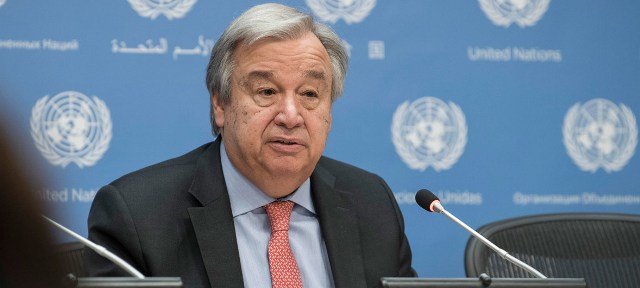
Caspian Sea deal an invaluable step towards easing regional tensions, says UN Chief
New York, Aug 15 (IBNS): António Guterres, the UN Secretary-General, has welcomed the historic signing of the Convention on the Legal Status of the Caspian Sea, which took place on Sunday, marked by a ceremony which brought together the leaders of the five countries bordering its coastline.
The region has been a subject of dispute, ever since the dissolution of the Soviet Union in 1991. Up until that time, the Caspian - the largest enclosed body of water on earth - was shared by just two states, the USSR and Iran.
Today, Iran has to share it with Russia, Kazakhstan, Azerbaijan and Turkmenistan, all of which have different, and divergent, interests as far as the sea is concerned. Furthermore, one major sticking point has been whether to define the Caspian as a lake (which would mean it is divided equally between all five countries), or a sea (and therefore governed by the United Nations Law of the Sea).
A UN Spokesperson said that the Secretary-General hailed the document as a demonstration of the importance of regional cooperation, vital for maintaining international peace and security, and congratulated the five signatory countries for their landmark achievement.
The spokesperson added that the Secretary-General believes the Convention should prove invaluable in regulating a wide range of longstanding issues among the Caspian Sea littoral States, and is a significant step in the easing of regional tensions.
Whilst many issues are a long way from being resolved, the accord reportedly takes a compromise approach, dividing the seabed into territorial zones (as is the norm with a lake) and the surface as international water (as is the norm for an officially designated sea). It is believed that further talks will be needed to deal with a number of outstanding issues.
Support Our Journalism
We cannot do without you.. your contribution supports unbiased journalism
IBNS is not driven by any ism- not wokeism, not racism, not skewed secularism, not hyper right-wing or left liberal ideals, nor by any hardline religious beliefs or hyper nationalism. We want to serve you good old objective news, as they are. We do not judge or preach. We let people decide for themselves. We only try to present factual and well-sourced news.
Support objective journalism for a small contribution.


