


 School Opening
COVID-19: Prioritize school meals in plans to reopen classrooms, UN report says
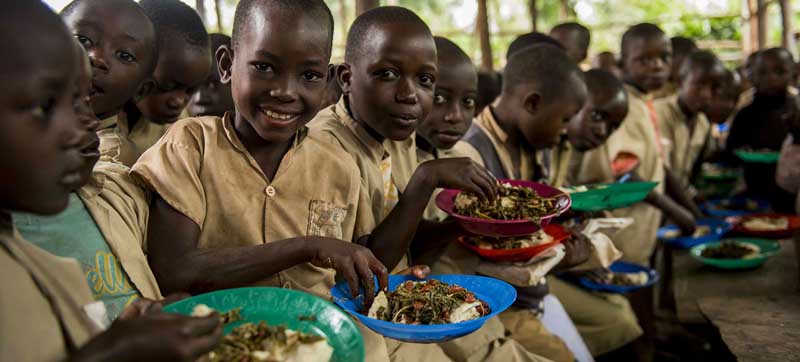
New York: Although school feeding programmes are a lifeline for millions of boys and girls, nearly 40 billion in-school meals have been missed during the COVID-19 pandemic, according to a report published on Thursday by the UN Children’s Fund (UNICEF) Office of Research: Inocenti, and the World Food Programme (WFP).
The study found 370 million children worldwide, many of whom rely on school meals as a key source of their daily nutrition, have missed 40 per cent of in-school meals, on average, since the crisis began.
The authors warned this looming nutrition crisis could put a whole generation at risk.
Reliable nutrition
“Despite clear evidence that schools are not primary drivers of COVID-19 infections, millions of children are facing school closures around the world”, said Henrietta Fore, UNICEF Executive Director.
“Children who depend on schools for their daily meals are not only losing out on an education but also on a reliable source of nutrition. As we respond to the COVID-19 pandemic and await vaccine distribution, we must prioritize the reopening of schools and take action to make them as safe as possible, including through renewed investments in proven infection prevention measures like clean water and soap in every school around the world.”
Some 24 million children are at risk of dropping out of school due to the pandemic, the report said, which would reverse global progress made on school enrollment.
School feeding programmes can provide incentives for the most vulnerable students to return to the classroom, especially girls and those from the poorest and most marginalized communities.
Jeopardizing the future
“Missing out on nutritious school meals is jeopardizing the futures of millions of the world’s poorest children. We risk losing a whole generation”, said David Beasley, the WFP Executive Director.
“We must support governments to safely reopen schools and start feeding these children again. For many, the nutritious meal they get in school is the only food they will receive all day.”
WFP has been supporting governments to adapt their school meals programmes with more than 70 countries delivering take-home rations, cash transfers or food vouchers during school closures.
Additionally, more than 13 million children received WFP school-based support during the first nine months of 2020, compared to 17.3 million the previous year.
Support Our Journalism
We cannot do without you.. your contribution supports unbiased journalism
IBNS is not driven by any ism- not wokeism, not racism, not skewed secularism, not hyper right-wing or left liberal ideals, nor by any hardline religious beliefs or hyper nationalism. We want to serve you good old objective news, as they are. We do not judge or preach. We let people decide for themselves. We only try to present factual and well-sourced news.
Support objective journalism for a small contribution.


