 Europe
Europe: COVID must spark rethink to prioritize ‘human lives’ over economic policies
New York: The devastating impact of COVID-19 serves as a stark reminder that the European Union must “put human lives” above economic policy considerations, that privilege competition between EU Member States, an independent UN human rights expert said on Friday.
Speaking ahead of the EU Porto Social Summit on May 7, Olivier De Schutter, Special Rapporteur on extreme poverty and human rights, pointed out that with over 90 million people and almost 20 million children at risk of poverty or social exclusion in the Union, plans to address it are “insufficiently ambitious”.
The European Pillar of Social Rights Action Plan, commits to reducing that number by 15 million and 5 million, respectively, by 2030.
“It doesn’t come near the pledge of ‘no poverty’ made in Sustainable Development Goal 1 (SDG1)”, he said.
Moreover, there are no consequences for missing the target or government accountability mechanisms to enforce commitments.
“The EU must demand that Member States develop realistic, transparent, and accountable national plans to meet these and other targets”, underscored Mr. De Schutter.
‘Truly strengthen’ resilience
The EU reacted swiftly to the COVID-19 pandemic, including lifting budgetary rules for Member States to spend above legal maximum levels, providing billions in loans and grants, and making proposals to ensure children’s rights and gender equality.
But, the UN expert stressed, more is needed to “truly strengthen social resilience.”
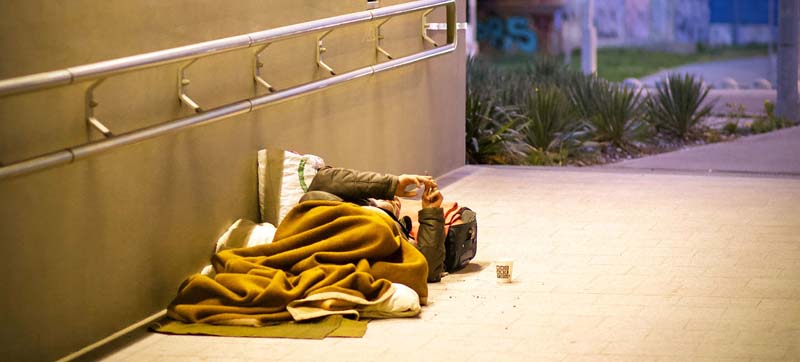
He noted that some 700,000 people sleep on the streets each night, and painted a picture of poverty and social exclusion in the EU faced by 30.1 per cent of people with disabilities, nearly 21 per cent of the general population and 22.5 per cent of the bloc’s children.
Calling these numbers “unacceptable,” the Special Rapporteur urged for measures to alleviate poverty in the context of the COVID-19 pandemic that are “not superseded by blind economic policies” favouring social and tax competition and imposing stringent deficit controls.
Institutionalized pullbacks
Despite being employed, nine million workers remain in poverty because of expanded non-standard forms of employment and low wages, said Mr. De Schutter, calling it an “institutionalized race to the bottom” among Member States, which “in the name of competitiveness” is leading to lower wages and worker protections.
“The EU must address this harmful competition as part of its efforts to fight poverty and protect social rights”, he said.
And since 2009, the bloc’s members had decreased social protection, health and education investments, which left them ill-prepared for the pandemic.
Until very recently the EU itself had recommended many of these budget cuts to ensure compliance with its own budgetary rules, he added.
Although these rules have now been relaxed, the UN expert expressed concern that countries that utilize a new EU recovery fund to increase social investments may, in effect, be punished once the Union’s rules on maximum deficits are reinstated. Stand up for social rights
“This would be a defeat for social rights”, he said. “The EU must use the COVID-19 crisis as an opportunity to rethink its fundamental economic rules".
Mr. De Schutter hoped that the upcoming summit would generate “a broad consensus for an EU-wide anti-poverty strategy that strengthens public services, combats homelessness, addresses in-work poverty, and ensures greater progressivity in taxation”.
Appointed as by the UN Human Rights Council on 1st May 2020, Mr. De Schutter and all other human rights experts are not UN staff and do not receive a salary for their work.
Support Our Journalism
We cannot do without you.. your contribution supports unbiased journalism
IBNS is not driven by any ism- not wokeism, not racism, not skewed secularism, not hyper right-wing or left liberal ideals, nor by any hardline religious beliefs or hyper nationalism. We want to serve you good old objective news, as they are. We do not judge or preach. We let people decide for themselves. We only try to present factual and well-sourced news.
Support objective journalism for a small contribution.