


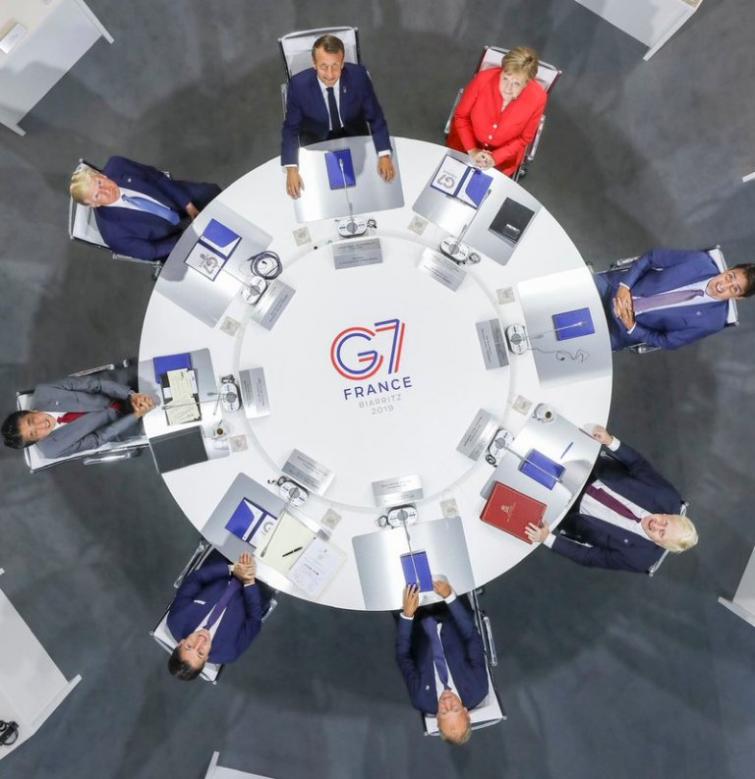
G7 summit instructs Macron to send message to Iran regarding nuclear deal - Reports
Paris, August 25 (Sputnik/UNI) Leaders of G7 countries have tasked French President Emmanuel Macron with sending a message to Tehran about the future of the Joint Comprehensive Plan of Action (JCPOA), also known as the Iran nuclear deal, based on the results of negotiations in Biarritz, local media reported on Sunday.
The issue of the agreement with Iran is one of the most salient during this summit, as the majority of G7 countries, supportive of the JCPOA, are keeping a united front against the United States, which in recent years has consistently advocated for rougher measures against the Islamic Republic.
According to BFMTV channel, citing a source in the Elysee Palace, the G7 summit have instructed the head of French government to send a message to Iran regarding the nuclear deal.
The JCPOA was signed in 2015 by Iran, China, France, Germany, Russia, the United Kingdom, the United States, Germany and the European Union. It required Iran to scale back its nuclear program and severely downgrade its uranium reserves in exchange for sanctions relief. In 2018, the United States abandoned its conciliatory policy on Iran, withdrawing from the JCPOA and hitting Iranian petroleum industries with sanctions, prompting criticism from its allies in Europe.
Earlier this week, President Macron proposed to soften the sanctions or to create a compensation system to improve the living conditions of Iranians, eliciting a positive response from Tehran.
Support Our Journalism
We cannot do without you.. your contribution supports unbiased journalism
IBNS is not driven by any ism- not wokeism, not racism, not skewed secularism, not hyper right-wing or left liberal ideals, nor by any hardline religious beliefs or hyper nationalism. We want to serve you good old objective news, as they are. We do not judge or preach. We let people decide for themselves. We only try to present factual and well-sourced news.
Support objective journalism for a small contribution.


