


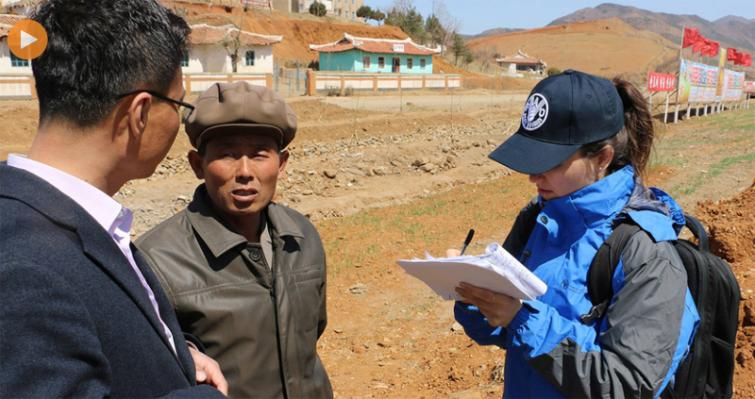
North Korean families facing deep ‘hunger crisis’ after worst harvest in 10 years, UN food assessment shows
New York, May 4 (IBNS): More than 10 million North Koreans are suffering “severe food shortages” after the worst harvest in a decade, according to a United Nations food security assessment released on Friday.
Crop failures due to dry spells, heatwaves and flooding during the growing season, mean that those affected do not have enough food to see them through to the next harvest.
The assessment for the Democratic People’s Republic of Korea (DPRK), as the country is formally known, is based on data gathered by the UN Food and Agriculture Organization (FAO) and the World Food Programme (WFP) who conducted missions to the country last month and in November 2018.
They concluded that the reduced harvest, coupled with increased losses following the harvest, has left the country with a food deficit of 1.36 million metric tonnes, taking into account DPRK’s ability to import food from outside the country.
The aggregate 2018-2019 food crop production is estimated at 4.9 million metric tons, which is the lowest since the 2008-2009 season.
In addition to unfavourable climatic conditions, limited supplies of agricultural inputs, such as fuel, fertilizer and spare parts have had “significant adverse impact” the agencies report.
The report also found worryingly low food consumption levels, limited dietary diversity and families being forced to cut meals, or simply eat less.
A particular concern, is the lack of dietary diversity, which is vital to good nutrition. That’s amplified when it comes to families with young children, or pregnant and breastfeeding women, who are the most vulnerable to malnutrition.
The assessment found that the Government’s Public Distribution System, on which a large portion of the population relies, has been forced to cut rations to the lowest ever level for this time of the year.
Support Our Journalism
We cannot do without you.. your contribution supports unbiased journalism
IBNS is not driven by any ism- not wokeism, not racism, not skewed secularism, not hyper right-wing or left liberal ideals, nor by any hardline religious beliefs or hyper nationalism. We want to serve you good old objective news, as they are. We do not judge or preach. We let people decide for themselves. We only try to present factual and well-sourced news.
Support objective journalism for a small contribution.


