


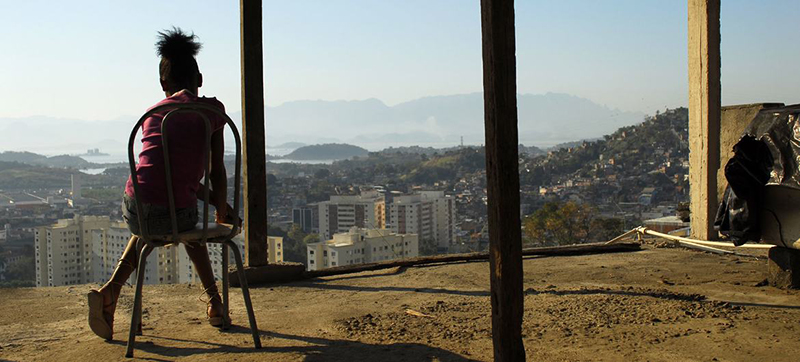
 World Day of Social Justice
On World Day of Social Justice, deeper dialogue across ‘real economy’ can drive progress, UN deputy chief says
New York: Social progress must move into the spotlight, flanked by policies that can drive meaningful change for millions of currently struggling people, the UN deputy chief said, marking the World Day of Social Justice on Monday.
“We must develop fairer, more balanced policies that generate the political buy-in to drive change,” Deputy Secretary-General Amina Mohammed said in a video message. “What is also needed is a deeper social dialogue with actors across the real economy.”
The day’s theme focuses on strengthening global solidarity and re-building trust in government by overcoming barriers and unleashing opportunities for social justice. This approach comes from recommendations in Our Common Agenda, the UN’s plan for realizing the 2030 Agenda for Sustainable Development and its 17 goals.
Overcoming multiple crises
The challenge is to overcome a toxic combination of mutually-reinforcing crises – inflation, debt, food and fuel price rises, geopolitical tensions and conflict, climate change – that are threatening to increase poverty, inequality and discrimination worldwide.
“All around the world people are struggling to recover from the socioeconomic fallout of the COVID-19 pandemic, which has devastated lives and deepened inequalities,” she said.
Indeed, the coronavirus pandemic exacerbated global inequality, reversing declines over the past two decades. Women’s share of total incomes from work is less than 35 per cent, just a five per cent rise relative to 1990. At the same time, 214 million workers live in extreme poverty, on less than $1.90 a day, and the number of working poor is increasing in developing countries.
But, even before the pandemic began in 2020, she said, far too many were forced to eke out a living on less than $2.00 a day without rights and social protection and little prospects for a better future.
“When there is an imbalance between economic growth and social policy, political instability and unrest often follow,” she said. “That is why we need a closer convergence between the social and normative frameworks of the UN and the policies pursued by international financial institutions.”
Getting ‘back on track’
The 2030 Agenda, reinvigorated by Our Common Agenda, provides a blueprint to get “back on track and rescue” the Sustainable Development Goals (SDGs), she said.
“Let us always remember who the outcomes aim to serve; at the heart of social justice are people, especially our women and youth,” she said, anticipating fruitful, constructive discussions to meet the needs of millions.
Rampant inequalities
Poverty and inequalities within and among countries are on the rise in many parts of the world. Inequality remains very high, with annual gross domestic product per capita ranging from about $600 at purchasing power parity in the poorest country to more than $115,000 in the richest country. The top 10 per cent of the global population currently takes 52 per cent of global income, whereas the poorest half earns 6.5 per cent of it.
About 290 million youth globally are not in education, employment, or training, while two billion people work in the informal economy. Unstable jobs and income, unhealthy and unsafe working conditions and no social protection led to a disproportionate impact of the COVID-19 pandemic on these workers that saw their earnings drop by 60 per cent in 2020.
Identifying key bottlenecks
To commemorate the day, Kyrgyzstan, the International Labour Organization (ILO) and partners held an event on the 2023 theme. Participants explored key bottlenecks and challenges to overcoming rising inequalities, opportunities in the green and digital economy to reduce them, and the actions needed by governments, the UN system, international financial institutions, and other stakeholders to boost investments for social justice.
José Antonio Ocampo ,Colombia’s Finance Minister, in a keynote address, set out several suggestions for tackling current “immense” global challenges that have a deep impact on social issues, including rising food prices, the climate crisis, and an economic downturn.
Social justice requires national-level fiscal action that centres on taxation, including wealth taxes, he said. Indeed, inequality in wealth far surpasses current income gaps, he said.
Touching on several areas of action, he said resources to guarantee ample tax revenues must be tailored to cover existing needs, alongside measures “ensuring subsidies of the poorest people”.
However, international financing has a critical role to play going forward, he said. Expanded multilateral bank efforts can help nations address climate challenges, and current debt swap arrangements can be further broadened. Assisting countries facing natural disasters is another key area that calls for expansion, he said.
Call for global coalition
Experts at an ILO event outlined further ways to bolster progress, with experts weighing in with innovative suggestions.
ILO’s Director-General Gilbert F Houngbo explained why a greater emphasis on social justice is essential for a sustainable recovery in a podcast released on Monday.
“Socially speaking, if we do not cultivate a better social justice, you will end up with more social unrest,” he said.
To ensure that the necessary measures and actions are integrated throughout all levels of policy making, he also underscored the need for a global coalition for social justice.
“Imagine, if in the whole world, we can bring the discourse on social justice at the same level as the economic and the environment,” he said. “That, for me, will be big achievement, because right now, it's not.”
Support Our Journalism
We cannot do without you.. your contribution supports unbiased journalism
IBNS is not driven by any ism- not wokeism, not racism, not skewed secularism, not hyper right-wing or left liberal ideals, nor by any hardline religious beliefs or hyper nationalism. We want to serve you good old objective news, as they are. We do not judge or preach. We let people decide for themselves. We only try to present factual and well-sourced news.
Support objective journalism for a small contribution.


