


Reviving domestic demand key to sustainable growth in Asia-Pacific : UN report
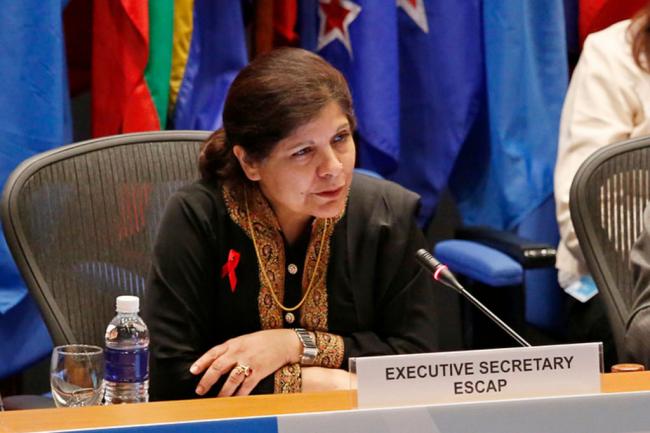
“While the 2030 Agenda promotes a broader concept of human welfare, robust growth is important for creating jobs and improving overall development outcomes,” Shamshad Akhtar, Executive Secretary of the UN Economic and Social Commission for Asia and the Pacific (ESCAP), said on the launch of the Economic and Social Survey of Asia and the Pacific 2015: Year-end Update .
Akhtar added that “adoption of the 2030 Agenda comes at a time when the global policy makers are still struggling to revive economic growth despite taking extraordinary measures.”
Developing economies of the Asia-Pacific region grew by an estimated 4.5 per cent in 2015, the lowest rate since 2010, with only a modest rebound to five per cent growth projected for 2016, according to the report.
Domestic constraints such as weak productivity, demographic shifts, and growing wage gaps, have attributed to the economic stagnation, indicated the report.
Exports remained sluggish, given the reducing demand of industrial goods and commodities from China and its gradual economic slowdown, which in turn has had vital impacts in the region.
Capital outflows and exchange rates may be affected by the recent increase in interest rates in the United States, hammering financial stability in some countries, the report predicted.
“This poses particular challenges for countries which have accumulated significant household and corporate debt through external financing and with significant exposure to the real estate sector,” Akhtar explained.
In response, the report therefore recommended a proactive fiscal stance, especially on education, healthcare and infrastructure, for countercyclical support to the economy and for strengthening foundations for future growth and development.
“In order to create more fiscal space to invest in these critical areas, governments should reprioritize expenditures and enhance their efficiency while improving tax policy and administration” stressed Akhtar.
Further, the report addressed the importance of income equality, as “economic growth supported by increases in real wages is more resilient than growth backed by accumulation of debt ,” explained Akhtar.
Photo: ESCAP
Support Our Journalism
We cannot do without you.. your contribution supports unbiased journalism
IBNS is not driven by any ism- not wokeism, not racism, not skewed secularism, not hyper right-wing or left liberal ideals, nor by any hardline religious beliefs or hyper nationalism. We want to serve you good old objective news, as they are. We do not judge or preach. We let people decide for themselves. We only try to present factual and well-sourced news.
Support objective journalism for a small contribution.


