


Rich economies not a promise of education equality, new report finds
New York, Oct 30 (IBNS): High national wealth does not guarantee equal access to a quality education, a new report released on Tuesday by the UN Children’s Fund (UNICEF) suggests.
The report incorporates new data from 41, wealthy, member countries of the European Union and the Organization for Economic Co-operation and Development (OECD).
Countries were assessed on their children’s access to quality education, and differences in performance among children from preschool to primary school levels.
According to the report, some of the poorest countries surveyed, such as Latvia and Lithuania, demonstrate higher preschool enrollment and more compatible reading performance among its students than wealthier countries.
The survey was conducted by the UNICEF Office of Research-Innocenti, established by UNICEF to gather data in support of its advocacy for children worldwide.
She added that rich countries “can and must” ramp up their efforts to ensure children from disadvantaged families are meeting education standards, as they are most likely to fall behind.Director for the research centre, Dr. Priscilla Idele said, “Countries can offer their children the best of both worlds: They can achieve standards of excellence in education and have relatively low inequality.”
Circumstances beyond children’s’ control, the report says, are driving some students to outperform others. The poorest households, for example, show lower preschool attendance rates, while first-generation immigrant children struggle more than non-immigrant children.
The report advises modifications to early education programs, aid to low income families to reduce socio-economic disparities, and production of more data on the subject via longer, in-depth studies, to improve overall education accessibility and performance.
This report is part of the Innocenti Report Card initiative, designed to monitor and compare the performance of wealthy countries in securing the rights of children.
This research is intended to help ensure that all girls and boys complete free, equitable and quality primary and secondary education by 2030,a central focus of Sustainable Development Goal 4 one of 17 global goals set by the United Nations General Assembly in 2015.
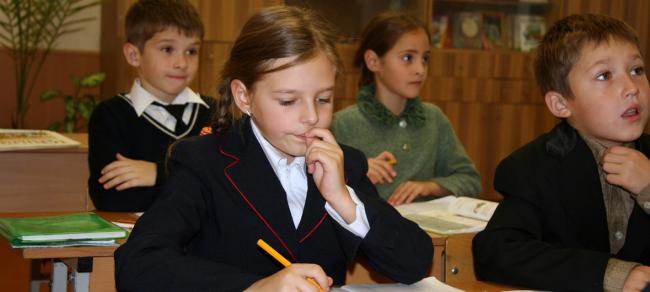
World Bank/Irina Oleinik
Support Our Journalism
We cannot do without you.. your contribution supports unbiased journalism
IBNS is not driven by any ism- not wokeism, not racism, not skewed secularism, not hyper right-wing or left liberal ideals, nor by any hardline religious beliefs or hyper nationalism. We want to serve you good old objective news, as they are. We do not judge or preach. We let people decide for themselves. We only try to present factual and well-sourced news.
Support objective journalism for a small contribution.


