


Rising number of young people excluded from jobs, education and training
New York/IBNS: The number of young people around the world who are neither employed, studying or in some kind of training, is on the rise, according to a new report released on Monday by the International Labour Organization (ILO).
And young women are more than twice as likely as their male counterparts to be affected.
Increasing automation, a narrow focus of vocational training and a lack of jobs to match qualifications, are leaving young people with a precarious future in the labour market, says the report, officially called: Global Employment Trends for Youth 2020: Technology and the future of jobs (GET Youth 2020).
Moreover, employees between the ages of 15 and 24, face a greater risk than older workers of losing their jobs because of further technological advances, and those with vocational training are even more vulnerable.
“This reflects how the occupation-specific skills imparted by vocational training tend to become obsolete faster… than general education skills”, the report says, calling for modernized vocational training programmes that meet the evolving demands of the digital economy.
Upward trend
The report shows that since 2017, there has been an upward trend in the number of youth not in employment, education or training (NEET).
In 2016 there were 259 million young people classified as NEET – a number that rose to an estimated 267 million in 2019, and is projected to continue climbing to around 273 million in 2021.
In terms of percentage, the trend was also slightly up from 21.7 per cent in 2015 to 22.4 per cent in 2020 – implying that the international target to reduce the NEET rate by 2020 will be missed.
“Not enough jobs are being created for these young people”, said Sukti Dasgupta, Chief of the Employment and Labour Market Policies branch of the ILO Employment Policy Department.
“We can’t afford to waste this talent or this investment in learning if we are to meet the challenges posed by technology, climate change, inequality and demographics".
Women excessively affected
Some 267 million of the current population of 1.3 billion young people globally, are classified as NEET, two-thirds, or 181 million, of whom are young women.
Too many young people around the world are becoming detached from education and the labour market -- ILO
“Too many young people around the world are becoming detached from education and the labour market, which can damage their long-term prospects, as well as ultimately undermine the social and economic development of their countries”, said Sangheon Lee, Director of the Employment Policy Department of the ILO.
But the reasons for the trend, vary enormously: “The challenge will be to balance the flexible approach needed to reach these young people with the strong policies and actions necessary to make an impact”, he continued, stressing that a ‘one-size-fits-all’ approach will not work”.
GET Youth 2020 shows that those who do complete tertiary education, are less likely to find their jobs lost to automation.
However, they face other issues. The rapid increase in the number of young people with degrees in the labour force has outpaced the demand for graduate labour, pushing down graduate wages.
“Not enough jobs are being created for these young people, meaning the potential of millions is not being properly tapped”, said the ILO’s Ms. Dasgupta.
“We can’t afford to waste this talent or this investment in learning if we are to meet the challenges posed by technology, climate change, inequality and demographics”, she concluded. “We need integrated policy frameworks and responsive training systems, designed using dialogue between governments, workers and employers”.
Photo caption and credit:
World Bank/Li Wenyong
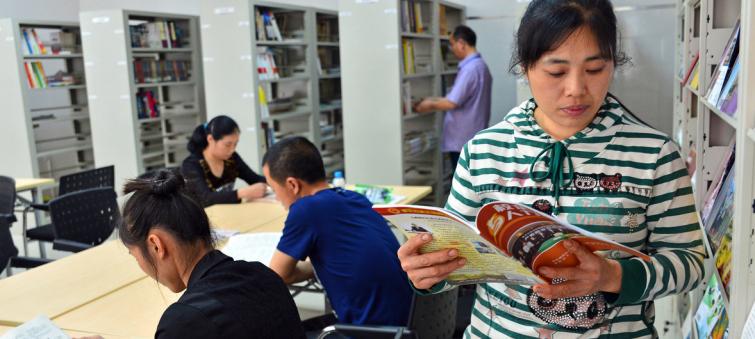
Employed youth, between the ages of 15 and 24, face a greater risk than older workers of losing their jobs because of automation.
Support Our Journalism
We cannot do without you.. your contribution supports unbiased journalism
IBNS is not driven by any ism- not wokeism, not racism, not skewed secularism, not hyper right-wing or left liberal ideals, nor by any hardline religious beliefs or hyper nationalism. We want to serve you good old objective news, as they are. We do not judge or preach. We let people decide for themselves. We only try to present factual and well-sourced news.
Support objective journalism for a small contribution.


