


Syria: WHO unable to sustain operations without funding increase
“The Kuwait pledging conference comes at a crucial moment to show the world`s commitment to assisting those affected by the crisis,” said Elizabeth Hoff, UN World Health Organization (WHO) Representative in Syria.
She added, “We are unable to sustain our operations as the funding gap increases at an alarming rate. We call upon donors to continue to support our efforts to provide basic health services to the Syrian people.”
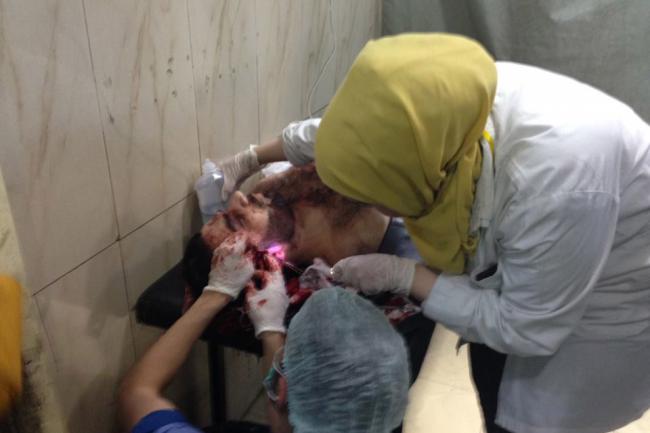
Hoff, speaking after returning from a recent visit to Aleppo, during which she visited Al Razy hospital shortly after scores of people were brought in following an attack on a public square the previous day, noted that only four out of 11 public hospitals remain operational in the city and all health facilities are overcrowded and experiencing critical shortages of medical supplies.
“Scenes of severely injured children and civilians are yet another stark reminder of the immense and continuous suffering of the Syrian people,” she said, noting that 57 per cent of public hospitals nationwide are only partially functioning or are completely out of service.
In Aleppo, she said hospitals required generator power because the population could rely on electricity for only one to three hours each day and she estimated that 1.3 million people needed health assistance in Aleppo alone.
At the same time, she said, the health situation continues to deteriorate across the country.
“As weather temperatures become warmer, there is an increased risk of waterborne diseases,” she said.
She added, “Therefore, improving hygiene conditions and practices is essential to protecting the population.”
Currently, WHO is unable to chlorinate water stations, which has led to heightened risks, which she also expressed concerns about several other issues, including the drop in vaccination rates from about 90 per cent nationwide before the crisis, to between 50 and 60 per cent now.
Hoff described how healthcare was also jeopardized by the 70 per cent drop-off in local production of medicines and lack of availability of many life-saving treatments, as well as by shortages of surgeons, anaesthesiologists, laboratory professionals, and female health professionals. The total number of available healthcare workers stood at just 45 per cent of 2011 levels.
Photo: WHO/T. Jasarevic
Support Our Journalism
We cannot do without you.. your contribution supports unbiased journalism
IBNS is not driven by any ism- not wokeism, not racism, not skewed secularism, not hyper right-wing or left liberal ideals, nor by any hardline religious beliefs or hyper nationalism. We want to serve you good old objective news, as they are. We do not judge or preach. We let people decide for themselves. We only try to present factual and well-sourced news.
Support objective journalism for a small contribution.


