


 Syria
Syria
Syria’s last cross-border aid lifeline must stay open, insist UN humanitarians
New York: The imminent closure of the last cross-border aid lifeline to northwest Syria must be postponed beyond the 10 July deadline, UN humanitarians said on Friday, noting that no cross-line supplies had reached Idlib from Damascus, in 11 months.
World Food Programme (WFP) spokesperson Tomson Phiri said that the renewal of the UN resolution allowing cross-border operation was critical, since “millions of lives are at stake”.
Lifeline for 2.4 million
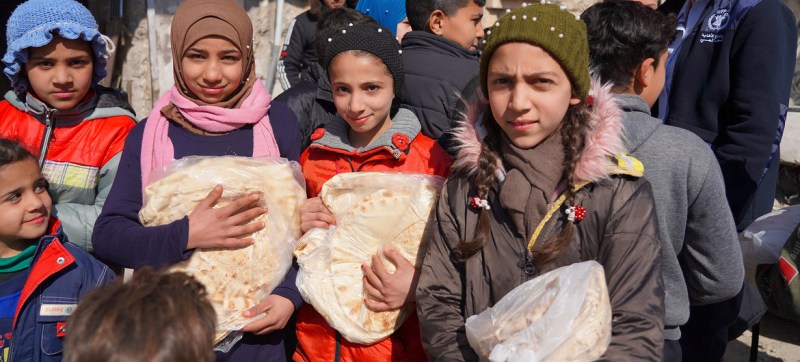
Speaking in Geneva during a regular briefing, Mr. Phiri explained that 2.4 million people “depend entirely on cross-border assistance for their basic needs including food. The majority of these people are women and children, many of whom have been displaced multiple times.”
The development follows an appeal by UN Secretary-General António Guterres to the Security Council on Wednesday to continue to allow convoys to pass through the Bab al-Hawa crossing from Turkey for another year.
“A failure to extend the Council’s authorization would have devastating consequences”, said Mr. Guterres, highlighting that cross-line aid assistance “at present levels” could not replace the quantities that were delivered cross-border.
World’s biggest aid operation
More than 1,000 trucks have transported food, medicine and other items through the Bab al-Hawa border crossing each month over the past year, as part of a wider UN humanitarian operation that is the biggest in the world.
Around $10 billion is needed to support people affected by the conflict, whether in the country or as refugees across the region.
Inside Syria, needs are massive and growing, however.
“Today, an estimated 12.4 million Syrians are food insecure and this amounts to nearly 60 per cent of the population who do not know what they will eat tomorrow. This is an increase of 4.5 million people in only one year,” said Mr. Phiri.
Most vulnerable
Those living in Idlib in Syria’s northwest – which is the last opposition stronghold after more than a decade of war – are among the most vulnerable.
“Of greatest concern today is northwest Syria, where nearly 30 per cent of the people WFP assists, live”, Mr. Phiri explained. “Similarly, 30 per cent of the food WFP ships into Syria is through the single remaining border crossing.”
The Bab al-Hawa crossing from Turkey is the last of four cross-border passages still open, after a 2014 UN Security Council resolution authorising humanitarian aid into opposition-held areas of Syria.
COVID-19 threat only one of many
Spokesperson Christian Lindmeier from the World Health Organization (WHO) underscored the likely consequences for Idlib’s already weakened population if cross-border authorisation is not renewed: “It would not be possible to roll out reliable COVID vaccinations to the population and other campaigns to vaccinate children as well as other essential health activities including lifesaving care for chronic non-communicable diseases.”
“The COVID-19 response is heavily reliant on the UN including the vaccination roll-out,” he added. “The UN-supported COVAX mechanism is the only option for access to vaccines in the area, yet less than 0.58 per cent of the population has received one dose.”
The WHO spokesperson also insisted that cross-line convoys “even if deployed regularly would not replicate the size and scope of this (cross-border) operation. Despite significant continuing efforts by the UN, we have not yet managed to create the conditions to deploy the first cross-line convoy to north-west Syria and no cross-line convoys have crossed into north-west Syria from Damascus in the last 11 months.”
Falling further into debt
Securing enough food to eat inside Syria is a daily struggle, and families are now buying food on credit, WFP’s Mr. Phiri said.
“Food prices continue to rise and have increased by 247 per cent food price increase in the last year alone; families have exhausted their savings after years of conflict and are unable to afford basic meals.”
Support Our Journalism
We cannot do without you.. your contribution supports unbiased journalism
IBNS is not driven by any ism- not wokeism, not racism, not skewed secularism, not hyper right-wing or left liberal ideals, nor by any hardline religious beliefs or hyper nationalism. We want to serve you good old objective news, as they are. We do not judge or preach. We let people decide for themselves. We only try to present factual and well-sourced news.
Support objective journalism for a small contribution.


