


 Seafarers
UN launches key initiative to protect seafarers’ human rights amid COVID-19 crisis
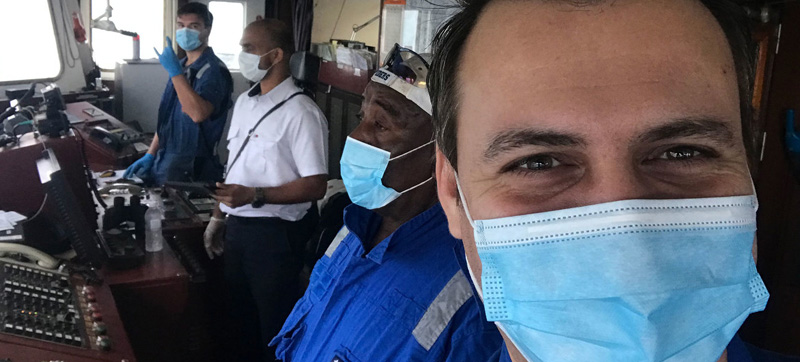
New York: Around 200,000 cargo ship crew members are stranded at sea, beyond the length of their contracts due to COVID-19 restrictions, placing a major strain on their physical and mental health. New UN guidelines were published on Thursday, aimed at helping the industry better protect human rights at sea, as new COVID variants threaten to further delay crew turnover.
The Human Rights Due Diligence Tool, provides a wide-ranging checklist co-developed by the UN Global Compact, the UN Human Rights Office, the International Labour Organization (ILO) and the International Maritime Organization (IMO), for all businesses involved in the maritime industry.
The agencies are warning about a possible surge in the number of crewmembers stranded at sea due to new COVID-19 variants and government-imposed travel restrictions.
Unchecked, they fear the situation could return to the heights of the September 2020 crew change crisis, when 400,000 seafarers were stranded at sea around the world.
“Seafarers are at the heart of the global supply chain. They are also at the mercy of COVID-19 restrictions on travel and transit. This has led to hundreds of thousands of seafarers being denied repatriation, crew changes, shore leave and ultimately being forced to stay working on ships long beyond their contracts”, explained IMO Secretary General, Kitack Lim.
He added that the new tool represents an important step forward for the maritime industry. It provides a practical approach for cargo owners, charterers, and logistics providers to “ensure [seafarers] are put first and foremost as they work to deliver the goods that people need and want”.
Human rights must go first
Physical and mental health, access to family life, and freedom of movement are some of the human rights considerations included in the new guidance, with the agencies expressing concern at reports of seafarers working on board well beyond the 11-month maximum that is set out by the ILO Maritime Labour Convention (MLC).
The UN agencies also expressed apprehension at reports of companies avoiding chartering vessels where a crew change is due.
Some have demanded ‘no crew change’ clauses in charter agreements, preventing required crew changeovers from taking place.
Under the UN Guiding Principles on Business and Human Rights, companies engaged in the maritime industry have a clear responsibility to respect the human rights of seafarers in all economic decision-making.
The COVID-19 seafarer’s crew change crisis sparked by the pandemic, has shone a spotlight on one the “weakest links” in global supply chains, said UN High Commissioner for Human Rights, Michelle Bachelet. “This is an urgent and grave humanitarian and human rights crisis that is impacting the lives of thousands of maritime workers. All companies involved in global supply chains may be linked to this crisis.”
The new human rights tool complements current industry-led collective action, such as the Neptune Declaration on Seafarer Wellbeing, signed by more than 750 companies.
Support Our Journalism
We cannot do without you.. your contribution supports unbiased journalism
IBNS is not driven by any ism- not wokeism, not racism, not skewed secularism, not hyper right-wing or left liberal ideals, nor by any hardline religious beliefs or hyper nationalism. We want to serve you good old objective news, as they are. We do not judge or preach. We let people decide for themselves. We only try to present factual and well-sourced news.
Support objective journalism for a small contribution.


