


 Afghanistan
WHO calls for greater investment in Afghanistan’s health system
The World Health Organization (WHO) on Friday appealed for donors to ramp up funding to provide healthcare to some 14 million people in Afghanistan, particularly in underserved areas where infrastructure is severely lacking.
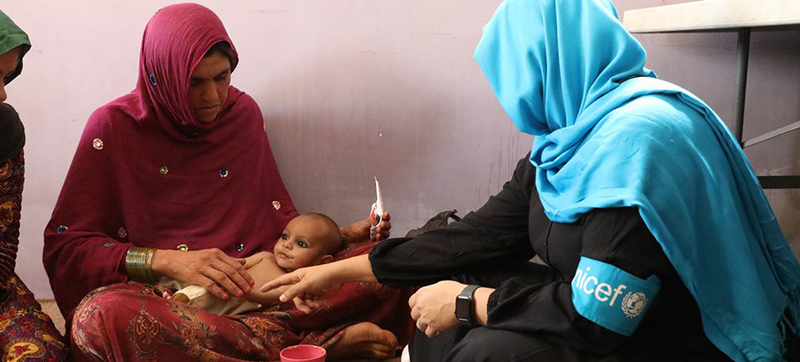
Afghanistan continues to face a humanitarian crisis brought on by decades of instability, exacerbated by severe drought and natural disasters. As a result, millions are living with poor or no access to healthcare and food, putting them at severe risk of malnutrition and disease outbreaks.
WHO added that the vulnerability of women and girls has further intensified as they face increased obstacles in accessing healthcare due to Taliban edicts on education and workforce participation.
‘A critical humanitarian concern’
“The situation in Afghanistan is critical, and it demands urgent attention,” said Dr. Luo Dapeng, WHO's Representative there.
“For a country already affected by decades of conflict, underfunding of the healthcare system is a critical humanitarian concern. The consequences of this underfunding cannot be overstated.”
Tweet URL
The UN and partners report an alarming increase in the number of Afghans in urgent need of humanitarian aid this year. Nearly 29 million require immediate assistance - up from 18.4 million prior to August 2021, when the Taliban returned to power.
To address the health emergency, humanitarians are targeting 14 million people, including 7.5 million children and 3.1 million women. They reached 8.4 million during the first six months of the year and have provided more than 25 million healthcare services since 2022.
‘Countless lives at risk’
However, WHO warned that despite these efforts and without sufficient funding, eight million Afghans will lose access to essential and potentially lifesaving healthcare.
Furthermore, 450,000 people will have little to no access to lifesaving trauma care services, including blood transfusions and referrals. Roughly 1.6 million people with mental health conditions will also face shortfalls in accessing support.
Tedros Adhanom Ghebreyesus, the WHO Director-General, urged donors to give generously so that its lifesaving work can continue.
"The situation in Afghanistan is grave, and the lack of resources and funding to support health workers and facilities is putting countless lives at risk,” he said. “Women and children are suffering the most."
A collective responsibility
During the remainder of the year, WHO will continue working with partners to tackle critical health emergencies in Afghanistan while also building on successes achieved in 2022.
The UN agency stressed that much work still remains to deliver on its priorities which include protecting people every day; reaching everyone, everywhere, and putting mothers and children first.
Dr. Ahmed Al Mandhari, Regional Director for the Eastern Mediterranean, urged the international community to unite with WHO and respond to the ongoing humanitarian health crisis in Afghanistan.
"It is our collective responsibility to act now to support the Afghan healthcare system,” he said. “The consequences of inaction are catastrophic and may leave a lasting impact on the health and well-being of the Afghan people."
Support Our Journalism
We cannot do without you.. your contribution supports unbiased journalism
IBNS is not driven by any ism- not wokeism, not racism, not skewed secularism, not hyper right-wing or left liberal ideals, nor by any hardline religious beliefs or hyper nationalism. We want to serve you good old objective news, as they are. We do not judge or preach. We let people decide for themselves. We only try to present factual and well-sourced news.
Support objective journalism for a small contribution.


