


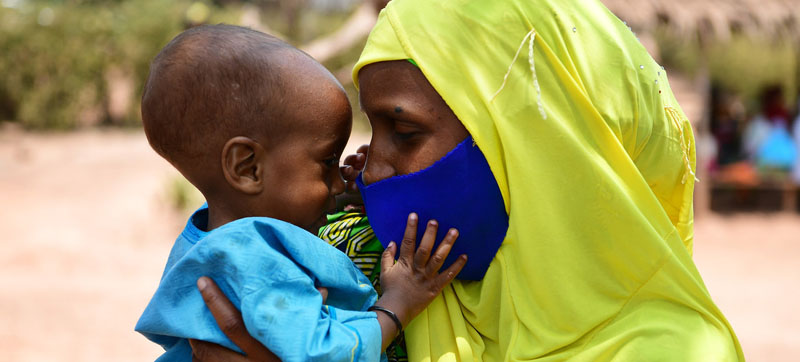
 Pandemic
World leaders call for new international treaty to improve pandemic response
New York: A group of world leaders have joined the head of the World Health Organization (WHO) in calling for an international treaty to improve pandemic preparedness and response in the wake of COVID-19, for the sake of future generations.
In a joint article published on Tuesday across leading news platforms, the signatories said that the coronavirus pandemic had been a “stark and painful reminder that nobody is safe until everyone is safe” and that “there will be other pandemics and other major health emergencies”.
‘Not if, but when’
“The question is not if, but when. Together, we must be better prepared to predict, prevent, detect, assess and effectively respond to pandemics in a highly coordinated fashion”, they said.
The question is not if, but when. Together, we must be better prepared to predict, prevent, detect, assess and effectively respond to pandemics in a highly coordinated fashion
The main goal of the treaty, which would be rooted in the WHO Constitution, would be to foster a comprehensive approach to strengthen national, regional and global capacities and resilience to future pandemics, the leaders added.
Standing with WHO Director-General Tedros Adhanom Ghebreyesus, the leaders signing on so far, represent Albania, Chile, Costa Rica, the European Council, Fiji, France, Germany, Greece, Indonesia, Italy, Kenya, the Netherlands, Norway, Portugal, the Republic of Korea, Romania, Rwanda, Senegal, Serbia, South Africa, Spain, Thailand, Trinidad and Tobago, Tunisia, the United Kingdom, and Ukraine.
“At a time when COVID-19 has exploited our weaknesses and divisions, we must seize this opportunity and come together as a global community for peaceful cooperation that extends beyond this crisis”, the leaders said.
‘We must act boldly’: Dr. Tedros
Speaking at a press conference later in the day, WHO Director-General Dr. Tedros highlighted that the idea behind the proposal for the treaty is to “systematically tackle the gaps exposed by COVID-19”.
The pandemic has brought out the best and worst in humanity, he added, recalling “acts of incredible courage” from health workers and communities around the world, on a daily basis, but also inequalities in societies, geopolitical fault lines and frayed trust in public institutions.
“The impacts on our societies, economies and health, especially for the poor and the most vulnerable, are too significant”, Dr. Tedros said, stressing that “we cannot do things the way we have done them before and expect a different result…we must act boldly”.
We cannot do things the way we have done them before and expect a different result … we must act boldly
– Dr. Tedros
He went on to note that the treaty would strengthen the implementation of the International Health Regulations (IHR) as well as provide a framework for international cooperation and solidarity.
It would help build resilience to pandemics and other global health emergencies, with robust national and global preparedness systems; ensure timely and equitable access to pandemic countermeasures, including vaccines; support sustainable funding and capacity for prevention, detection, and responses to outbreaks; and promote mutual trust.
Member States’ decision
Dr. Tedros also said that ultimately, the Member States would decide.
“How such a treaty is developed and what it looks like, and whether it is ratified, is a matter for our Member States – the nations of the world”, he added.
“We must leave a legacy for our children: a safer world for all.”
Support Our Journalism
We cannot do without you.. your contribution supports unbiased journalism
IBNS is not driven by any ism- not wokeism, not racism, not skewed secularism, not hyper right-wing or left liberal ideals, nor by any hardline religious beliefs or hyper nationalism. We want to serve you good old objective news, as they are. We do not judge or preach. We let people decide for themselves. We only try to present factual and well-sourced news.
Support objective journalism for a small contribution.


