

'Forgive, forgive, forgive...': Supreme Court says leniency must have a limit
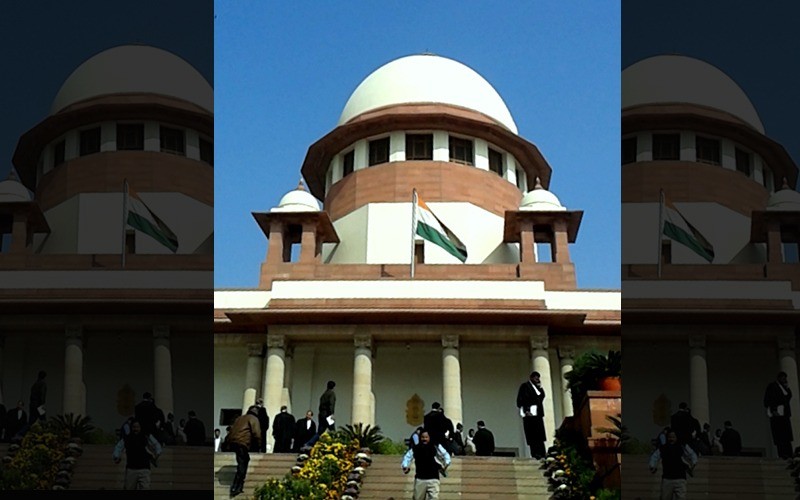
The Supreme Court on Thursday observed that its “forgiving nature” in commuting death sentences may need to be reconsidered, warning that there has to be a point where such leniency comes to an end.
A Bench of Justices Dipankar Datta and Sheel Nagu made the remarks while hearing a plea seeking the premature release of a life convict in a murder case.
The convict's death sentence had earlier been commuted to life imprisonment.
'You have to draw a line somewhere'
Justice Datta said, “Forgive, forgive, forgive... you have to draw a line somewhere,” while discussing the approach adopted by courts in cases involving death sentences.
He observed that the principle of the “rarest of rare” cases was developed at a time when murders were comparatively less frequent, but said circumstances have changed and the rising incidence of crime must also be considered.
Justice Datta recalls daughter's murder case
To explain his concern, Justice Datta referred to a case involving a man who had raped and murdered his elder daughter.
According to the judge, the man was sentenced to life imprisonment based on his wife's testimony.
After spending years in prison, he was released on parole and allegedly murdered his wife in front of their younger daughter.
The man was subsequently sentenced to death based on the younger daughter's testimony.
However, the Supreme Court later commuted his death sentence to life imprisonment because he had not killed the younger daughter.
Justice Datta cited the case while questioning whether the court's approach to commuting death sentences could sometimes go too far.
'Balance has to be struck'
The judge stressed that courts must also take into account the rising number of crimes while considering pleas seeking commutation of death sentences.
The observations came during the hearing of the premature-release plea and underscore the need, in the court's view, to strike a balance between considerations of rehabilitation and the seriousness of the crime while deciding whether a convict sentenced to death should instead serve life imprisonment.
Support Our Journalism
We cannot do without you.. your contribution supports unbiased journalism
IBNS is not driven by any ism- not wokeism, not racism, not skewed secularism, not hyper right-wing or left liberal ideals, nor by any hardline religious beliefs or hyper nationalism. We want to serve you good old objective news, as they are. We do not judge or preach. We let people decide for themselves. We only try to present factual and well-sourced news.
Support objective journalism for a small contribution.