


 Internet
Around 2.6 billion people globally who are still waiting for an Internet connection, says International Telecommunications Union
The benefits of cutting-edge technology remain out of reach for around 2.6 billion people globally who are still waiting for an Internet connection the head of the International Telecommunications Union (ITU) said on Thursday, outlining the agency’s plans to narrow the gap.
Doreen Bogdan-Martin underscored ITU's wide-ranging brief, emphasizing its pivotal role in fostering connectivity across the globe.
Founded in 1865 as an international telegraph association, today ITU champions two paramount goals: universal connectivity and sustainable digital transformation.
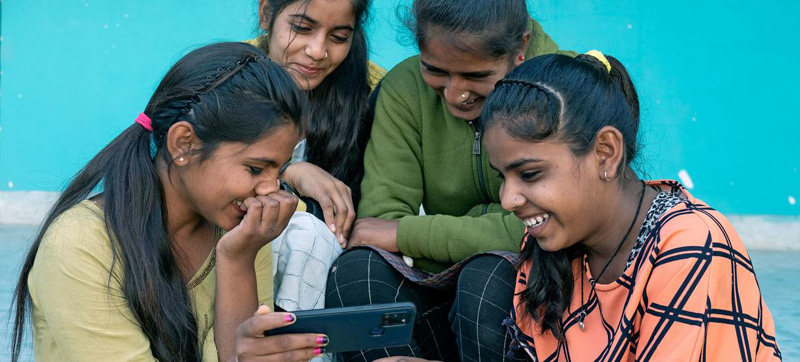
The first woman in the post, Secretary-General Bogdan-Martin highlighted the stark digital divide impacting women and marginalized communities. Women still account for a disproportionate share of those offline, outnumbering men by some 20 per cent.
Women losing out
In Least Developed Countries, only 30 per cent of women have access to the internet, she added.
“I’ve seen women who can’t afford a smartphone, women in countries where entry-level handsets can exceed 70 per cent of the average household’s monthly income,” she said reflecting on the time spent in office, on the eve of the International Women’s Day.
Speaking about generative artificial intelligence (AI) – an area where ITU holds a leading role among the UN-family agencies – the Secretary-General stressed there are clear pros and cons.
Citing AI's potential to mitigate greenhouse gas emissions by 10 per cent and advance progress across the 17 UN Sustainable Development Goals, she cautioned against the threat AI poses, including cyberattacks and erosion of trust caused by dis and misinformation.
Multiple threats
“Emerging technologies, like AI, can be used to erode trust in our elections, in our institutions, and it can threaten our jobs, our privacy, and I think also our very future,” she said adding that more than 2200 cyberattacks happen each day. An ITU study indicates, that attacks are increasing by some 80 per cent year on year.
Amidst the challenges, Bogdan-Martin exuded optimism, citing recent commitments by the private sector and multilateral institutions totalling $46 billion towards accessible network connectivity, bound to reach the goal of $100 billion in overall investments by 2026.
Moreover, in certain regions some positive trends are observed. A recent ITU report shows that Internet use in the world’s 57 small island developing states and territories – or SIDS – has outpaced the world average of 6.7 per cent over the past decade, increasing by 8.4 per cent annually between 2014 and 2023.
Proper investments, coupled with initiatives and decisions made at ITU’s venues such as the AI for Good Global Summit and the World Telecommunication Standardization Assembly can help bridge the digital divide, the agency chief said.
Support Our Journalism
We cannot do without you.. your contribution supports unbiased journalism
IBNS is not driven by any ism- not wokeism, not racism, not skewed secularism, not hyper right-wing or left liberal ideals, nor by any hardline religious beliefs or hyper nationalism. We want to serve you good old objective news, as they are. We do not judge or preach. We let people decide for themselves. We only try to present factual and well-sourced news.
Support objective journalism for a small contribution.


