


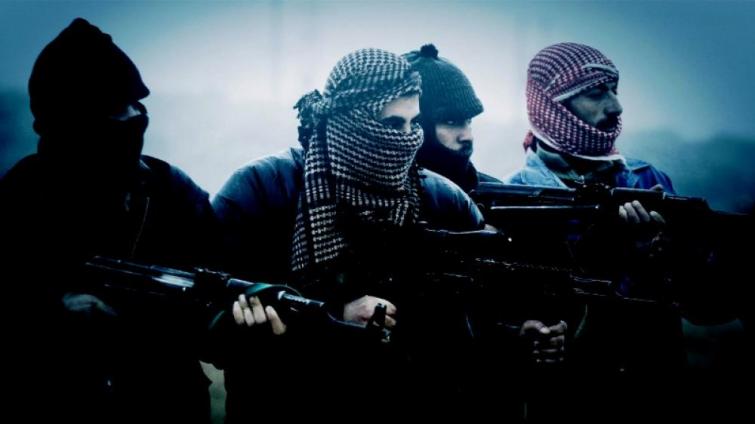
Lack of evaluation in countering violent extremism may boost terror threat: Study
London, May 22 (IBNS): A lack of evaluation of the impact of countering violent extremism (CVE) and counter-terrorism (CT) efforts may actually be increasing the threat and risk of terrorism, a new study points out.
Researchers say that national and international agencies’ efforts to counter terrorism and violent extremism have lacked two key ingredients – a clear and coherent theory of how individuals change and consistent evaluation of evidence of their changing attitudes.
Now experts at the University of Birmingham are proposing a new evaluation methodology – the Innovative Moments Coding System (IMCS) – to be explored as a more reliable way of tracking changes in violent extremists’ narrative accounts and life stories.
Working with partners at the Universities of Minho and Aveiro, in Portugal, researchers at Birmingham have published their findings in the journal Aggression and Violent Behaviour.
Dr Raquel da Silva, from the International Development Department at the University of Birmingham, commented: “We believe that using the IMCS could provide an in-depth view of how an individual has changed; a useful and reliable indicator in tracking how former militants’ life stories change as they leave their radical and extremist views behind."
“There is currently no clarity regarding what change looks like in deradicalisation and risk reduction interventions. Indeed, the lack of evaluation of these interventions might be actually increasing the threat and risk of terrorism, instead of doing the opposite.”
Researchers analysed two life-story interviews of former politically violent militants – ‘Julia’ and ‘Jaime’ – with contrasting experiences. They used IMCS to analyse their subjects’ degree of change and establish the system’s reliability and usefulness in tracking such people’s life stories.
They note that while radicalised views may open a path to politically motivated violence, these opinions are not criminal or harmful in themselves and do not always lead to certain engagement with a violent organisation.
Moreover, they explore studies that show how unrealistic and counterproductive it is to expect offenders to renounce their commitment to certain political and religious beliefs to prove they are no longer radicalised.
“It is more accurate to expect individuals to stop committing political violence and reject violence as a personal legitimate tactic, than to expect a full make-over of their belief systems,” added Dr da Silva.
”We believe that ‘self-narrative change’ in this context is embodied by thoughts, emotions, actions and experiences that distance the individual from the commission of politically violent acts – demonstrating continued and committed disengagement.”
Researchers adapted the IMCS from clinical research and provide evidence for the successful use of this tool to reliably track narrative, non-clinical, change in two cases of former violent militants.
Support Our Journalism
We cannot do without you.. your contribution supports unbiased journalism
IBNS is not driven by any ism- not wokeism, not racism, not skewed secularism, not hyper right-wing or left liberal ideals, nor by any hardline religious beliefs or hyper nationalism. We want to serve you good old objective news, as they are. We do not judge or preach. We let people decide for themselves. We only try to present factual and well-sourced news.
Support objective journalism for a small contribution.


