


 Artificial Intelligence
UN General Assembly adopts 'landmark' resolution on promoting artificial intelligence
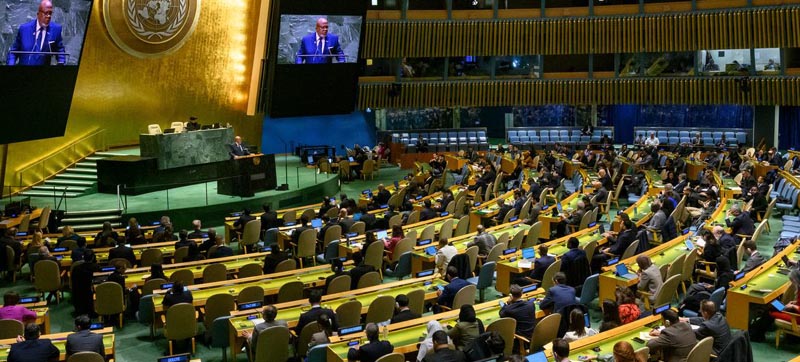
The UN General Assembly on Thursday adopted a landmark resolution on the promotion of “safe, secure and trustworthy” artificial intelligence (AI) systems that will also benefit sustainable development for all.
Adopting a United States-led draft resolution without a vote, the Assembly also highlighted the respect, protection and promotion of human rights in the design, development, deployment and the use of AI.
The text was “co-sponsored” or backed by more than 120 other Member States.
The General Assembly also recognized AI systems’ potential to accelerate and enable progress towards reaching the 17 Sustainable Development Goals.
It represents the first time the Assembly has adopted a resolution on regulating the emerging field. The US National Security Advisor reportedly said earlier this month that the adoption would represent an “historic step forward” for the safe use of AI.
Same rights, online and offline
The Assembly called on all Member States and stakeholders “to refrain from or cease the use of artificial intelligence systems that are impossible to operate in compliance with international human rights law or that pose undue risks to the enjoyment of human rights.”
“The same rights that people have offline must also be protected online, including throughout the life cycle of artificial intelligence systems,” it affirmed.
The Assembly also urged all States, the private sector, civil society, research organizations and the media, to develop and support regulatory and governance approaches and frameworks related to safe, secure and trustworthy use of AI.
Closing the digital divide
The Assembly further recognized the “varying levels” of technological development between and within countries, and that developing nations face unique challenges in keeping up with the rapid pace of innovation.
It urged Member States and stakeholders to cooperate with and support developing countries so they can benefit from inclusive and equitable access, close the digital divide, and increase digital literacy.
Hope for other sectors
Speaking before the adoption, Linda Thomas-Greenfield, US Ambassador and Permanent Representative to the UN, introduced the draft resolution.
She expressed hope that the “inclusive and constructive dialogue that led to this resolution would serve as a model for future conversations on AI challenges in other arenas, for example, with respect to peace and security and responsible military use of AI autonomy.”
Thomas-Greenfield noted that the resolution was designed to amplify the work already being done by the UN, including the International Telecommunication Union (ITU), the UN Educational, Scientific and Cultural Organization (UNESCO) and the Human Rights Council.
“We intend for it to complement future UN initiatives, including negotiations toward a global digital compact and the work of the Secretary-General’s high-level advisory body on artificial intelligence,” she said.
We govern AI
Thomas-Greenfield also highlighted the opportunity and the responsibility of the international community “to govern this technology rather than let it govern us”.
“So let us reaffirm that AI will be created and deployed through the lens of humanity and dignity, safety and security, human rights and fundamental freedoms,” she said.
“Let us commit to closing the digital gap within and between nations and using this technology to advance shared priorities around sustainable development.”
Support Our Journalism
We cannot do without you.. your contribution supports unbiased journalism
IBNS is not driven by any ism- not wokeism, not racism, not skewed secularism, not hyper right-wing or left liberal ideals, nor by any hardline religious beliefs or hyper nationalism. We want to serve you good old objective news, as they are. We do not judge or preach. We let people decide for themselves. We only try to present factual and well-sourced news.
Support objective journalism for a small contribution.


