


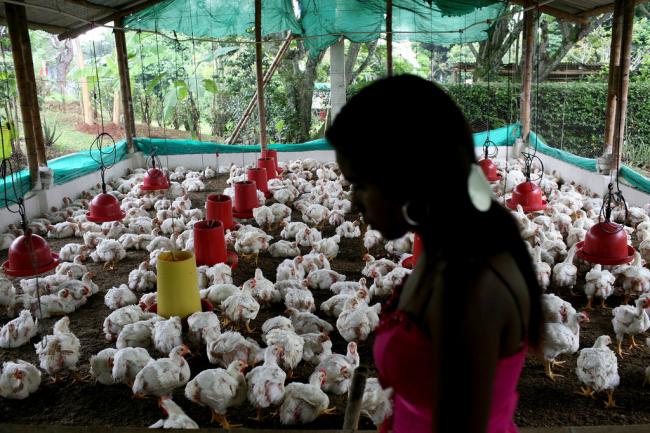
UN health agency recommends farmers stop using antibiotics in healthy animal
New York, Nov 8(Just Earth News):Farmers and the food industry should stop using antibiotics routinely to promote growth and prevent disease in healthy animals, the United Nations health agency said on Tuesday.
“A lack of effective antibiotics is as serious a security threat as a sudden and deadly disease outbreak,” said Tedros Adhanom Ghebreyesus, Director-General of the World Health Organization (WHO) in a news release on the new guideline aimed at helping preserve the effectiveness of antibiotics for humans by reducing their unnecessary use in animals.
“Strong, sustained action across all sectors is vital if we are to turn back the tide of antimicrobial resistance and keep the world safe,” he added.
In some countries, some 80 per cent of the total consumption of medically important antibiotics is in the animal sector, largely for growth promotion in healthy animals.
Over-use and misuse of antibiotics in animals and humans is contributing to the rising threat of antibiotic resistance. Some types of bacteria that cause serious infections in humans have already developed resistance to most or all of the available treatments, and there are very few promising options in the research pipeline.
WHO strongly recommends an overall reduction in the use of all classes of medically important antibiotics in food-producing animals, including complete restriction of these antibiotics for growth promotion and disease prevention without diagnosis.
Healthy animals should only receive antibiotics to prevent disease if it has been diagnosed in other animals in the same flock, herd, or fish population, according to the updated WHO guidelines on use of medically important antimicrobials in food-producing animals.
Many countries have already taken action to reduce the use of antibiotics in food-producing animals. For example, since 2006, the European Union has banned the use of antibiotics for growth promotion. Consumers are also driving the demand for meat raised without routine use of antibiotics, with some major food chains adopting “antibiotic-free” policies for their meat supplies.
Alternative options to using antibiotics for disease prevention in animals include improving hygiene, better use of vaccination, and changes in animal housing and husbandry practices.
Photo: World Bank/Charlotte Kesl
Source: www.justearthnews.com
Support Our Journalism
We cannot do without you.. your contribution supports unbiased journalism
IBNS is not driven by any ism- not wokeism, not racism, not skewed secularism, not hyper right-wing or left liberal ideals, nor by any hardline religious beliefs or hyper nationalism. We want to serve you good old objective news, as they are. We do not judge or preach. We let people decide for themselves. We only try to present factual and well-sourced news.
Support objective journalism for a small contribution.


