 Fashion Industry
A photo series to raise awareness on damages inflicted on the environment by the fashion industry
Kolkata/IBNS: Did you know that the fashion industry not only uses a vast quantity of water but is also one of the biggest producers of waste water?
Did you know that water pollution is the most notable impact of clothing production, with around 20 percent of global industrial water pollution traceable directly back to the textiles industry?
A single cotton shirt uses up to 3,000 litres of water to make and a denim jacket takes 7,500 litres - enough drinking water for one person for six years.
Textile production uses around 93 billion cubic metres of water annually — equivalent to 37 million Olympic swimming pools.
Beyond production, washing clothing using washing machines is estimated to require an additional 20 billion cubic meters of water per year globally.
(6).jpg)
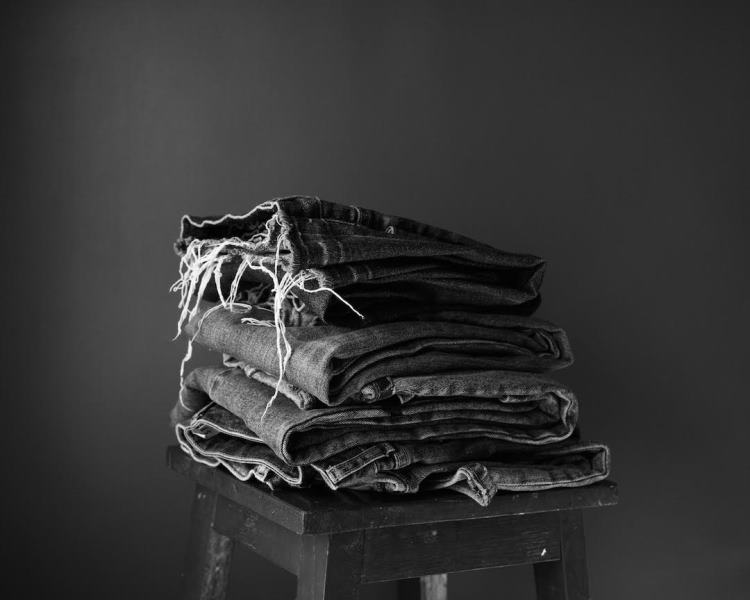
The ReFashion Hub, a collective working to raise awareness around the issue of water wastage in the fashion industry with a focus on bringing climate-action to fashion, has commissioned photographer Prarthana Singh to highlight the damage.
Singh's photography practice is known for her exploration of unusual narratives through her distinctive and sensitive style of portraiture.
For this series, she turns her lens on 10 articles of clothing, elevating them to sculptural pieces through her black and white portraits of these otherwise ubiquitous items of clothing.
The viewer is invited to imagine the multiple narratives of utility, memory, consumption, waste and discarding that are layered within these images, said The ReFashion Hub in a release.
(4).jpg)
The full series of works will be launching as a photo essay on The ReFashion Hub’s website.
Said Prarthna Singh, "When The Refashion Hub approached me to create a series of images addressing fast-fashion for them, I began noticing the omnipresence of clothes in my personal environment - my favourite pair of shorts out to dry; a pile of clothes waiting to be recycled; my partner’s sports kit back from the cleaners. I hadn’t consciously registered this before and it gave me some pause.”
“I was struck by the ubiquity of clothes and how little we think of how our clothes are made or where they might end up,” she said. “This series of black and white images communicates a quiet moment of reflection and recognition of these objects of clothing that make up our everyday landscape."
This photo series by Prarthna Singh is part of a series of creative programmes by The ReFashion Hub.
Earlier this month, The ReFashion Hub launched a fellowship focussing on wastewater reuse and management in the textile industry called the Fashion Forward Fellowship.
The on-going five-week fellowship programme ends in April with one winning a sustainable capsule collection.
The ReFashion Hub has also collaborated with seven artists and designers to create a series of artworks and comic strips, aimed to address the issue of heavy water wastage in the fast fashion industry and will promote traditional crafts and local artisans through its textile exhibit Karkhana Chronicles.
Support Our Journalism
We cannot do without you.. your contribution supports unbiased journalism
IBNS is not driven by any ism- not wokeism, not racism, not skewed secularism, not hyper right-wing or left liberal ideals, nor by any hardline religious beliefs or hyper nationalism. We want to serve you good old objective news, as they are. We do not judge or preach. We let people decide for themselves. We only try to present factual and well-sourced news.
Support objective journalism for a small contribution.