 E20
E20
Why E20 fuel isn't cheaper than pure petrol: Govt explains pricing, mileage and engine compatibility
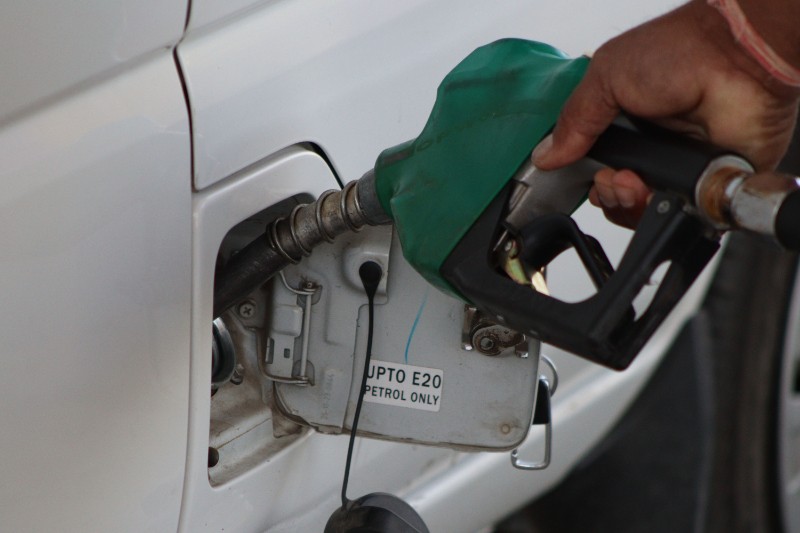
The Centre has issued a detailed clarification on E20 petrol, addressing public concerns over fuel prices, mileage, engine compatibility and ethanol blending more than a year after the nationwide rollout of the fuel.
The clarification comes amid renewed debate following a recent survey that found 66 percent of owners of petrol vehicles manufactured before 2023 reported a decline of more than 10 percent in fuel efficiency since early 2025.
Responding to the discussion, the Ministry of Petroleum and Natural Gas said the ethanol blending programme has been developed over more than two decades and is primarily aimed at strengthening India's energy security rather than reducing retail fuel prices.
'A gradual process'
Rejecting suggestions that India rushed into ethanol blending, the Centre said the programme began with pilot projects in 2001 before being formally launched in 2004.
According to the ministry, E5 fuel was introduced in several states by 2006, while the policy framework was notified in 2013.
The government said the National Policy on Biofuels, 2018, significantly accelerated the programme by expanding approved feedstocks and encouraging investment.
It added that the transition to E20 followed extensive consultations with automobile manufacturers, oil marketing companies and technical experts.
Why isn't E20 petrol cheaper
Addressing questions over pricing, the ministry said ethanol blending is intended to reduce dependence on imported crude oil rather than lower prices at fuel stations.
According to the government, ethanol is procured at remunerative prices to ensure stable returns for farmers.
It said maize-based ethanol, for example, is currently purchased at about Rs 71.86 per litre.
Because of these fixed procurement costs, the ministry said E20 can cost more to manufacture than conventional petrol when global crude oil prices remain around 70 US dollars per barrel.
The government added that consumers would likely see a retail price advantage only if international crude prices rise significantly, to around 120 to 130 US dollars per barrel.
Instead, it said the principal economic benefit comes from replacing 20 percent of petrol with domestically produced ethanol, reducing India's exposure to global oil market volatility.
Separate fuel options not practical
Responding to demands for consumers to choose between pure petrol, E10 and E20, the government said operating three separate nationwide fuel supply chains would be logistically impractical.
The ministry noted that India's fuel distribution network includes more than one lakh petrol pumps, terminals, depots and pipelines.
Maintaining multiple parallel supply systems, it said, would be financially and operationally unviable.
The government also pointed to investments of nearly Rs 1 lakh crore in ethanol production infrastructure, saying the current policy balances consumer convenience with national energy security objectives.
Govt rejects engine damage claims
The Centre dismissed concerns that E20 causes engine corrosion or damages older vehicles.
According to the ministry, E20 was introduced only after extensive testing involving the Automotive Research Association of India (ARAI), the Society of Indian Automobile Manufacturers (SIAM), oil companies and vehicle manufacturers.
The government said manufacturers would not have approved E20-compatible vehicles or continued warranty support if significant safety concerns had existed.
It also cited industry data from Maruti Suzuki, which serviced 2.84 crore vehicles during 2025-26.
Of these, around 1.5 crore were older models not originally certified for E20, yet the company reported no cases of engine corrosion or fuel system failure linked to the fuel.
The ministry added that E10 labels on older vehicles merely reflected the prevailing fuel standards at the time those models were launched and should not be interpreted as evidence that E20 is unsafe.
Centre acknowledges 'slight' drop in mileage
The government acknowledged that some vehicles may experience a reduction in fuel economy of between 3 percent and 5 percent when using E20 petrol.
However, it said the higher octane rating of ethanol-blended fuel offers smoother acceleration, improved combustion, cleaner engines and lower emissions, offsetting the modest decline in mileage.
The ministry also stated that lifecycle carbon emissions from E20 are approximately 40 percent lower than those from conventional petrol.
'Crude oil imports reduced'
According to the Petroleum Planning and Analysis Cell, India's ethanol blending programme has saved more than Rs 1.97 lakh crore in foreign exchange by reducing crude oil imports.
The government also said the programme has transferred over Rs 1.66 lakh crore to farmers and the rural economy through ethanol procurement.
The ministry noted that ethanol blending has helped cushion India against international oil price fluctuations.
It said petrol prices in the country increased by only 5.58 percent between June 2022 and June 2026, compared with sharper rises recorded in several neighbouring South Asian countries and European economies.
Govt advises consumers against unverified claims
The Ministry of Petroleum and Natural Gas said E20 is a scientifically validated fuel that complies with Bureau of Indian Standards (BIS) quality specifications.
It urged consumers not to rely on unverified claims circulating on social media and reiterated that the ethanol blending programme aims to reduce dependence on imported crude oil, improve air quality, enhance energy security and support farmers through increased domestic ethanol production.
Support Our Journalism
We cannot do without you.. your contribution supports unbiased journalism
IBNS is not driven by any ism- not wokeism, not racism, not skewed secularism, not hyper right-wing or left liberal ideals, nor by any hardline religious beliefs or hyper nationalism. We want to serve you good old objective news, as they are. We do not judge or preach. We let people decide for themselves. We only try to present factual and well-sourced news.
Support objective journalism for a small contribution.