


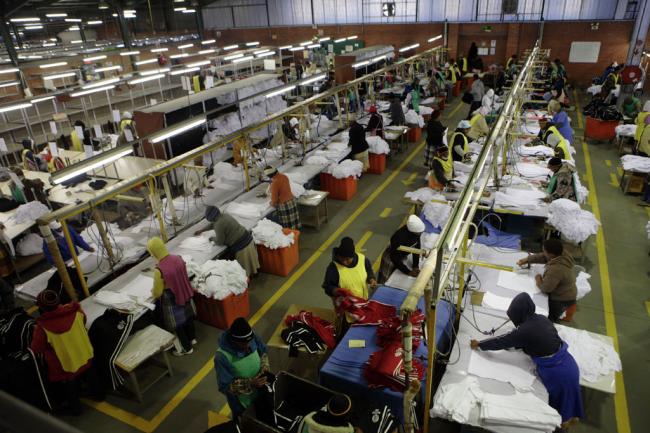
Key trends for infrastructure development and industrialization in spotlight at special UN meeting
“The 2030 Agenda for Sustainable Development – and its 17 Sustainable Development Goals (SDGs) and targets – recognizes the importance of infrastructure, industrialization and innovation for eradicating poverty and expanding opportunities for people, especially the poorest,” said ECOSOC President Frederick Shava, citing the 15-year development framework adopted by 193 UN Member States in 2015.
Addressing the Council’s special meeting on ‘Innovations for Infrastructure Development and Promoting Sustainable Industrialization,’ Shava said that the achievement of Sustainable Development Goal 9 on infrastructure, industrialization and innovation will need to be prioritized in national, regional and global policy making.
The one-day meeting aims, among others, to highlight the challenges to building, maintaining and upgrading infrastructure and promoting industrialization, and related innovations, in developing countries, particularly in Africa and the countries in special situations; and to share knowledge, experiences and innovative approaches for the promotion and development of infrastructure and industrialization in all countries.
“Making progress on SDG 9 will have positive ripple effects on other SDGs, such as SDG 1 to end poverty; SDG 2 on zero hunger; SDG 3 on health, SDG 4 on education, SDG 6 on water and sanitation, SDG 7 on affordable and clean energy, SDG 8 on decent work and economic growth; and SDG 11 for sustainable cities and communities, among others,” he said.
As someone who hails from Africa, Shava said he knows the potential the continent holds and the challenges it faces. Citing an estimate by the UN Economic Commission for Africa (UN-ECA), he said that about $93 billion is needed to bring the continent’s infrastructure up to speed over the next three years.
Also addressing the special meeting was Wu Hongbo, UN Under-Secretary-General for Economic and Social Affairs, who highlighted “a catalytic and cross-cutting role” of infrastructure development and sustainable industrialization to implement the 2030 Agenda.
“Access to infrastructure and the promotion of sustainable industrialization is essential for inclusiveness. It is essential so that no one is left behind and that there truly is sustainable development for all,” he said.
Wu went on to underscore some critical challenges, including the global infrastructure gap. The infrastructure financing gap in developing countries is estimated to be between $1 trillion and $1.5 trillion annually.
A second challenge is urbanization, he said, noting that the number of people living in cities in emerging markets is expected to double by 2030, adding another two billion people to urban areas.
And a third challenge is the importance of building and applying effective technology for resilient infrastructure and industrialization in rural areas, he said.
“The international community has committed to supporting efforts to ensure infrastructure development and sustainable industrialization. Now is the time to take action,” he said, citing four particular areas: integrated policy advice; capacity building; partnerships; and information and data on infrastructure for follow-up and review.
Photo: World Bank/John Hogg
Source: www.justearthnews.com
Support Our Journalism
We cannot do without you.. your contribution supports unbiased journalism
IBNS is not driven by any ism- not wokeism, not racism, not skewed secularism, not hyper right-wing or left liberal ideals, nor by any hardline religious beliefs or hyper nationalism. We want to serve you good old objective news, as they are. We do not judge or preach. We let people decide for themselves. We only try to present factual and well-sourced news.
Support objective journalism for a small contribution.


