


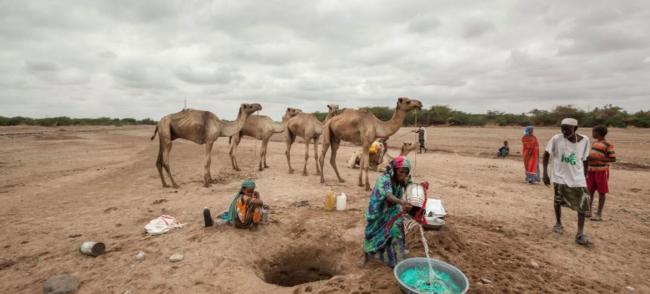
Preventive action could save billions of dollars in food assistance costs - UN agency
New York, May 15 (IBNS): As chronic hunger increases and food crises intensify worldwide, preventative action and extra investment could results in billions of dollars of savings each year, a new United Nations report has found.
As an example, an end to conflict in Syria and Yemen alone could save over $500 million a year.
According to the UN World Food Programme (WFP), while ending conflict is crucial, making national and local systems of relief more robust, is equally important.
“Preventing food crises also requires long-term investment in education, infrastructure and economic growth,” said Steven Were Omamo, the Chief of Food Systems at WFP.
“While increases in per capita income help countries limit the scale of food crises, even low-income countries can prevent crises by making these investments.”
In its report entitled World Food Assistance: Preventing Food Crises, WFP makes the case for tackling the root causes of food crises – not just conflict, but climate shocks, chronic hunger and malnutrition; poorly functioning food systems; and flawed political, social and economic structures.
For example, helping countries and communities better manage the risks posed by natural disasters - especially those related to climate change - as well as reducing displacement, could yield potential savings of close to $1 billion.
Concerted action could lower the agency's costs by more than $5 billion, the report noted.
“In other words, there would be virtually no need for food assistance and the money saved could be spent on longer-term developmental initiatives to improve the lives of the most vulnerable,” said WFP.
WFP/Petterik Wiggers
Support Our Journalism
We cannot do without you.. your contribution supports unbiased journalism
IBNS is not driven by any ism- not wokeism, not racism, not skewed secularism, not hyper right-wing or left liberal ideals, nor by any hardline religious beliefs or hyper nationalism. We want to serve you good old objective news, as they are. We do not judge or preach. We let people decide for themselves. We only try to present factual and well-sourced news.
Support objective journalism for a small contribution.


