


Scourge of slavery still claims 40 million victims worldwide, ‘must serve as a wakeup call’
New York: Incidents of modern-day slavery are “only likely to increase” as a result of some of biggest challenges facing the world today, a UN expert outlined in a report for the Human Rights Council in Geneva on Monday.
The Special Rapporteur on contemporary forms of slavery, Urmila Bhoola, explained that over 40 million people are enslaved around the world, a quarter of them children. Due to problems of environmental degradation, migration and shifting demographics, the scourge of modern-day slavery is expected to grow.
Over 60 percent of those in forced labour work in the private sector, Ms. Bhoola said, with women and girls disproportionately affected. Of the female victims involved in forced labour, 98 percent have experienced sexual violence.
Global estimates from the International Labour Organization (ILO) indicate that 24.9 million people are in forced labour situations worldwide, and 15.4 million live in forced marriages.
This sort of trend, “must serve as a wakeup call,” Ms. Bhoola said, highlighting that the astounding statistics come four years after States committed to the UN’s Sustainable Development Goals (SDGs), with relevant targets 5.2 and 8.7 aimed at stamping out trafficking, ending violence against women, and eradicating modern slavery.
The problem is exacerbated by the pressing climate conflict of our time. “In wake of climate change, people may lose their livelihoods, young people who don’t have access to decent work may migrate through unsafe channels and changes in the world of work, such as automation, may push already vulnerable people out of their jobs,” all of which could increase people’s vulnerability to slavery, the expert explained.
Even for those who escape, life for survivors is often difficult. Investigations by the NGO Human Rights Watch, highlight how even victims who manage to extricate themselves, can return home to the same desperate circumstances that made them vulnerable to begin with, but now facing stigma or blame.
Beyond these tragic realities for individuals, “slavery leads to increased public health costs, productivity losses, negative environmental externalities and lost income,” Ms. Bhoola added, urging for States and business to “act now.”
“We cannot afford to stand by while more and people are driven into forced labour, servile marriage or child labour,” she said.
Looking forward, the UN expert highlighted that for youth approaching working age, the situation is more dire - “By 2030, some 85 percent of the more than 25 million young people entering the labour force globally will be in developing and emerging countries,” she noted. “Their perspectives to access jobs offering decent work will determine their level of vulnerability to exploitation, including slavery.”
To prepare for this, “it is imperative” anti-slavery efforts are “systematic, scientific, strategic, sustainable, survivor-informed, and smart” she maintained.
Current efforts to end slavery are falling short and States and businesses “must take more decisive action to end slavery,” Ms. Bhoola concluded. This must be done “by committing more resources to this effort and by adopting and implementing public policies which address contemporary forms of slavery effectively.”
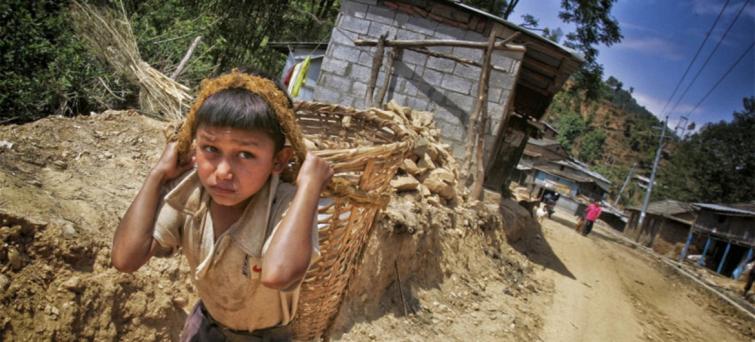
Photo caption and credit:
David Longstreath/IRIN
A young boy works as a labourer near Kathmandu, Nepal. Photo: David Longstreath/IRIN
Support Our Journalism
We cannot do without you.. your contribution supports unbiased journalism
IBNS is not driven by any ism- not wokeism, not racism, not skewed secularism, not hyper right-wing or left liberal ideals, nor by any hardline religious beliefs or hyper nationalism. We want to serve you good old objective news, as they are. We do not judge or preach. We let people decide for themselves. We only try to present factual and well-sourced news.
Support objective journalism for a small contribution.


