


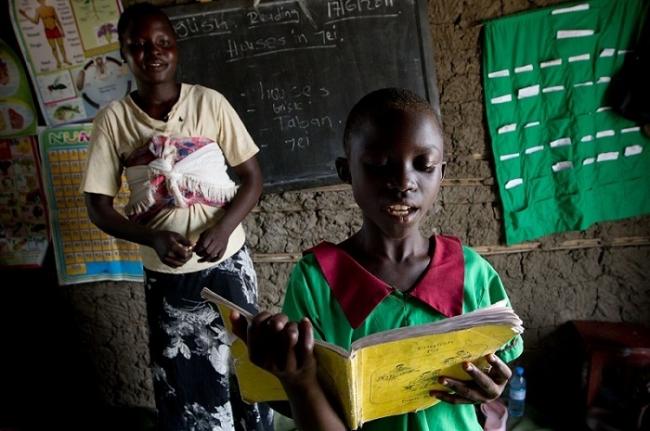
Young students getting better at reading, finds international study
New York, Dec 6(Just Earth News): Reading literacy levels are on the rise across the globe, giving young students a set of strong skills to serve them in their futures as well as contributing to the implementation of the United Nations Sustainable Development Goals (SDGs), in particular those related to inclusive and quality education.
According to the 2016 Progress in International Reading Literacy Study (PRILS), launched Tuesday by the International Association for Evaluation of Educational Achievement at the UN Education, Scientific and Cultural Organization (UNESCO) headquarters, in Paris, 96 per cent of fourth graders from over 60 education systems achieved above the international benchmark.
“An early start in reading literacy has lasting benefits, with students who had attended pre-primary school for three years or more reporting higher average scores,” said UNESCO in a news release announcing the findings.
It also highlighted the impact of supportive home environments – with parents engaging their children in early literacy activities – and safe and well-resources learning environments with qualified teachers associated with higher achievement scores.
Furthermore, the report also showed that female students outperformed their male counterparts in 48 countries and dependent territories by an average of 19 points.
This year's PIRLS was extended to include an assessment of online reading – called ePIRLS. The findings from this section concluded that good readers also have an advantage in digital literacy skills, with half of students deemed good to excellent readers reaching the PIRLS high international benchmark.
Also on Tuesday, UNESCO and the International Association launched a guidance booklet on how large-scale assessments, such as PIRLS, can help in measuring progress towards the achievement of the education-related SDG (Goal 4).
SDG 4 targets analysed in the booklet include target 4.1 on primary education, 4.2 on early childhood development, 4.4 on skills for work, 4.5 on gender equality and inclusion, 4.a on effective learning environments and 4.c on teachers.
UNESCO/Mark Hofer (2011)
Source: www.justearthnews.com
Support Our Journalism
We cannot do without you.. your contribution supports unbiased journalism
IBNS is not driven by any ism- not wokeism, not racism, not skewed secularism, not hyper right-wing or left liberal ideals, nor by any hardline religious beliefs or hyper nationalism. We want to serve you good old objective news, as they are. We do not judge or preach. We let people decide for themselves. We only try to present factual and well-sourced news.
Support objective journalism for a small contribution.


