Bangladesh apparel exports can create more jobs: World Bank
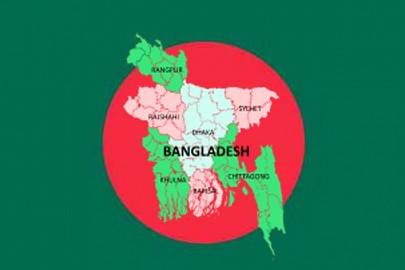
A new World Bank report “Stitches to Riches: Apparel Employment, Trade and Economic Development” says Bangladesh has the largest apparel export industry in South Asia and, at 6.4 percent, the largest market share of global apparel exports among South Asian countries.
Bangladesh has steadily increased its share of global apparel trade above the world average and greater than China but lower than that of the Southeast Asian countries.
The report highlights that Bangladesh needs to improve performance on non-cost factors important to global buyers. Successfully implementing reforms will help Bangladesh increase exports and capture more jobs from China’s gradual exit from the clothing market and compete with Vietnam, Cambodia, and Indonesia. For the U.S. market, a 10 percent increase in Chinese apparel prices would increase apparel employment in Bangladesh by 4.22 percent.
“The apparels sector in Bangladesh tells a remarkable story of women’s empowerment by significantly increasing female participation in the labor force,” said Qimiao Fan, the World Bank Country Director for Bangladesh, Bhutan and Nepal. “The apparel industry is extremely important to Bangladesh’s economy, accounting for 83 percent of total exports. The potential decrease in Chinese exports presents a huge opportunity for Bangladesh, if it can meet global buyers’ requirements for cost, quality, lead time, reliability and compliance with safety standards and other policies.”
In Bangladesh, the industry is dominated by local firms, but foreign direct investment played a central role in launching the industry, providing linkages to foreign buyers, technology, and knowledge transfer. Its apparel firms produce large quantities of clothing at low costs, largely due to its low wage rates. Firms mostly specialize in low-value and mid-market price segment apparels – trousers, knit and woven shirts, sweaters/sweatshirts – and have not penetrated the high-end clothing markets so far.
“Competition is increasing in the global apparels market with buyers moving towards greater consolidation in sourcing decisions and the impending approval of the Trans-Pacific Partnership,” said Gladys Lopez-Acevedo, report co-author and a Lead Economist for the World Bank. “Bangladesh should capitalize on its position as regional leader and implement policies to improve the quality of its product. Bangladesh should focus on sustaining the creation and expansion of good jobs, bringing more women into the work force and diversifying its products and end markets to increase skills and value.”
Bangladesh has many policy options to increase exports. For improved product quality and diversity, reducing import barriers to manmade fibers is essential. Bonded warehouses, duty drawback, cash subsidy, and export processing zones could also help. To improve compliance and better safety standards, one potential option could be to encourage the relocation of firms into export processing zones.
The report demystifies the global and South Asian apparel markets, estimating the potential gains in exports and jobs, and identifies policies that can unleash South Asia’s export and job potential. The report was launched today in Dhaka jointly with the Bangladesh Institute of Development Studies.
Support Our Journalism
We cannot do without you.. your contribution supports unbiased journalism
IBNS is not driven by any ism- not wokeism, not racism, not skewed secularism, not hyper right-wing or left liberal ideals, nor by any hardline religious beliefs or hyper nationalism. We want to serve you good old objective news, as they are. We do not judge or preach. We let people decide for themselves. We only try to present factual and well-sourced news.