

Sweet Memory: How a Kolkata Durga Puja Is Retelling Bengal’s Love Affair With Mishti
In central and north Kolkata, two Durga Pujas have turned the humble mishti into a theme. “Mishtanna Puran” traces a thousand-odd years of milk, sugar and ingenuity—from temple offerings to the rosogolla—and reminds the city that no other cuisine has made sweetness so central to its identity. Reporting and writing by Sujoy Dhar and Aaheli Chakraborty; photos by Avishek Mitra
Every Bengali knows that a celebration is not complete until something sweet arrives. At the Wellington Nagarik Kalyan Samity puja, in the heart of the city’s bustling market belt, that instinct has become the theme.
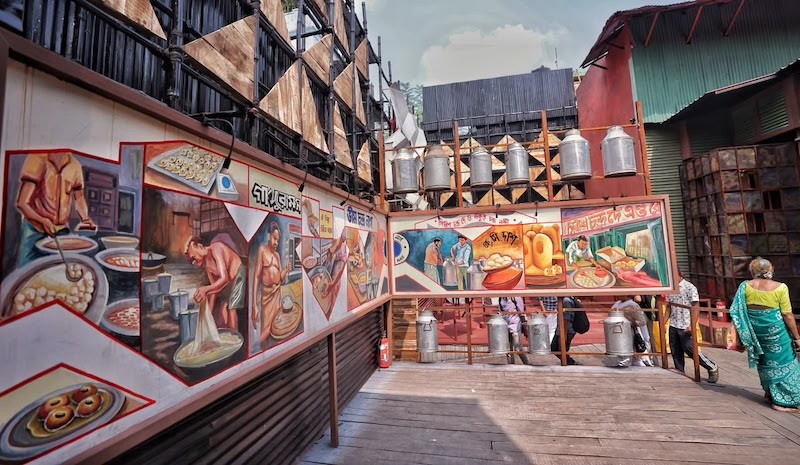
Called “Mishtanna Puran”, the pandal tells the story of Bengali sweets in two acts, before and after Chaitanya Mahaprabhu. The first is a world of khoa, or condensed milk, and of pithe and payesh offered as prasad. The second is the world we know, of chhana, rosogolla and sandesh.
 Sweets from rosogolla to sandesh, alongside the names of Bengal’s legendary confectioners, are woven into the theme of the Wellington Square pandal. Photo: Avishek Mitra
Milk before chhana
“When Chaitanya Mahaprabhu was alive, in those times pithe and payesh were very common, which used to be made of kheer, or condensed milk, and were offered as prasad,” said Susmit Barua, a member of the committee.
The pandal also depicts the palm and date trees that give Bengal its gur, with the tal (palm fruit) and the aank (sugarcane), from which jaggery is made. Bengali sweetness, the artists wanted to say, began in the soil.
The Portuguese twist
The turning point, as the committee tells it, came with the Portuguese. “When the Portuguese came here for business in the 17th or 18th century, they were the first ones who fermented the milk to make cheese out of it, near the Hooghly river,” Barua said. “Then after that cheese, chana originated.”
Food historians have long argued over this. Many credit Portuguese traders with introducing the art of curdling milk to Bengal, where it was once considered improper because a curdled offering was thought unfit for the gods. That is why, Barua explained, early chhana sweets were not offered as bhog. “People said that these are not real prasad. But later eventually we accepted it.”
 Famous Bengal sweet shops, like Bhim Chandra Nag and their signature mishti form the theme of the Mishtanna Puran pandal at Wellington Square. Photo: Avishek Mitra
The rosogolla moment
From chhana came the revolution, and a name that every Bengali schoolchild knows. “Nabin Chandra Das first invented rosogolla, then eventually other sweets came up using chana,” Barua said.
Nabin Chandra Das’s shop in north Kolkata is traditionally said to have launched the spongy, syrup-soaked sweet in the 1860s. His son, Krishna Chandra Das, built on that legacy with the famed KC Das brand and is associated with popularising the rasomalai.

The rosogolla’s origins have been fiercely contested between Bengal and Odisha, and Bengal received a Geographical Indication tag for its version, the “Banglar Rosogolla”, in 2017. In Kolkata, no one needs the paperwork to know whose it is.
The house of sandesh
If the rosogolla is Bengal’s showstopper, sandesh is its poetry. Delicate, fragrant, shaped in moulds that range from conch shells to fish, it turned chhana into an art form.
This is where the old confectioners come in. Bhim Chandra Nag, whose shop in Bowbazar dates back to 1826, is among the oldest names in the trade. Local lore also credits the house with the ladikeni, a fried chhana sweet created in honour of Lady Canning, wife of the Governor-General, in the 1850s.
Balaram Mullick and Radharaman Mullick, in business since the 1880s, are other names that every Kolkata family can recite, as is Putiram. These shops carried Bengali mishti from the neighbourhood sweetmeat counter to the centre of the city’s social life.


They made sweets a language. A box of sandesh is a thank-you, an apology, an introduction and a blessing. Mishti doi marks the end of a good meal, and nolen gur sandesh and patishapta arrive with winter. Pantua, langcha and Bardhaman’s mihidana and sitabhog, as well as Joynagar’s moa, carry their towns’ names across the country.
“Sweets are something that is present in every festival, be it Bhai Phota or Rakhi Purnima,” Barua said. “You can say that this is a remarkable art form of Bengal.”
 Bengali sweets take centre stage in the theme of this year’s Wellington Square Durga Puja. Photo: Avishek Mitra
A theme that took time to arrive
It was the artists who brought the idea to the committee. “We saw that people who worked in Kolkata for all these years, no one did anything on sweets,” Barua said. “When artists told us that they wanted to do something on sweets, we liked the concept and chose this.”
Kolkata’s pandals have, over the years, borrowed themes from temples, tribal art, handloom and architecture. A pandal dedicated to mishti seems overdue in a city where a Durga Puja that UNESCO recognised in 2021 as intangible cultural heritage unfolds alongside a parallel celebration of food.
Sweet makers in the audience
Another committee member said the theme has also brought the old guard to the pandal. “We have invited Bhim Chandra Nag, KC Das, Naba Krishna Guin and others, all of them have come together with us here,” he said. “They came here and appreciated us, and even invited others to visit our pandal. They all are very satisfied with our theme this year.”
 The legacy of KC Das, the house behind the rosogolla’s popularity, finds a place in the Mishtanna Puran theme at Wellington Square. Photo: Avishek Mitra
The locality, he noted, is a commercial hub, home to traders from many communities. “Nowadays here I’m a Bengali who has a shop here, other than that most of the shops are owned by Hindi-speaking people, but nonetheless everyone of us has come together to establish the theme of the sweets of Bengal this year.”
He added that the theme “has never happened anywhere in Kolkata or West Bengal before.”
 The Mishtanna Puran pandal at Wellington Square pays tribute to Bengal’s sweet-making legacy. Photo: Avishek Mitra
Meanwhile, Ahiritola Sarbojanin Durgotsav Samiti, one of North Kolkata’s longstanding community pujas, too turned the spotlight on Bengal’s sweet-making heritage in its 87th year.
Its 2026 theme, In Search of Sweet Friendship, draws on the place mishti occupies in the Bengali imagination, where sweets are woven into everyday courtesies, family milestones, festivals and friendships. The pavilion explores this relationship between food and social life, treating Bengal’s sweets not merely as culinary creations but as markers of memory, tradition and shared cultural identity.
The narrative reaches into the history of Bengali confectionery, bringing the world of traditional ingredients, age-old recipes and the artisans behind them into focus. From sweets made with jaggery, coconut and milk to the many varieties of sandesh and rosogolla, Bengal’s mishti tradition reflects generations of experimentation and craftsmanship.
 Ahiritola Sarbojanin’s 2026 pandal celebrates Bengal’s rich mishti heritage. Photo: Avishek Mitra
The neighbourhood sweet shop, too, occupies a special place in this story: a familiar corner where people meet, exchange news, mark occasions and carry home something for those they love. At Ahiritola, this everyday culture becomes the starting point for a larger exploration of the ties between food, place and community.
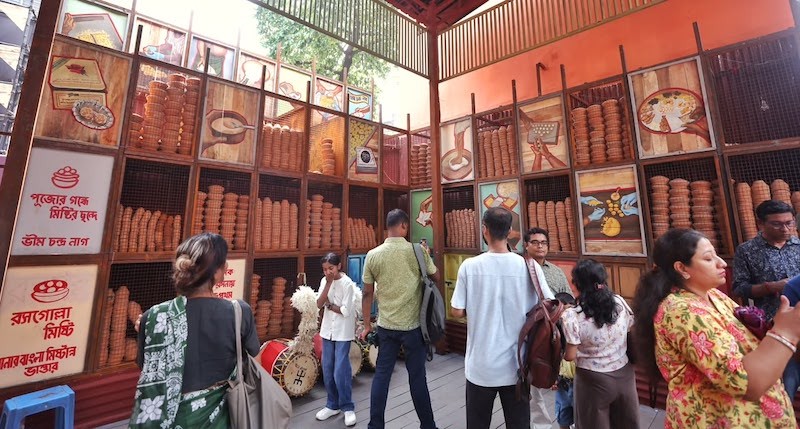 tribute to Bengal’s iconic sweet shops and their timeless flavours. Photo: Avishek Mitra
The theme also looks at the simple act of sharing sweets as a gesture that can bring people together across social and cultural boundaries. In a city where mishti accompanies everything from celebrations to reconciliation, the idea of sweet friendship carries a meaning beyond taste.
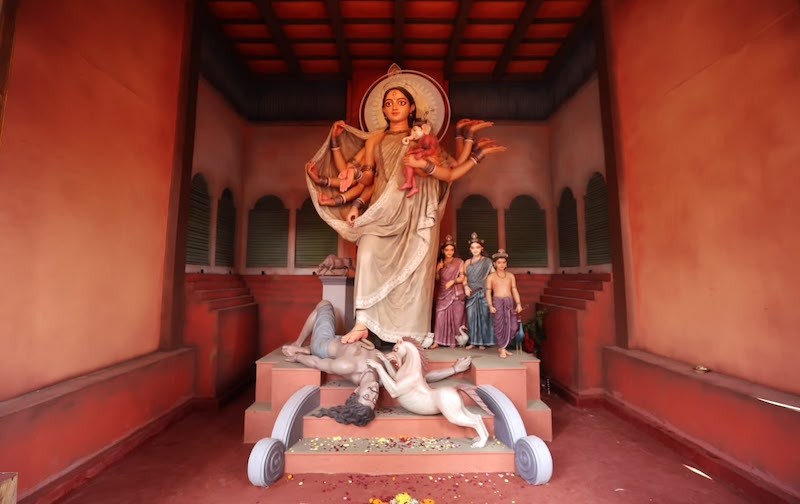 Ahiritola’s 87th-year celebration brings Bengal’s mishti memories to life. Photo: Avishek Mitra
Ahiritola’s presentation invites visitors to revisit these familiar associations and consider how culinary traditions preserve the bonds between generations. In doing so, the puja connects a much-loved part of Bengal’s heritage with the spirit of togetherness that lies at the heart of Durga Puja.
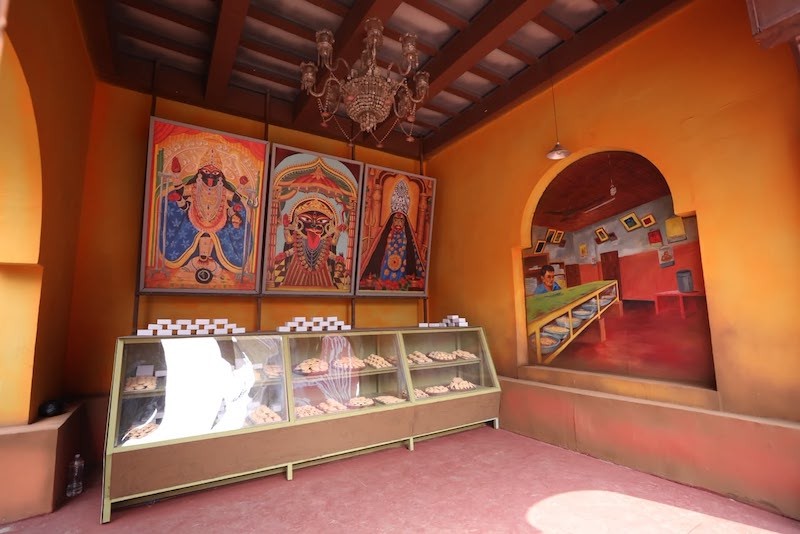 The pandal showcases the legacy of celebrated Bengali mishti brands. Photo: Avishek Mitra
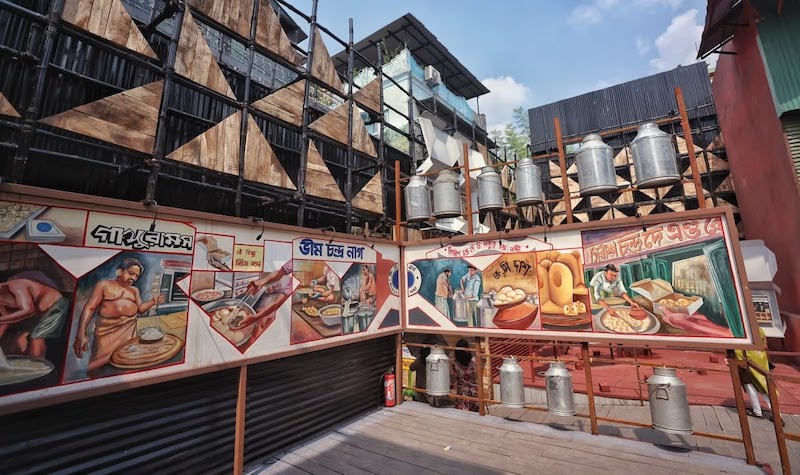 Ahiritola explores how sweets have shaped Bengal’s culture of sharing and friendship. Photo: Avishek Mitra
The last bite
For visitors, the pandals offer something rarer than spectacle: recognition. Many will walk out remembering the first rosogolla they were fed by a grandmother, or the sandesh packed for a train journey.
Nothing else in the world comes close to Bengal’s mishti, and for four days in Wellington Square, the city is happy to say so.
 Sandesh moulds, the tools behind Bengal’s most delicate sweet, feature in the Mishtanna Puran theme at Wellington Square. Photo: Avishek Mitra
Support Our Journalism
We cannot do without you.. your contribution supports unbiased journalism
IBNS is not driven by any ism- not wokeism, not racism, not skewed secularism, not hyper right-wing or left liberal ideals, nor by any hardline religious beliefs or hyper nationalism. We want to serve you good old objective news, as they are. We do not judge or preach. We let people decide for themselves. We only try to present factual and well-sourced news.
Support objective journalism for a small contribution.