 AI
AI
Ind.AI: Sovereignty, jobs, energy and the “What If?”
India stands at an inflection point.
As AI Summits fill auditoria and optimism fills headlines, we must pause and ask harder questions. Not about model accuracy. Not about chatbot adoption. But about sovereignty, livelihoods and national resilience.
AI is not merely a technology upgrade. It is an infrastructure shift. And infrastructure determines power.
Countries have increasingly used trade and technology as strategic leverage. We have witnessed it with semiconductors, rare earths, telecom networks and energy supply chains. If India builds its AI backbone on a handful of foreign foundation models, what guarantees do we have that those systems cannot be throttled, modified, or influenced from their country of origin?
History offers uncomfortable lessons. In the 18th and 19th centuries, the UK used this in China with Cocaine dependency becoming a geopolitical instrument. Economic addiction translated into leverage. Leverage translated into control.
In a post-AI world, digital dependency could play a similar role if we are not vigilant.
If our enterprises, defence systems, financial networks, and public infrastructure rely on AI systems we do not fully control, vulnerability becomes systemic. Strategic addiction is subtle — but its consequences are structural.
This is not fear-mongering. It is foresight. Then comes the employment question.
In a widely discussed episode of The Diary Of A CEO, God Father of AI, (AI safety officer) predicted that up to 99% of jobs could disappear. Even if the figure is overstated, the direction is clear: large-scale disruption is imminent.
We cannot comfort ourselves with clichés that “new jobs will emerge.” They probably will. But which ones? At what scale? In what geographies? Requiring what skills?
If the apocalypse comes then it’ll be like a Covid like situation where the five main vaccine players make the money and then the rest of the world comes to a standstill.
Hope is not a strategy.
India needs a serious displacement map — sector by sector, region by region — paired with a five-year skilling and transition blueprint. We need AI guardrails, liability frameworks, and shock absorbers for employment markets.
Like in the US India needs to build fast a workforce development board across every district where industry, academia and society sit together to find out how the job displacement will occur and what's skilling is needed to re-skill our people
India managed demonetization. India managed COVID. AI-driven displacement could be more permanent than both. The macroeconomic implications are even more profound.
If large segments of white-collar work shrink dramatically, demand patterns shift. There will be no official travel. Corporate mobility slows. Office footprints contract. Consumption resets.
If productivity surges but wage participation falls, the GDP equation itself changes.
Should we consider AI dividend frameworks? Should compute infrastructure be treated as a public utility? Should India build a sovereign AI wealth fund? AI is not a startup conversation. It is a fiscal and monetary conversation. And beneath all of this lies energy.
AI is compute. Compute is energy. Energy is geopolitics.
Does India have the power capacity to sustain AI-scale compute? Do we have a semiconductor strategy aligned to national AI goals? Are we building strategic data centre clusters with energy security embedded into the plan?
AI ambition without energy independence is an illusion. Yet this is not a pessimistic moment. It is a constructive one.
There are many Indians who are global leaders in AI — researchers, founders, safety experts, chip designers, systems architects. They sit in Silicon Valley, London, Singapore, Toronto, and Bengaluru. Roll out the red carpet. Provide sovereign compute access. Create National AI research clusters. Invite India diaspora to co-build India’s foundational models. If we do not build our own intelligence layer, we will rent it.
And rented intelligence, in geopolitics, can become leveraged intelligence. India has missed waves before. This time, we have the talent, the scale, and the urgency. AI is not just innovation. It is a national strategy. And the countries that think about sovereignty, jobs, energy — and the “what if” — will shape the next century.
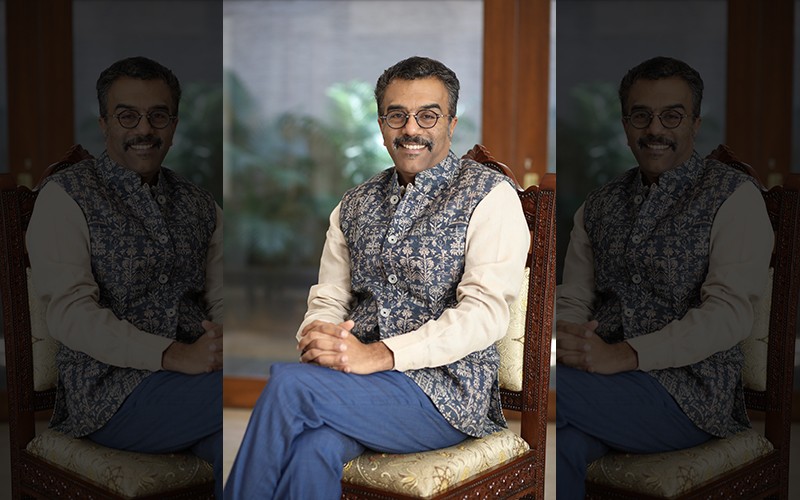
About the Author: Chocko Valliappa is Founder and Managing Director, Vee Technologies and Vice Chairman, The Sona Group.
Support Our Journalism
We cannot do without you.. your contribution supports unbiased journalism
IBNS is not driven by any ism- not wokeism, not racism, not skewed secularism, not hyper right-wing or left liberal ideals, nor by any hardline religious beliefs or hyper nationalism. We want to serve you good old objective news, as they are. We do not judge or preach. We let people decide for themselves. We only try to present factual and well-sourced news.
Support objective journalism for a small contribution.