

 J&K
Kashmir's connectivity revolution: Railways, mega tunnels, airport expansion reshape the region's economic landscape
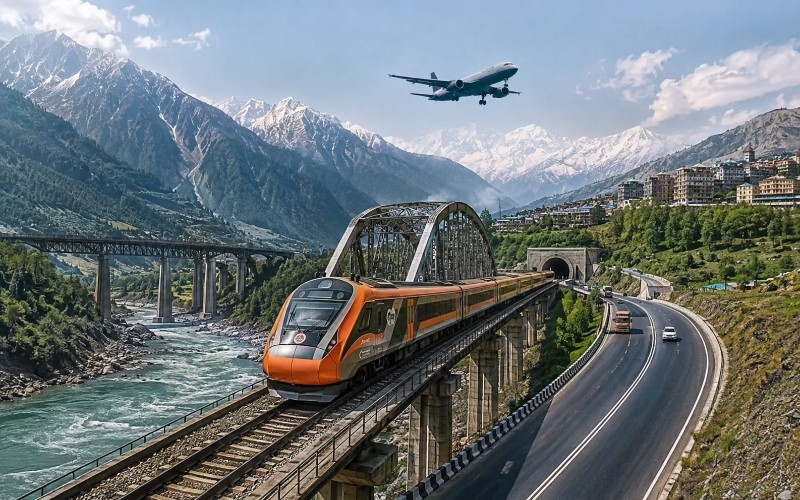
Jammu and Kashmir is witnessing a major transformation in connectivity, with an expanding network of railways, highways, tunnels and airport infrastructure bringing remote areas closer to national markets.
From the Udhampur–Srinagar–Baramulla Rail Link (USBRL) and the world’s highest railway arch bridge over the Chenab River to major road tunnels and airport expansion plans, infrastructure development is reshaping mobility across the Himalayan region.
The projects are designed to address longstanding geographical challenges, improve all-weather access and strengthen connections between communities, businesses and destinations.
New railway services are making passenger journeys faster, while road corridors and tunnels are expected to reduce travel times and improve access to areas that have historically faced seasonal isolation.
The expansion also carries economic significance.
Improved transport links are creating new opportunities for farmers, traders and tourism operators by making it easier to move agricultural produce, handicrafts and other goods to markets beyond the region.
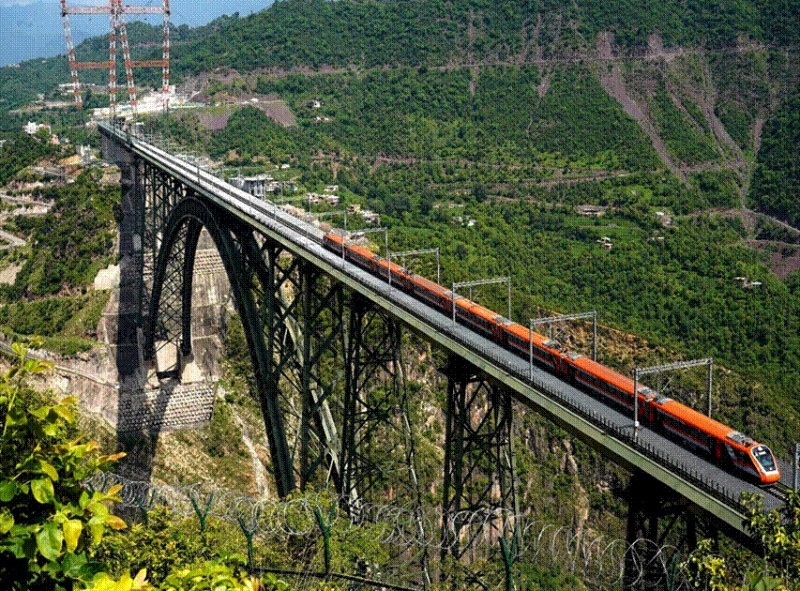 A Vande Bharat train is crossing the Chenab rail bridge, the world's highest railway arch bridge. Photo: PIB
USBRL connects Kashmir to India’s rail network
The 272-kilometre Udhampur–Srinagar–Baramulla Rail Link is among the most significant railway infrastructure projects undertaken in the Himalayan region.
Inaugurated in June 2025, the ₹43,780-crore national project connects the Kashmir Valley with the wider Indian railway network, overcoming difficult terrain through an extensive system of tunnels and bridges.
The railway line passes through Udhampur, Reasi, Ramban, Srinagar, Anantnag, Pulwama, Budgam and Baramulla.
Its construction involved 36 tunnels extending over 119 kilometres and 943 bridges, reflecting the engineering demands of building a railway through the mountainous landscape.
The project has also boosted local employment, generating more than five crore man-days during construction.
In addition, the project has built over 215 kilometres of roads, including a tunnel and 320 bridges, as part of wider infrastructure development, improving access for surrounding communities.
Electrification across the USBRL route supports more efficient railway operations.
Together, the rail link and associated infrastructure are strengthening connections between the Kashmir Valley and other parts of the country, with potential benefits for passenger mobility, tourism and the movement of goods.
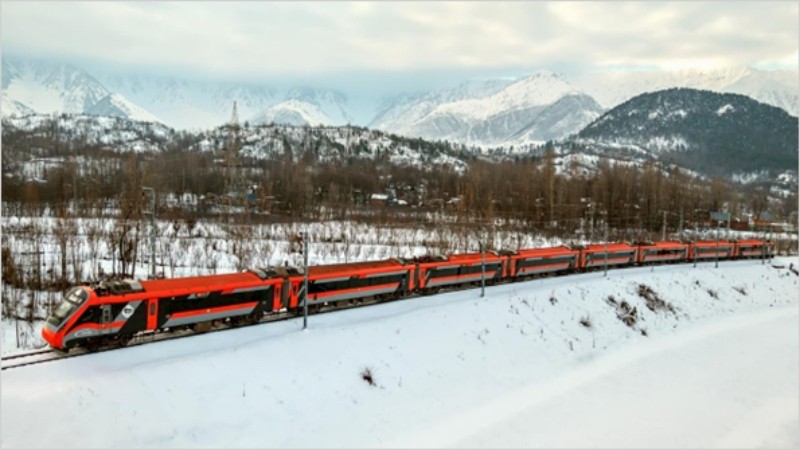 Vande Bharat Express, Jammu and Kashmir. Photo: PIB
Vande Bharat makes travel faster
The introduction and expansion of Vande Bharat services have added another dimension to railway connectivity in Jammu and Kashmir.
The service between Katra and Srinagar began in June 2025, before being extended to Jammu Tawi Railway Station in April 2026.
The extended service has reduced the journey between Jammu and Srinagar to less than five hours.
The trains have also been expanded from eight to 20 coaches to support passenger movement.
Designed to operate in extreme weather and high-altitude conditions, the trains incorporate specialised operating systems and electronics.
A snow-removal train travels ahead of passenger services to clear railway tracks, while seismic dampers help absorb tremors in the region’s earthquake-prone terrain.
These features support the operation of railway services in an environment where heavy snowfall, low temperatures and seismic activity pose significant infrastructure challenges.
The expanded rail network is also supported by investment in stations and additional railway lines.
Under the Amrit Bharat Station Scheme, four stations in Jammu and Kashmir—Budgam, Jammu Tawi, Martyr Captain Tushar Mahajan at Udhampur, and Shri Mata Vaishno Devi Katra—have been identified for redevelopment.
Plans for additional railway infrastructure include a third line between Jalandhar Cantt and Jammu Tawi, an additional line between Jammu and Shri Mata Vaishno Devi Katra, and a proposed railway connection between Jammu/Reasi and Poonch.
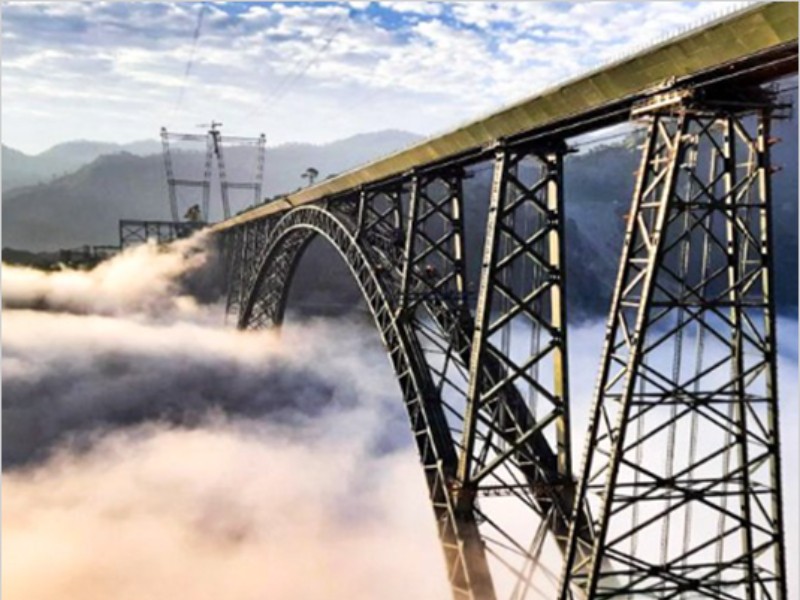 Chenab Rail Bridge in Jammu and Kashmir. Photo: PIB
Chenab Bridge: An engineering marvel
Among the most prominent achievements of the USBRL project is the Chenab Rail Bridge in Reasi district.
Inaugurated in June 2025, the 1,315-metre-long structure is the world’s highest railway arch bridge.
Its arch spans 467 metres, while the bridge rises 359 metres above the riverbed, making it taller than the Eiffel Tower.
Engineers designed the structure to withstand strong winds and seismic forces, addressing the demanding conditions of its location in the Himalayas.
The bridge has become a defining feature of the railway connection between the Kashmir Valley and the rest of India.
Its construction demonstrates the scale of engineering required to establish reliable transport infrastructure across the region’s deep river valleys and steep mountain slopes.
Another major structure is the Anji Khad Bridge, India’s first cable-stayed railway bridge. Also inaugurated in June 2025, it crosses the Anji River gorge in Reasi district.
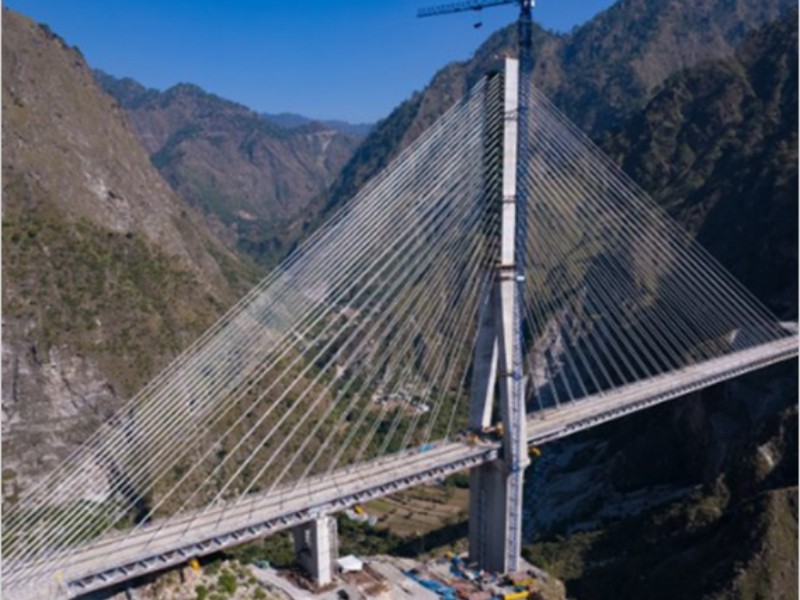 Anji Khad Bridge in Jammu and Kashmir. Photo: PIB
The bridge has a total length of 473.25 metres and is supported by a single 193-metre-high tower shaped like an inverted Y.
The project’s Tunnel T50, inaugurated in 2024, is another important component of the rail network. Extending 12.77 kilometres between Khari and Sumber, it is described in the supplied PIB material as India’s longest transportation tunnel.
Constructed through challenging Himalayan geology, the tunnel incorporates a parallel escape passage linked to the main tunnel at regular intervals.
CCTV cameras and a central monitoring system support operational safety.
Together, these structures form part of the infrastructure that has made rail connectivity across the mountainous region possible.
Road projects improve access to remote areas
Railway expansion is being complemented by investment in roads, which remain essential for reaching communities and destinations beyond the rail network.
In August 2026, foundation stones were laid for 110 road projects covering 598.455 kilometres under the fourth phase of the Pradhan Mantri Gram Sadak Yojana.
Costing more than ₹1,500 crore, the projects are expected to benefit 46,972 people across the Udhampur–Kathua–Doda–Kishtwar region.
Several project packages also incorporate waste plastics into road construction, supporting the use of alternative materials in infrastructure development.
Highway projects are strengthening connections between Jammu and Kashmir and other parts of northern India.
The 667-kilometre Delhi–Amritsar–Katra Expressway is designed to provide a faster road link between Delhi, Amritsar and Katra while reducing congestion on National Highway 44.
Key sections of the expressway were inaugurated in July 2026.
Once the relevant sections are operational, the corridor is expected to reduce the journey between Delhi and Katra from around 14 hours to approximately six hours.
It is also intended to improve access for pilgrims travelling to the Shri Mata Vaishno Devi shrine and support industrial and logistics activity along the route.
Other road projects are addressing regional connectivity needs.
The widening and strengthening of the Rafiabad–Kupwara section of National Highway 701 is intended to improve access to border areas.
Meanwhile, the 8.925-kilometre Shopian bypass, sanctioned at a cost of ₹224.44 crore, is designed to improve links between Shopian, Pulwama and Kulgam and facilitate the transportation of agricultural produce.
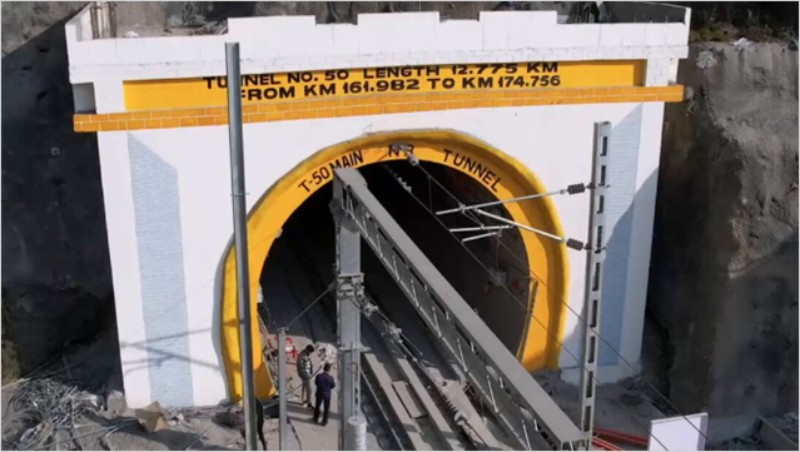 Tunnel T50 in Jammu and Kashmir. Photo: PIB
Sonamarg and Zojila tunnels strengthen all-weather connectivity
Tunnels are central to efforts to improve road access through the Himalayan region, where snow, avalanches and landslides can disrupt transport.
The Sonamarg tunnel, also known as the Z-Morh tunnel, was inaugurated in January 2025.
The 6.4-kilometre tunnel, built at a cost of more than ₹2,700 crore, provides an all-weather route between Srinagar and Sonamarg on the road towards Leh.
It bypasses sections vulnerable to major avalanches and landslides, helping improve access to the tourist destination during winter.
The project is expected to support year-round tourism, including winter activities and adventure sports, while creating opportunities for local businesses and communities.
Further east, the 13.153-kilometre Zojila Tunnel is being constructed between Baltal and Minamarg on National Highway 1.
The ₹6,808-crore project achieved a major milestone in June 2026, when the main tunnel recorded its breakthrough.
Once completed, the tunnel is expected to reduce the journey between Sonamarg and Minamarg from approximately two hours to around 30 minutes.
It is also intended to reduce exposure to the severe winter conditions and avalanche risks associated with Zojila Pass.
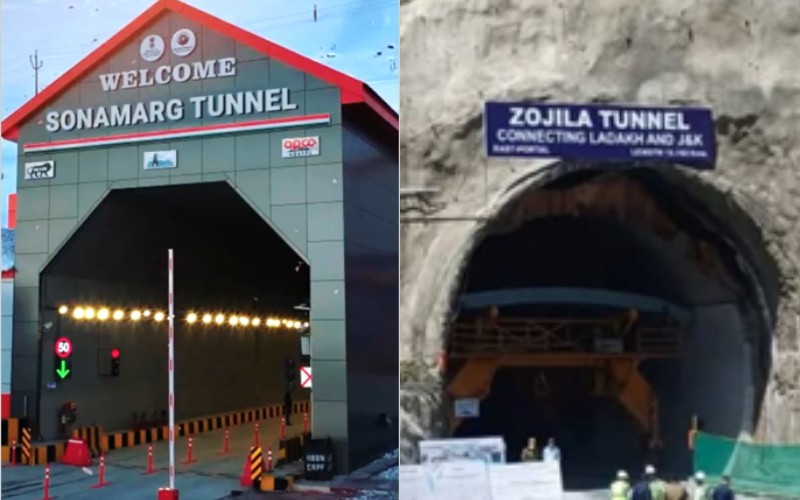 Sonamarg Tunnel (L) and Zojila Tunnel (R) in Jammu and Kashmir. Photo: PIB
The project includes advanced ventilation, fire detection and suppression systems, CCTV surveillance and traffic-management technology.
Additional structures along the approach roads include bridges, culverts and avalanche-protection measures.
The tunnel is expected to improve access between Jammu and Kashmir and Ladakh, supporting tourism, trade, movement to remote areas and defence logistics.
The Dr Syama Prasad Mookerjee Tunnel, formerly known as the Chenani–Nashri Tunnel, has already demonstrated the benefits of such infrastructure.
Opened in 2017, the nine-kilometre highway tunnel connects Udhampur and Ramban, reduces the road journey by 31 kilometres and cuts travel time by around two hours.
Srinagar airport expansion to boost passenger capacity
Air connectivity is another important part of Jammu and Kashmir’s infrastructure development.
In February 2026, a ₹1,677-crore expansion of the Civil Enclave at Srinagar International Airport was approved.
The project, operated by the Airports Authority of India within the Indian Air Force’s Budgam Airbase, is intended to strengthen aviation capacity in the Kashmir Valley.
Spread across 73.18 acres, the development includes a new terminal building covering 71,500 square metres.
It is designed to handle up to 2,900 passengers during peak hours and 10 million passengers annually.
Plans also include 15 aircraft parking bays, space for one wide-body aircraft, a multi-level car park accommodating 1,000 vehicles and barracks for security personnel.
The existing 3,658-metre runway will continue to be operated by the Indian Air Force.
The proposed terminal will incorporate elements of Kashmir’s traditional architecture, including local woodwork and craftsmanship.
Sustainability measures include water harvesting, increased use of natural light and locally sourced eco-friendly materials.
The project is targeted to achieve a five-star rating under the Green Rating for Integrated Habitat Assessment system.
Regional aviation plans also include airports at Udhampur and Kishtwar under the UDAN scheme, which aims to expand regional air connectivity.
These facilities are intended to improve access beyond the region’s principal urban centres and support tourism, employment and investment.
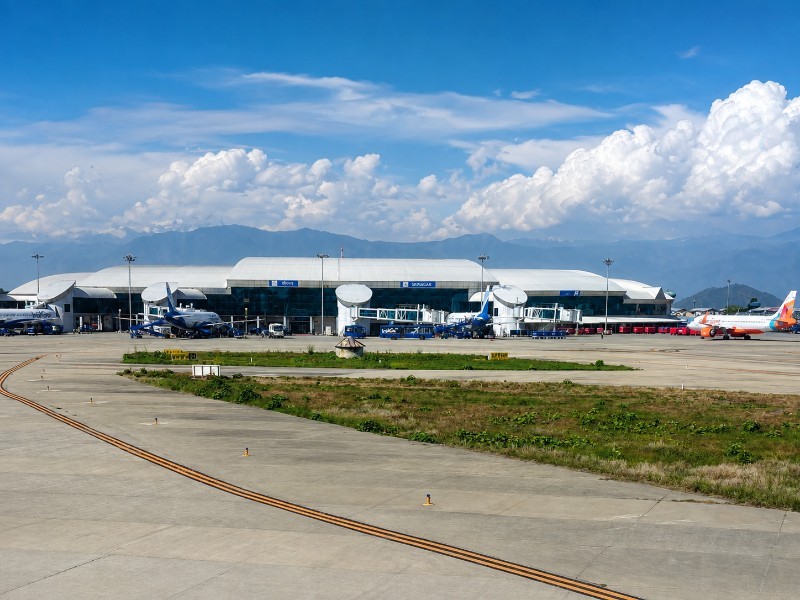 Srinagar International Airport. Photo: Wikimedia Commons/Harvinder Chandigarh
Cargo terminals link local produce to wider markets
Improved transport infrastructure is also creating opportunities to integrate Jammu and Kashmir more closely with national supply chains.
The PM Gati Shakti National Master Plan, launched in October 2021, provides a common geographic information system-based platform for planning infrastructure across central ministries and states and Union Territories.
The initiative brings together different transport modes and logistics networks to support coordinated development.
Under the Gati Shakti Multi-Modal Cargo Terminal policy, a cargo terminal in Samba district was commissioned in 2024 and is now fully operational.
In-principle approvals have also been granted for three additional terminals in Kathua, Anantnag and Jammu districts.
The terminals are intended to support the movement of goods through rail-linked logistics facilities, including warehousing, silos and cold storage.
Such infrastructure can help farmers and businesses transport products more efficiently and connect with markets beyond the region.
For Jammu and Kashmir, where apples, saffron, dry fruits, pashmina shawls and handicrafts form an important part of local commerce, stronger transport links can widen market access and support the movement of goods across longer distances.
The combined expansion of railways, roads, tunnels, airports and cargo facilities is establishing a more integrated transport network across Jammu and Kashmir.
By improving access to remote areas and connecting local producers with wider markets, these projects are reshaping the region’s transport infrastructure and strengthening its links with the national economy.
Support Our Journalism
We cannot do without you.. your contribution supports unbiased journalism
IBNS is not driven by any ism- not wokeism, not racism, not skewed secularism, not hyper right-wing or left liberal ideals, nor by any hardline religious beliefs or hyper nationalism. We want to serve you good old objective news, as they are. We do not judge or preach. We let people decide for themselves. We only try to present factual and well-sourced news.
Support objective journalism for a small contribution.