


 Pakistan
'Maza na karaya toh…': Pakistan army spokesman’s mocking threat rekindles tensions with India
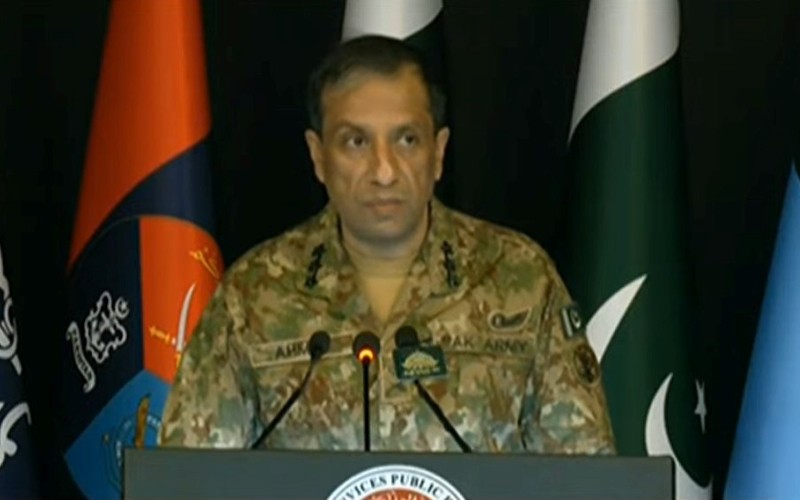
Islamabad/IBNS: Lieutenant General Ahmed Sharif Chaudhry, Director General of Pakistan’s Inter-Services Public Relations (ISPR), has once again triggered controversy after issuing a mocking and unprovoked remark aimed at India during a recent press conference.
His comments, delivered in a colloquial and taunting tone, have drawn sharp reactions for deviating from established norms of military communication.
Chaudhry’s statement came amid renewed efforts by Pakistan’s military leadership to link India to Islamabad’s ongoing tensions with Kabul, a claim that has been repeatedly made without independent verification.
'Maza na karaya' comment draws attention
While addressing the media, the ISPR chief used a phrase commonly employed in informal settings to provoke opponents.
“Maza na karaya toh paise wapas,” he said, loosely translating to, “If you don’t enjoy it, you’ll get your money back.”
The remark was widely interpreted as a thinly veiled threat directed at India.
What type of example Aaaaamd force is using?
— Lala (@FabulasGuy) January 6, 2026
“Ek Baar maza naa kara diaa to paise wapas” 🤣 pic.twitter.com/FcRw8A629b
Observers noted that the phrase, delivered with a mocking undertone, marked a departure from the measured language typically associated with senior military officials during formal briefings.
Claims linking India, Afghanistan resurface
During the same interaction, Chaudhry reiterated Islamabad’s long-standing allegation that India plays a role in Pakistan’s security challenges through Afghanistan.
He claimed that India would not accept Pakistan’s existence and suggested that regional dynamics were being shaped by adversarial intent.
According to him, Pakistan’s future depends on how it responds to these perceived threats.
He asserted that both political and military leadership in Islamabad were united and confident, while once again portraying Pakistan as divinely ordained and resilient against external pressures.
The ISPR chief further repeated Pakistan’s position that Kabul acts as a proxy for New Delhi, a claim that has been denied by both India and Afghanistan in the past.
Senior leadership echoes allegations
Chaudhry’s comments followed similar assertions made earlier by Pakistan’s senior leadership.
Defence Minister Khawaja Asif and other officials have previously alleged a nexus involving Afghanistan, India and the banned Tehreek-i-Taliban Pakistan (TTP), accusing them of conspiring against Pakistan’s internal security.
These allegations have remained a recurring theme in Pakistan’s official narrative amid strained regional relations.
'Wink-gate' adds to criticism of conduct
The latest remarks come on the heels of another controversy involving Chaudhry that drew widespread criticism.
Last month, the ISPR chief faced backlash after a video surfaced showing him winking at a journalist during a press briefing.
JUST IN: 🚨🇵🇰
— NavaBharatSpeak (@NavaBharatSpeak) December 10, 2025
Pakistan’s Army media chief sparks outrage after viral “wink” clip
Lt. Gen. Ahmed Sharif Chaudhry was caught winking at a female journalist during a press briefing — raising serious questions about professionalism.
The video has triggered criticism not only in… pic.twitter.com/j4FHZqImC0
The exchange occurred while responding to a question about jailed former Prime Minister Imran Khan and allegations labelling him a national security threat or acting at India’s behest.
Chaudhry’s response included an additional remark referring to Khan as a “zehni mareez” or mental patient, followed by a smile and a wink.
The gesture was widely condemned as unprofessional and unbecoming of the spokesperson of Pakistan’s armed forces.
Pattern of provocative messaging
Taken together, the incidents have intensified scrutiny of the tone and conduct adopted by Pakistan’s military spokesperson in public forums.
The use of mocking language, personal remarks and informal gestures has sparked debate over messaging standards at a time of heightened regional sensitivities.
As tensions persist across South Asia, Chaudhry’s remarks have once again placed Pakistan’s military communication style under the spotlight, drawing attention beyond the immediate geopolitical claims he sought to advance.
Support Our Journalism
We cannot do without you.. your contribution supports unbiased journalism
IBNS is not driven by any ism- not wokeism, not racism, not skewed secularism, not hyper right-wing or left liberal ideals, nor by any hardline religious beliefs or hyper nationalism. We want to serve you good old objective news, as they are. We do not judge or preach. We let people decide for themselves. We only try to present factual and well-sourced news.
Support objective journalism for a small contribution.


