Centre fortifies cotton MSP scheme amid Trump’s tariff blow to textile sector
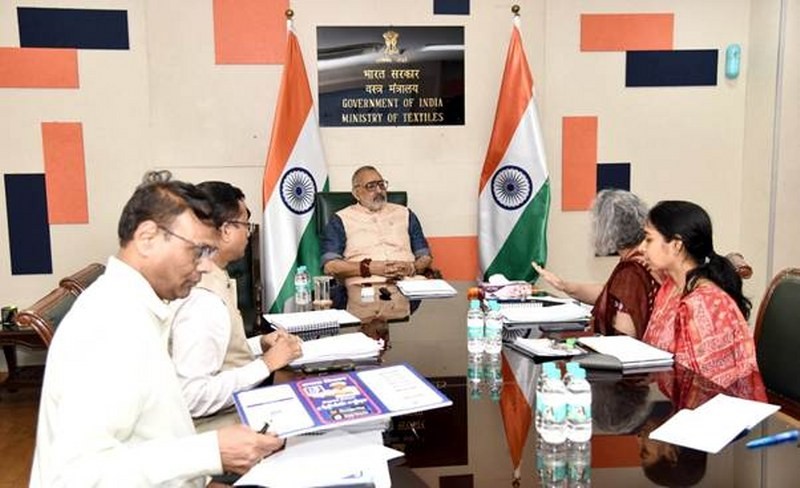
New Delhi: In a high-level review chaired by Union Textiles Minister Giriraj Singh, the government reaffirmed its commitment to protect cotton farmers ahead of the Kharif Marketing Season 2025–26, commencing October 1.
Singh assured that all kapas procured under Minimum Support Price (MSP) guidelines will be handled "without disruption," emphasizing transparency, timeliness, and a digitally enabled ecosystem.
This initiative comes amid rising pressure on India’s textile sector due to the U.S. implementing steep 50% tariffs on Indian exports, effective since August 27, citing India’s continued purchase of Russian oil as the trigger.
However, several reports and analysts suggest the 50% tariffs were not driven solely by India’s Russian oil purchases. The more decisive trigger, they argue, was New Delhi’s rejection of Trump’s offer to mediate in the Indo-Pak conflict last May—a role the U.S. president has repeatedly portrayed as worthy of a Nobel Peace Prize.
Trump has often claimed credit for preventing escalation by warning both India and Pakistan of punitive tariffs. Yet, despite the subsequent de-escalation, he went ahead with a 50% tariff on India, citing discounted Russian oil imports as justification—an explanation many experts dispute.
The tariffs hit labour-intensive sectors such as textiles and apparel hardest—textile exports to the U.S. account for nearly one-third of the industry, and SIMA warns that these duties could impact up to 70% of exports, Times of India reported.
In response, the government, on Wednesday, extended the 11% duty exemption on cotton imports until December 31, enabling exporters to access cheaper raw materials and partially offset the cost burdens created by the tariffs.
To strengthen domestic procurement over imports, the MSP operations have been modernized: the Cotton Corporation of India (CCI) has set up a record 550 procurement centres across key cotton-growing states.
Digital features—like a faceless, paperless process and the new ‘Kapas-Kisaan’ mobile app—will enable Aadhaar-based farmer registration, rolling 7-day slot booking, and direct bank payments via NACH, supplemented by SMS payment alerts, deployment of local monitoring committees at APMC mandis, alongside helplines, logistics, and manpower to ensure smooth operations.
Support Our Journalism
We cannot do without you.. your contribution supports unbiased journalism
IBNS is not driven by any ism- not wokeism, not racism, not skewed secularism, not hyper right-wing or left liberal ideals, nor by any hardline religious beliefs or hyper nationalism. We want to serve you good old objective news, as they are. We do not judge or preach. We let people decide for themselves. We only try to present factual and well-sourced news.
Support objective journalism for a small contribution.